






































Bridging Generations: "Sakowin Synergy" Celebrates the Collaborative Future of Indigenous Art

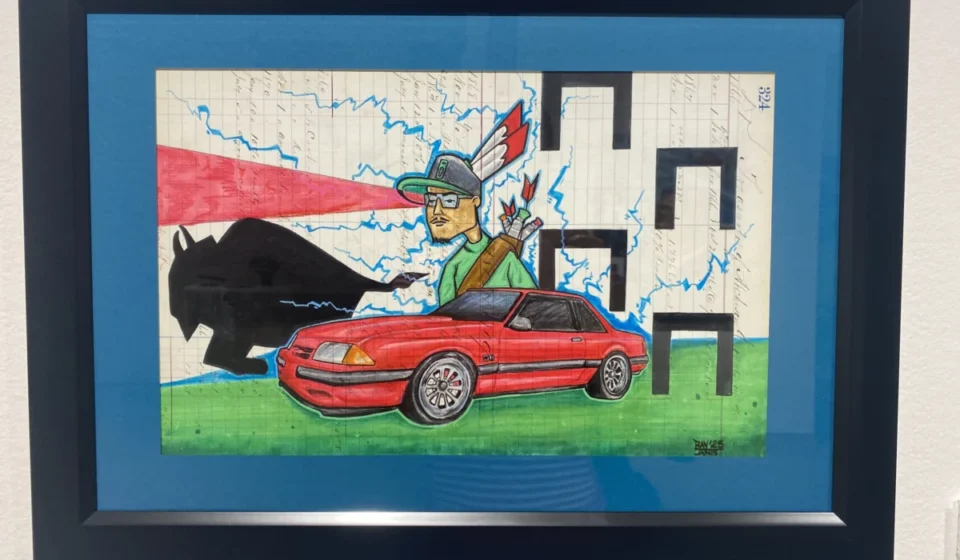
At Minneapolis’s All My Relations Gallery, the boundaries between teacher and student, tradition and innovation, and the historical and the contemporary are not just blurred—they are being actively rewritten. The new exhibition, Sakowin Synergy, serves as a powerful testament to this evolution. Curated to highlight the interconnectedness of the Oceti Sakowin (the Seven Council Fires of the Dakota, Lakota, and Nakota nations), the show centers on the work of South Dakota-based artist Ray "Rock Boy" Janis, whose practice serves as a conduit for a unique, multi-generational artistic dialogue.
The Core Concept: Art as Alliance
The exhibition’s title, Sakowin Synergy, is a direct reference to the historic Oceti Sakowin alliance. By invoking this deep-rooted political and cultural structure, Janis and his collaborators—Sheldon Starr, Dwayne "Chuck" Wilcox, and Jim Yellowhawk—are recontextualizing the concept of community.
Janis, an Oglala Lakota artist known for his vibrant, pop-culture-infused aesthetic, has moved beyond individual expression. Instead, he has invited his mentors and peers to intervene directly on his canvases. This approach challenges the Western notion of the "solitary genius" artist, opting instead for a collaborative model that mirrors the traditional values of reciprocity and collective responsibility inherent in Lakota culture.
The exhibition explores identity through a juxtaposition of mediums. Janis’s signature superhero motifs and depictions of fast cars—symbols often associated with modern reservation life—sit comfortably alongside the traditional, structured artistry of Wilcox and Yellowhawk. By placing his work in conversation with these established figures, Janis is not merely paying homage to his predecessors; he is asserting that contemporary Indigenous identity is a layered, multi-dimensional experience that refuses to be confined to a single era or aesthetic.
A Chronology of Collaboration
The genesis of Sakowin Synergy is a story of patience and deliberate relationship-building.

- 2020: The relationship between the gallery and the artists began in earnest when Janis and Starr participated in an emerging artist cohort facilitated by a partnership between All My Relations and the Hennepin Theatre Trust. This initial mentorship provided the structural support necessary for their professional growth.
- 2022: The gallery showcased their burgeoning talents in a group exhibition, proving that their unique visual language—a synthesis of digital design and traditional narrative—had found a receptive audience.
- Early 2026: The exhibition was originally slated to open in January. However, in a move that highlighted the gallery’s commitment to community, All My Relations shifted its focus to become a hub for mutual aid in response to Operation Metro Surge. This pivot necessitated a postponement of the show, underscoring the reality that for these artists, art is not an activity removed from the political realities of their people; it is fundamentally tied to their survival and social well-being.
- July 9, 2026: The exhibition finally opened its doors. The atmosphere was one of celebration, featuring traditional food from the adjacent Pow Wow Grounds, and providing a space for the artists and their families to congregate, signaling a return to cultural programming after a period of intense crisis management.
The Evolution of Ledger Art: "Rez Boys Boogie"
One of the most striking pieces in the collection is Rez Boys Boogie (2026). The work serves as a masterclass in collaboration, utilizing the tradition of ledger art. Historically, ledger art emerged in the 19th century as a creative adaptation; when hide-painting materials became scarce due to colonization, Plains Indian artists utilized the blank pages of accounting books provided by military and government agents to document their history, ceremonies, and daily lives.
Janis’s Rez Boys Boogie takes this historical medium and injects it with a four-way conversation. The long, rectangular canvas depicts a pow-wow circle from an aerial perspective.
- The Dancers: Dwayne "Chuck" Wilcox and Jim Yellowhawk, both accomplished pow-wow dancers in their own right, painted themselves as figures flanking the circle.
- The Framework: Janis designed the central circle and the celestial sky elements, which provide the gravitational pull for the composition.
- The Texture: Sheldon Starr contributed intricate bat imagery and dynamic geometric forms that add a layer of contemporary graphic design to the piece.
What makes this work particularly significant, as noted by Janis, is that it is the first time Wilcox and Yellowhawk—two titans of the contemporary Indigenous art scene—have ever worked directly on the same piece of paper. The result is a seamless, unified composition that feels both ancient and cutting-edge.
Perspectives from the Gallery: Mentorship as the Catalyst
Angela Two Stars, the director of All My Relations Gallery, views the exhibition as a critical juncture in the history of the gallery’s programming.
"Wilcox and Yellowhawk have been like mentors to the younger artist generation," Two Stars explains. "They represent a traditional, rigorous, and highly detailed style. Conversely, Janis and Starr are working in a more contemporary, often digital-inflected space. The beauty of this show is the synthesis—how they use their art to speak to the influences of each other."

For Janis, the experience of collaborating with his heroes has been transformative. The project began when Jim Yellowhawk spotted a painting by Janis featuring a character from The Fantastic Four. Recognizing the fusion of pop culture and indigenous storytelling, Yellowhawk invited Janis to contribute to one of his own works.
"I was like, ‘For real?’" Janis recalled. "It’s one of my heroes growing up in the art world." This humility and sense of wonder are central to the spirit of the show. It is an exhibition that acknowledges that the future of Indigenous art relies on the open-handed transfer of knowledge between generations.
Political Implications: Art as Resistance
While the exhibition is celebratory, it is also deeply political. The painting Tatanka O’sni (2026) is perhaps the most pointed example of this.
A stark departure from the colorful energy of other pieces, Tatanka O’sni renders a bison in cold, crystalline shades of blue. The animal is shown charging through a field of diagonal lines, appearing to shatter the very frame of the canvas. The work is explicitly identified as an "anti-ICE" piece, a visual manifestation of the artist’s frustration with the policies of Immigration and Customs Enforcement. The radiating blue streaks, which look like shards of broken ice or spiritual lightning, suggest that even in the face of state-sponsored coldness and border enforcement, the spirit of the Tatanka (bison)—a symbol of survival and sustenance for the Oceti Sakowin—remains unbroken and powerful.
The Broader Landscape
Sakowin Synergy is not an isolated success; it is part of a larger, vibrant wave of Indigenous art currently washing over the Twin Cities. The exhibition stands alongside several other significant shows that are redefining the regional artistic discourse:

- "Encounters" (Bockley Gallery): An exploration of the physical and spiritual meetings that define Indigenous life in the modern world.
- "Queering Indigeneity" (Minnesota Museum of American Art): A profound look at how traditional gender roles and contemporary LGBTQ+ identities intersect within Native communities.
- "Merciless: Indigenous Lands Since 1776" (Weisman Art Museum): A powerful, historical retrospective that confronts the legal and colonial foundations of land theft in the United States.
Conclusion
Sakowin Synergy is more than an exhibition; it is an act of communal creation. By bringing together the wisdom of elders like Wilcox and Yellowhawk and the fresh, kinetic energy of Janis and Starr, the show proves that the "Seven Council Fires" are burning as brightly as ever.
As the exhibition continues its run through September 5, it offers visitors a rare opportunity to see the process of cultural transmission in real-time. It is a reminder that in the face of historical hardship and contemporary political strife, the most potent weapon for an artist is the ability to connect, to collaborate, and to honor the ancestors while building something entirely new.