














































For decades, the standard for American parking infrastructure was as simple as it was destructive: pour asphalt, paint lines, and forget about it. These vast, heat-absorbing plains of petroleum-based blacktop have become a defining feature of the American landscape, occupying up to a quarter of the land area in some major downtown cores. However, as climate change accelerates and the "urban heat island" effect drives temperatures to dangerous new heights, municipalities and private developers are beginning to rethink the humble parking lot.
From Virginia to California, a quiet revolution is underway. Planners are swapping traditional, impervious asphalt for a new generation of "smart surfaces"—porous materials, lush bioswales, and reflective coatings—that not only store cars but serve as active, living components of a city’s climate resilience strategy.
The Problem: Why Asphalt is a Climate Liability
The traditional parking lot is a triple threat to the modern environment. First, it acts as a thermal battery. Dark asphalt absorbs solar radiation throughout the day, retaining that heat and radiating it back into the atmosphere well into the night. This contributes significantly to the urban heat island effect, where cities experience temperatures up to 20 degrees Fahrenheit higher than their rural surroundings. This, in turn, forces residents and businesses to rely more heavily on air conditioning, which consumes massive amounts of electricity and pumps even more waste heat back into the city streets.
Second, the impervious nature of asphalt creates a stormwater nightmare. When heavy rains hit a traditional lot, the water has nowhere to go but the sewer, carrying with it a toxic cocktail of oil, heavy metals, and debris collected from the surface. This runoff overwhelms municipal drainage systems and pollutes local waterways.
Finally, there is the issue of land use. Urban planners have long noted that a significant portion of parking infrastructure sits empty. Research from UCLA suggests that more than a third of parking spaces in many metropolitan areas are vacant at any given time, representing a massive misallocation of precious urban land.
A Chronology of Change: From Blacktop to Bioswale
The transition toward greener parking solutions has been a gradual shift driven by both policy and environmental necessity.
- Early 2000s: Municipalities began experimenting with basic "green infrastructure" pilots, such as simple rain gardens, to manage stormwater runoff in high-flood zones.
- 2015–2018: The rise of "de-paving" movements, most notably in Denver, signaled a shift in public sentiment. Citizens and activists began advocating for the removal of abandoned or underutilized asphalt to make way for public green space.
- 2020: The City of New Orleans formalized this shift, mandating that the Department of Public Works prioritize permeable paving in all public projects where technically feasible, setting a precedent for other flood-prone coastal cities.
- 2023–2025: High-profile projects, such as the Hampton Roads Planning District Commission headquarters in Virginia, demonstrated that high-performance, porous concrete could be durable, aesthetically pleasing, and functionally superior to traditional paving.
- Present Day: A growing number of cities, including Austin, Minneapolis, and Buffalo, have taken the radical step of eliminating "minimum parking requirements" for new developments. This policy change removes the legal mandate to build oversized lots, allowing developers to design based on actual demand rather than arbitrary quotas.
The Technological Toolkit: Alternatives to Asphalt
Modern engineering offers a suite of alternatives to traditional blacktop, each serving a specific environmental or functional purpose.

Cooling and Reflective Technologies
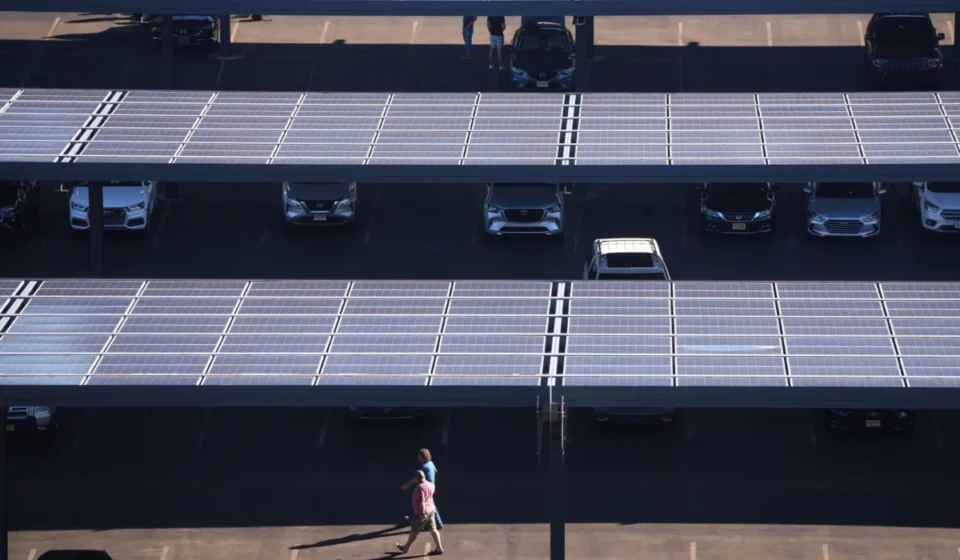
In places like Pacoima, Los Angeles, city officials have tested reflective coatings—essentially high-performance, durable "paint"—that prevent the ground from absorbing solar energy. When applied to existing lots, these treatments can significantly lower surface temperatures. Similarly, many cities are now mandating "shading requirements." Sacramento, for instance, requires that new parking lot designs include enough tree canopy to shade 50% of the surface within 15 years of construction. Where trees cannot be planted, solar canopies serve a dual purpose: providing shade for vehicles while generating clean, renewable energy for the grid.
Stormwater Management Systems
The most innovative lots are those that "breathe." Permeable paving, including porous concrete and interlocking grid systems, allows rainwater to infiltrate the ground directly, recharging groundwater and reducing the pressure on municipal storm drains. At the Newfields art museum in Indianapolis, for example, the facility replaced traditional pavement with a combination of recycled plastic grid pavers and bioretention rain gardens.
"It has worked really well for us because we don’t park on that lot every single day," says Jonathan Wright, director of the garden. "Why should it be asphalt and not breathing, and not permeable, when you only need to use it 10% of the time?"
These systems are often supported by bioswales—long, recessed channels filled with native, deep-rooted plants that act as natural filters, trapping sediment and pollutants before water reaches the water table.
Official Perspectives: Industry vs. Innovation
While the environmental benefits of these alternatives are clear, the asphalt industry urges caution. Buzz Powell, technical director at the Asphalt Pavement Alliance, argues that traditional materials have a track record of durability that newer, experimental systems have yet to match.
"I think we need to be very careful when we implement alternative systems to ensure we have a good understanding of the lifecycle impact," Powell says. "Some things look great on paper, but when you run a heavy-duty trash truck over a porous grid or a thin, decorative paver, it may not handle the structural strain."
Powell emphasizes that the industry is not sitting idle. Advances in porous asphalt and better mix designs are helping traditional materials perform more sustainably. His focus remains on "pavement preservation"—making the existing infrastructure more durable and efficient rather than replacing it entirely with unproven alternatives.

The Economic and Environmental Balance Sheet
The primary barrier to widespread adoption remains the upfront cost. Alternative materials, such as porous concrete or structural grids, often carry a higher price tag than conventional asphalt. Proponents, however, argue that this is a "false economy."
"If we were going to just repave it with asphalt, we could have done it significantly cheaper," admits Jill Sunderland of the Hampton Roads Planning District Commission. "It’s more expensive initially, but you get so much more life out of it, and the environmental savings—less flooding, less heat—provide value that isn’t captured in a simple construction quote."
Experts like Greg Kats, founder of the Smart Surfaces Coalition, suggest that as cities begin to quantify the "hidden costs" of traditional lots—such as flood damage repair, public health costs associated with heat, and energy expenditures—the business case for green surfaces becomes undeniable. "Once cities are able to understand in a rigorous way the scale of the benefits, it’s kind of intuitive," Kats notes.
Future Implications: A More Resilient Urban Fabric
The transition away from the "blacktop status quo" is not just about changing pavement; it is about changing the philosophy of urban development. As we move forward, the most successful cities will be those that treat every square foot of land as a multi-functional asset.
The path ahead is not without challenges. Budget-constrained municipalities often lack the capital to retrofit existing, aging lots, which continue to degrade and contribute to the heat island effect. However, by coupling new development standards with creative financing and public-private partnerships, cities can begin the slow, necessary process of de-paving.
Ultimately, the goal is to create an urban environment that is cooler, cleaner, and more resilient to the volatile climate of the 21st century. By replacing stagnant, heat-trapping surfaces with dynamic, permeable, and shaded alternatives, we are not just fixing parking lots—we are actively healing the cities we live in. As the Hampton Roads project proves, the difference isn’t just visible on a technical level; it’s palpable to the people who walk through it. It is, quite simply, more inviting.