

























































A Silent Crisis in the Tap: The Growing Push to Address Nitrate Contamination in U.S. Drinking Water

A broad, multi-state coalition of environmental advocacy groups, spearheaded by organizations deeply entrenched in the Mississippi River basin, has issued an urgent demand for federal intervention regarding nitrate contamination in the nation’s drinking water. Characterizing the issue as a full-scale public health emergency, the coalition is calling on the Environmental Protection Agency (EPA) and the Department of Health and Human Services (HHS) to move beyond bureaucratic inertia and implement immediate, tangible solutions to protect American communities from a hazard that has been quietly escalating for decades.
Nitrate, a chemical compound formed when nitrogen—often derived from agricultural fertilizers, manure, and septic systems—oxidizes, has become a persistent presence in both groundwater and surface water across the United States. While its impact on aquatic ecosystems, such as the infamous "dead zone" in the Gulf of Mexico, is well-documented, the threat it poses to human health is only now beginning to receive the public and political scrutiny it demands. Exposure to elevated nitrate levels has been definitively linked to severe health outcomes, including birth defects, thyroid dysfunction, and an increased risk of certain cancers.
The Scope of the Problem: A Data-Driven Crisis
The scale of the contamination is staggering. According to an April analysis by the Environmental Working Group (EWG), approximately 18% of the U.S. population—tens of millions of people—relied on community water systems containing 3 milligrams per liter (mg/L) or more of nitrate between 2021 and 2023. This threshold, while below the current federal regulatory limit, is the level at which the EPA itself acknowledges that contamination is present and potentially hazardous.
The agricultural heartland of the country, particularly the "Corn Belt," stands at the epicenter of this crisis. Intensive industrial farming operations—focused on corn, soy, and livestock production—act as the primary non-point source of nitrogen runoff. As these nutrients leach into aquifers and permeate surface water, they create a systemic dependency on filtration technologies that many small, rural communities cannot afford to maintain.
Advocates argue that the public has been largely shielded from the severity of this issue. "The longer we wait to address root causes, the more difficult, and more expensive [it is], and the more harm is caused in the long run," says Tyler Lobdell, a senior attorney at Food & Water Watch. For Lobdell and his peers, the economic burden of remediation—shifting the cost from agricultural polluters to taxpayers and water utility ratepayers—is an unsustainable path forward.
A Chronology of Inaction and Advocacy
The recent May 5 letter to federal authorities, signed by over 80 environmental organizations, represents the latest chapter in a long-standing struggle to force federal oversight. The coalition’s signatories include a diverse array of groups from across the Mississippi River basin, from the Black Warrior Riverkeeper in Alabama to the Minnesota Center for Environmental Advocacy.
The history of this advocacy is marked by a series of ignored petitions. Over the past decade, environmental groups in Wisconsin, Minnesota, and Iowa have petitioned the EPA to invoke emergency powers under the Safe Drinking Water Act to address nitrate contamination in their respective regions. Historically, these petitions have been met with silence or insufficient bureaucratic responses across multiple presidential administrations.
The effort to reform nitrate policy saw a flicker of hope during the Biden administration, which restarted a scientific assessment of nitrate’s human health impacts—a project that had been shelved during the first Trump administration. However, that assessment has stalled. This is particularly concerning to health advocates who note that the current federal drinking water standard for nitrate—10 mg/L—is based on outdated data. A growing body of peer-reviewed research indicates that adverse health impacts occur at concentrations significantly lower than the current legal limit, suggesting that millions of Americans currently consuming "legal" water are, in fact, at risk.
Scientific and Public Health Implications
The recent push is anchored by a landmark report from the Iowa Environmental Council and the Harkin Institute at Drake University. The report provides a chilling correlation between the high-intensity agricultural practices in Iowa and rising cancer rates. By documenting the confluence of nitrate, pesticides, and "forever chemicals" (PFAS) in drinking water, researchers have provided a compelling case that environmental toxicity is a primary driver of public health decline in rural America.
Beyond human health, the nitrogen crisis is devastating to biodiversity. In surface waters, excess nitrogen acts as a potent fertilizer for algae. These massive algal blooms choke out oxygen, creating hypoxic conditions that kill fish and collapse aquatic food chains. The "dead zone" in the Gulf of Mexico, which expands annually to cover thousands of square miles, serves as a macroscopic manifestation of the same failure in land management that is currently tainting the taps of millions of households.
Kelly McGinnis, executive director of One Mississippi, emphasizes that the divide between "environmental protection" and "public health" is an artificial one. "We are not separate from the environment," she notes. For McGinnis, addressing nitrate contamination is as much about restoring the resilience of the Mississippi River as it is about ensuring that a glass of water drawn from a tap does not carry a long-term health risk.
Official Responses and the Path Forward
The response from federal agencies remains a mix of standard procedure and vague commitments. The Department of Health and Human Services has remained largely silent on the May 5 letter, a stance that has frustrated coalition members who had hoped the new administration’s focus on "Making America Healthy Again" would signal a shift in priorities.
When pressed for comment, an EPA spokesperson stated that the agency is committed to "taking real, tangible steps to evaluate risks of nitrates in drinking water while following the law and gold standard science." The spokesperson highlighted the ongoing "six-year review" of drinking water standards as the primary mechanism through which policy changes might occur. However, critics argue that the six-year review process is inherently too slow to address a "crisis level" emergency that requires immediate intervention.
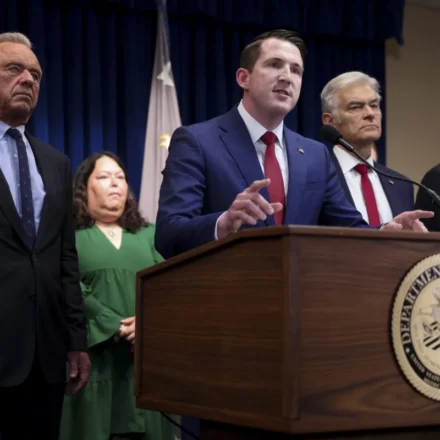
The coalition, however, is hopeful that the current political climate—specifically the interest in reducing chemical toxins in the American food and water supply—might provide the necessary leverage. Advocates are specifically looking to HHS Secretary Robert F. Kennedy Jr. to utilize his platform to bring national attention to the issue, hoping that the "Make America Healthy Again" agenda will include a rigorous, science-led reevaluation of what constitutes "safe" drinking water.
The Road Ahead: Why Local Action Matters
The 80 organizations behind the May 5 letter recognize that while the solution must be federal in scope, the work remains local. The list of signatories reads like a roadmap of the Mississippi River basin’s environmental heartbeat, including:
- The Mississippi River Collaborative and the Izaak Walton League: Focusing on the multi-state management of the river’s health.
- State-Level Advocates: Including the Ohio Environmental Council, the Iowa Citizens for Community Improvement, and the Minnesota Center for Environmental Advocacy.
- Waterkeeper Alliance members: Such as the Three Rivers Waterkeeper in Pennsylvania and the Bayou City Waterkeeper in Texas, who monitor local watershed health on the front lines.
These groups are not merely asking for studies; they are demanding that the federal government identify the primary sources of nitrate pollution and provide direct financial aid to communities that are currently forced to bear the cost of expensive treatment systems to remove nitrates from their water supplies.
As the nation grapples with the dual pressures of climate change and industrial agricultural output, the nitrate crisis serves as a litmus test for the government’s willingness to prioritize public health over the status quo of agricultural policy. For the millions of Americans living in the shadow of this contamination, the "gold standard science" promised by the EPA cannot come soon enough. Until then, the coalition remains vigilant, committed to the belief that access to clean, safe drinking water is not a luxury, but a fundamental human right.