

















































Bridging the Gap: New North Shore Shuttle Initiative Aims to Revitalize Flood-Ravaged Economy

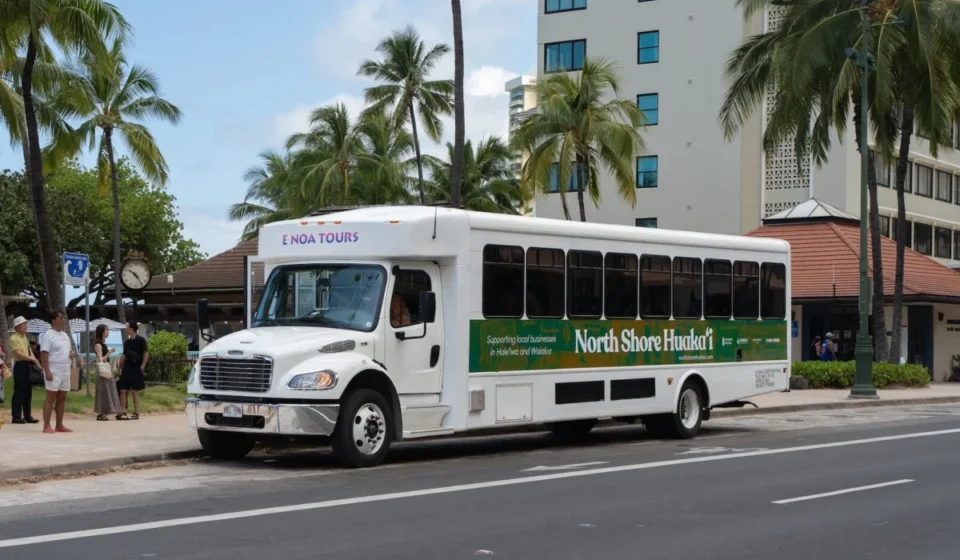
In a concerted effort to breathe new life into one of O‘ahu’s most iconic regions, a coalition of local organizations has launched the "North Shore Huaka‘i," a daily shuttle service designed to reconnect visitors with the North Shore’s historic communities. Launched on June 29, the initiative serves as a vital artery for tourism, channeling foot traffic from the bustling hotel districts of Waikīkī and Ko Olina directly into the heart of Waialua and Hale‘iwa.
For the casual tourist, the shuttle offers a stress-free, scenic excursion. For the local businesses of the North Shore, however, the program represents something far more critical: a lifeline. Born from the aftermath of devastating "Kona low" storms in March 2026, the project is a deliberate, community-focused strategy to catalyze economic recovery in areas that were brought to their knees by record-breaking rainfall and subsequent infrastructure failure.
The Genesis of the North Shore Huaka‘i: A Response to Crisis
The North Shore Huaka‘i is not merely a transportation service; it is a recovery vehicle. The 90-day pilot program—scheduled to run through September 26—is a collaborative effort spearheaded by the Hawaiian Council in partnership with the Hawai‘i Visitors and Convention Bureau (HVCB), E Noa Tours, and the Hawai‘i Tourism Authority (HTA).
The program was conceived in the weeks following the March 2026 weather events. As the North Shore struggled to clear debris and repair essential infrastructure, it became clear that the region’s primary economic engine—tourism—had stalled. "The North Shore Huaka‘i grew out of the Hawaiian Council’s recovery work alongside families, businesses, and community leaders following the storms," explains Kūhiō Lewis, president and CEO of the Hawaiian Council. "The community expressed a profound need for help bringing customers back, but they wanted to do it in a thoughtful, sustainable way."
The pilot serves as a test case for regenerative tourism. By evaluating rider feedback, the economic impact on local merchants, and the availability of future funding, the organizers hope to determine if this model can be scaled or made permanent as a fixture of the island’s transit landscape.
A Journey Through History: How the Shuttle Operates
The North Shore Huaka‘i experience is designed to be immersive rather than merely transactional. The full trip spans six to seven hours, allowing visitors enough time to engage deeply with the local culture.
The Routes
The service operates two primary lines. The Waikīkī route, which utilizes a 40-seat shuttle, begins its morning rounds at 8:30 AM at the Prince Waikiki. It makes several stops along Kalākaua Avenue—Waikīkī’s commercial spine—before departing the district at 9:15 AM.
The first destination is the historic sugar mill district of Waialua. Passengers are given approximately one hour to explore the remnants of the region’s agricultural past. Following this, the shuttle proceeds to Hale‘iwa, where guests enjoy two to two-and-a-half hours of leisure time to shop, dine, and wander.
A secondary route caters to the resort crowd in Ko Olina, utilizing a 26-seat shuttle. This route provides a seamless connection for guests staying at premier properties, including Disney’s Aulani Resort, the Four Seasons Resort O‘ahu, Marriott’s Ko Olina Beach Club, and the Beach Villas.
Cultural Stewardship
Distinguishing this service from a typical tourist bus is the inclusion of "cultural practitioners" on board. These individuals, including Kumu Hula Mehanaokalani Hind (senior adviser to the CEO of the Hawaiian Council) and storyteller Kamaka Pili, provide context and narrative during the transit.
"They were selected for their deep knowledge and their unique ability to help participants develop a meaningful connection to the communities they visit," says Lewis. This educational component is intended to shift the visitor mindset from one of extraction to one of appreciation, fostering a more respectful relationship between the traveler and the host community.
The "North Shore Passport" and Local Economy
Central to the initiative is the "North Shore Passport," a gamified program designed to ensure that visitor spending remains within the local economy. Upon boarding, every rider receives a passport containing a curated list of local restaurants, galleries, and boutiques.
When visitors make a purchase at a participating business, they receive a stamp. Collecting five stamps earns the traveler a commemorative gift. To ensure the program’s efficacy, the organizers encourage passengers to show proof of local purchase before boarding the return shuttle.
Participating Merchants
The list of participating businesses reads like a "best-of" guide to the North Shore. For culinary enthusiasts, stops include:
- Giovanni’s Shrimp Truck: A legendary staple of the North Shore’s mobile food scene.
- Hale‘iwa Bowls: Renowned for their fresh açaí bowls.
- Poke for the People: Offering authentic, high-quality local preparations.
- Farm to Barn Cafe and Juicery: Highlighting the region’s agricultural bounty.
Beyond food, the passport includes retail destinations such as The Ukulele Site, which showcases Hawai‘i-made instruments; North Shore Goodies, famous for its artisan coconut peanut butter; Maui Divers Jewelry; and the Aloha General Store.
Chronology of the Disaster: March 2026
To understand the necessity of this shuttle, one must understand the severity of the events that prompted it. Hawai‘i’s climate is typically governed by consistent trade winds, but the winter of 2026 brought a series of persistent "Kona lows."
Unlike the standard wind patterns, Kona lows originate west of the islands and pull warm, moisture-laden tropical air across the region. These storms are characterized by their slow movement; they often linger over land for days, dropping relentless rain. In March 2026, the North Shore faced two such storms within a single week. By the time the second system arrived, the ground was already saturated, and the region’s drainage infrastructure—already taxed—suffered catastrophic failure.
On March 20, flash flood emergencies triggered mass evacuations. The scale of the destruction was unprecedented, leading to a major disaster declaration in early April. The North Shore was arguably the hardest hit area on the island. Official reports indicated that 264 homes were left uninhabitable, with 23 homes completely destroyed by the deluge.
Supporting Data: The Economic Toll
The economic fallout was as damaging as the physical destruction. The timing of the storms—which coincided with the peak of spring break—meant that the local tourism sector lost its most profitable window.
- Statewide Impact: According to the Hawai‘i Department of Business, Economic Development and Tourism, the combination of flight cancellations, closed attractions, and empty hotels resulted in an estimated $300 million loss in statewide tourism revenue.
- Local Impact: Experts specializing in regional economic recovery estimated that businesses in the North Shore specifically lost nearly $100 million in potential revenue.
For small business owners, the loss was not just statistical; it was existential. After weeks of cleaning mud from storefronts and replacing ruined inventory, many owners faced the daunting task of re-attracting a visitor base that had been scared off by news coverage of the flooding.
Official Responses and Future Implications
The launch of the North Shore Huaka‘i represents a proactive shift in how the state manages disaster recovery. Rather than waiting for organic tourism to return, the Hawaiian Council and its partners decided to build the bridge themselves.
"We are looking at this as a model for how to respond to future shocks," says a spokesperson for the HTA. "By creating a direct link, we remove the friction of travel, making it easier for visitors to support the people who live and work in these communities."
The implications of this 90-day pilot extend beyond the North Shore. If the Huaka‘i succeeds in driving significant, measurable traffic to local businesses, the state may look to replicate this shuttle-and-passport model in other areas of the island or across the neighbor islands.
Evaluating Success
At the end of the 90-day period on September 26, the program will undergo a rigorous review. The evaluation criteria will include:
- Merchant Feedback: Have businesses seen a tangible increase in revenue?
- Rider Metrics: What is the average spend per passenger, and what is the level of satisfaction with the cultural educational aspect?
- Logistical Efficiency: Can the current shuttle capacity meet demand, and are the partnerships with the resorts in Ko Olina and hotels in Waikīkī sustainable?
As the summer draws to a close, the fate of the North Shore Huaka‘i remains in the hands of the travelers who choose to board. For those who do, the experience offers more than just a ride to a famous surf spot; it provides a chance to participate in the recovery of a community that has spent the last year rebuilding its home, one shop, one meal, and one visitor at a time.