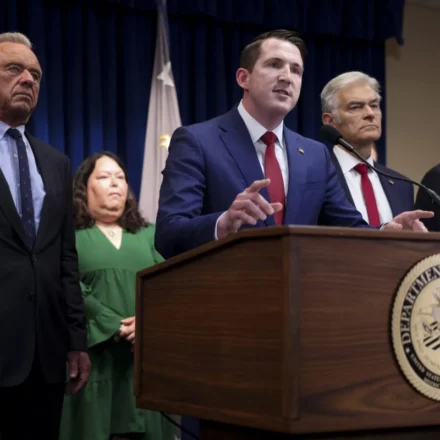




















































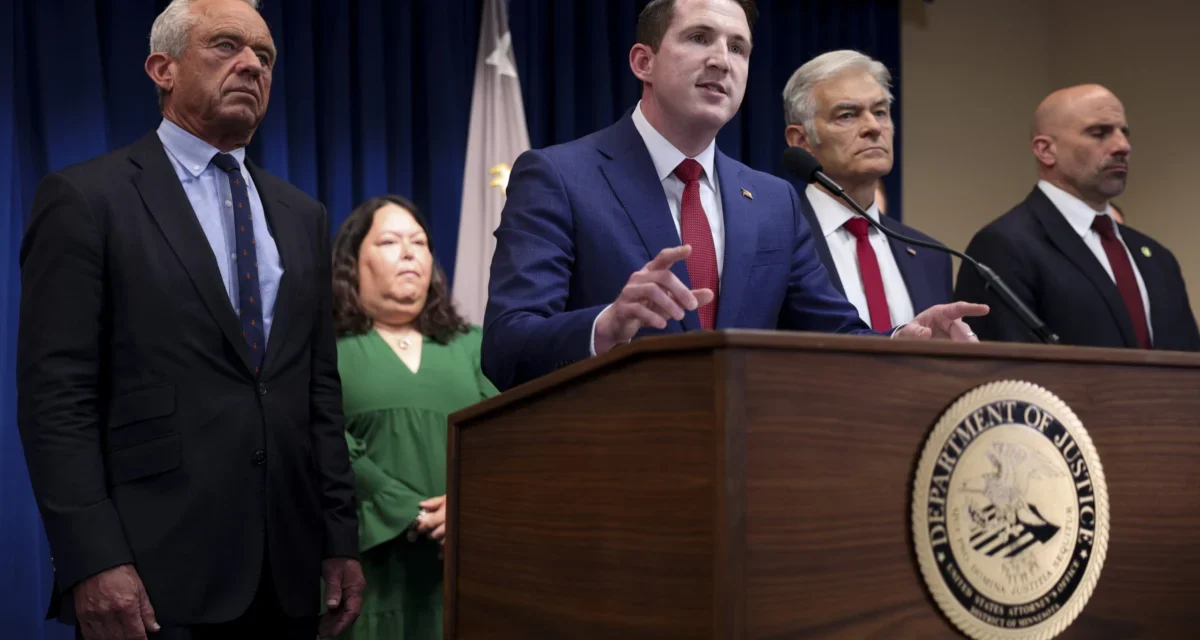





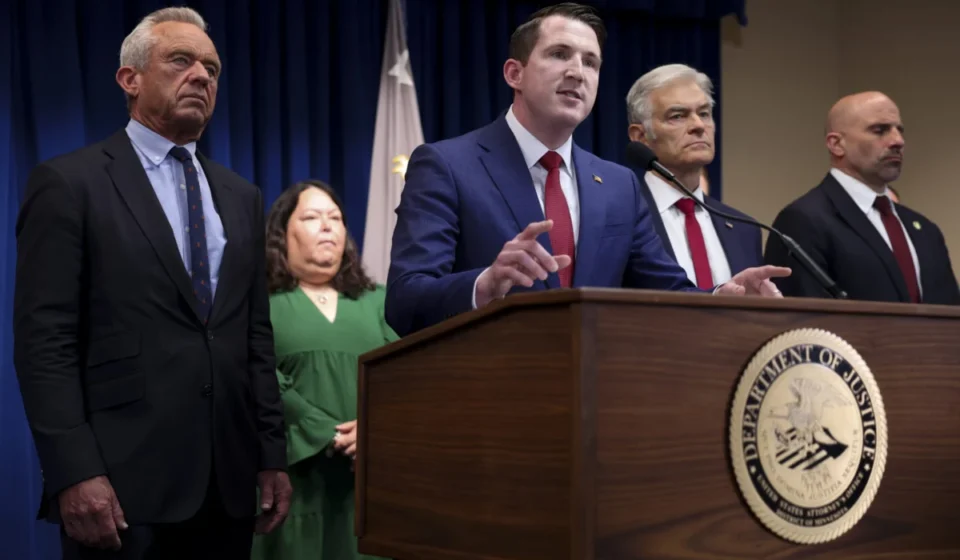

As the 2026 midterm elections approach, the political landscape is being reshaped by an unlikely, yet potent, campaign centerpiece: the crusade against fraud in federal healthcare programs. While rising healthcare costs have historically dominated voter anxiety, the Trump administration’s aggressive crackdown on alleged wrongdoing within Medicare, Medicaid, and the Affordable Care Act (ACA) has shifted the rhetorical focus. What began as a technical regulatory push has morphed into a high-stakes partisan battle, with Republicans framing the issue as a defense of the taxpayer and Democrats characterizing it as a pretext for gutting the American healthcare safety net.
The Shift in Political Strategy
For years, the Republican Party faced a difficult challenge in the healthcare arena: how to reconcile their goal of reducing federal spending with the public’s desire for robust coverage. By pivoting to the narrative of "fraud, waste, and abuse," the GOP has found a way to reframe austerity measures as a moral imperative.
"Going after fraud gives Republicans a healthcare message when they would otherwise just be defending cuts to Medicaid and the Affordable Care Act," explains Larry Levitt, executive vice president for health policy at KFF. This strategy, he notes, allows the party to "blunt" Democratic attacks regarding their past efforts to dismantle health programs.
For the Democratic base, the issue is seen through a different lens. While polls show voters traditionally trust Democrats more on healthcare, the GOP’s focus on fraud is gaining traction among specific demographics. According to recent KFF polling, 54% of Republican voters view the fight against fraud as "extremely important," and the issue ranks as the primary concern for rural Republican voters. This suggests that the administration’s messaging is not just political theater; it is successfully energizing the base.
A Chronology of the Crackdown
The administration’s anti-fraud campaign has unfolded in a series of rapid-fire administrative and legal actions throughout 2026:
- Early 2026: Federal investigators and the Government Accountability Office (GAO) intensify warnings regarding the susceptibility of Medicare and the ACA marketplace to fraudulent billing and improper enrollment.
- March 2026: CMS launches high-profile audits into state-run Medicaid programs, specifically targeting blue states like New York and California.
- May–June 2026: The administration announces charges against hundreds of individuals, including medical professionals, for alleged billing schemes. Simultaneously, billions in federal Medicaid payments are withheld from states over claims of "lax oversight."
- August 2026: CMS Administrator Mehmet Oz makes a high-profile appearance on national media, asserting that "phantom" enrollees are rampant within the ACA marketplace.
- September 2026: The administration cancels ACA coverage for 760,000 individuals, citing the absence of Social Security numbers and lack of program utilization as evidence of fraud.
- October 2026: President Trump calls on Congress to enact mandatory prison sentences for healthcare fraud, aiming to eliminate probation for offenders.
Data and Disputed Claims: The "Phantom" Enrollment Debate
The administration’s most controversial move—the termination of 760,000 ACA policies—rests on the claim that a significant portion of enrollees are "ghosts." Administrator Mehmet Oz cited the fact that roughly 35% of enrollees had not used their insurance for prescriptions or doctor visits as proof of illegitimacy.
However, health policy analysts and critics argue that this data is being misinterpreted for political gain. They point out that healthy, younger individuals often purchase insurance as a safety net without frequently utilizing medical services. Furthermore, the reliance on Social Security numbers as a definitive filter for fraud has been criticized; infants and children, for instance, are often added to family plans before they are issued a Social Security number.
The GAO has documented legitimate risks, including systemic issues in Medicare payments and the ability for investigators to sign up fake enrollees in the ACA. Yet, the leap from acknowledging these risks to purging hundreds of thousands of active accounts has ignited a firestorm. Critics fear that these mass disenrollments will disproportionately impact legitimate consumers, particularly in states like Florida and Texas, which represent 40% of the nation’s ACA enrollment.
Official Responses and Administrative Inconsistencies
The administration maintains that its actions are a necessary purification of public trust. "The fraud doesn’t just steal money—it steals our trust," Oz stated during a recent appearance on Face the Nation.
However, Democrats and watchdog groups highlight significant contradictions in the administration’s record. For instance, while the White House emphasizes its crackdown, it has simultaneously recertified hundreds of insurance brokers previously suspended for fraud and laid off approximately 200 CMS staff members tasked with regional oversight of the ACA marketplace.
Perhaps most damaging to the administration’s credibility among critics are the presidential pardons granted to health industry executives convicted of massive fraud. By pardoning figures associated with nursing home tax schemes and Medicaid billing fraud, the administration has left itself open to charges of hypocrisy. Critics argue that the government is punishing the vulnerable—those losing their health coverage—while exonerating white-collar criminals who have orchestrated the very schemes the administration claims to be fighting.
The Blue State Allegations: A Political Weapon?
The tension has peaked in confrontations between federal regulators and blue-state health agencies. A notable incident involved the administration’s claim that New York had provided personal care services to 5 million people—a number so large it would have covered nearly the entire Medicaid population of the state.
CMS eventually admitted this was a "glaring error" caused by a fundamental misunderstanding of state billing codes. Despite this admission, the administration proceeded to withhold millions of dollars from New York’s Medicaid Fraud Control Unit, claiming the department was not producing enough indictments. Similar disputes have played out in California and Minnesota, where states are fighting federal efforts to freeze hundreds of millions of dollars in funding.
Andy Schneider, a research professor at Georgetown University, describes the situation as unprecedented. "It’s a deferral, not a finding of fraud. This is being elevated by political decision-makers," he said, suggesting that the "fraud" label is being applied to routine technical disagreements between state and federal officials to create political leverage.
Implications for the Midterms and Beyond
The political fallout of this debate will be felt acutely at the ballot box this November. Republican candidates, such as Lisa Demuth in Minnesota, are running on platforms that accuse Democratic incumbents of failing to "root out" fraud. Conversely, Democrats are framing the issue as a dangerous distraction.
Beyond the campaign rhetoric, the long-term impact on the healthcare system is substantial. With the expiration of enhanced ACA subsidies at the end of 2025 and new, stringent oversight protocols in place, the Congressional Budget Office (CBO) projects that 16 million more Americans could be uninsured by 2034.
As election day nears, the debate over healthcare fraud serves as a microcosm of the broader American political divide. For the GOP, it is a tool to consolidate support, cut costs, and pivot away from unpopular stances on social safety nets. For Democrats, it is an urgent warning about the erosion of healthcare access. Ultimately, the voters will decide whether the administration’s anti-fraud campaign is a necessary exercise in fiscal responsibility or a calculated dismantling of the healthcare architecture built over the last decade. As the dust settles, the only certainty is that the definition of "program integrity" has become a central, and deeply contested, pillar of the American political project.