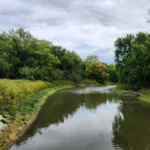















































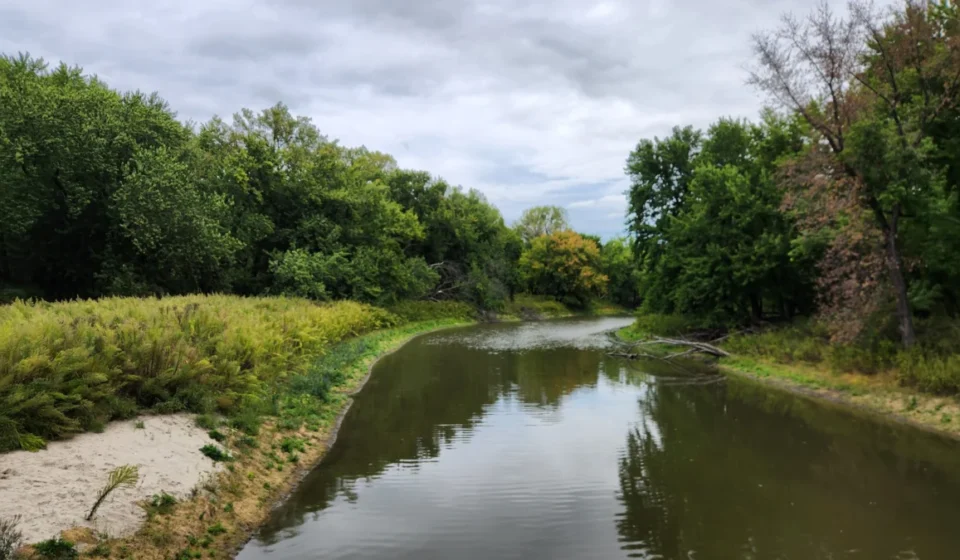

In 1992, when then-Governor Arne Carlson first set an ambitious, state-mandated goal to restore the ailing Minnesota River, Tom Crawford was not yet born. Across the state, David Minge—a former judge and newly elected U.S. Congressman—was just beginning to navigate the complex legislative waters of western Minnesota.
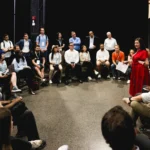
Today, three decades later, the two men find themselves unlikely colleagues in the trenches of environmental advocacy. They are part of the Minnesota River Collaborative (MRC), a loose but formidable coalition of approximately 50 citizens—retired engineers, veteran lawyers, environmental scientists, and agency alumni—united by a singular, persistent mission: to hold the line against the degradation of one of the nation’s most polluted waterways.
The Anatomy of the Collaborative
The MRC operates not as a formal non-profit with a sprawling budget, but as an agile, intellectual powerhouse. Meeting virtually on a weekly basis and maintaining a monthly dialogue with the Minnesota Department of Natural Resources (DNR), the group functions as a sophisticated watchdog. They don’t just protest; they parse.
“We’ve moved the needle within the DNR,” says 31-year-old Tom Crawford, who represents the coalition’s younger guard. Crawford, who works alongside the Friends of the Minnesota Valley and the Izaak Walton League, acts as the group’s primary navigator of bureaucratic complexity.
The group’s composition is its greatest strength. As 84-year-old David Minge notes, the diversity of professional backgrounds allows the MRC to punch well above its weight class. “We’ve had four or five active and retired lawyers. Engineers have taken a real leadership role—six or seven of them—and we have three or four agency retirees,” Minge explains. This technical depth allows the MRC to audit complex ditch drainage projects, submit evidence-based amicus briefs in legal disputes, and challenge the engineering assumptions that often prioritize agricultural output over ecological health.
Chronology: A River Under Pressure
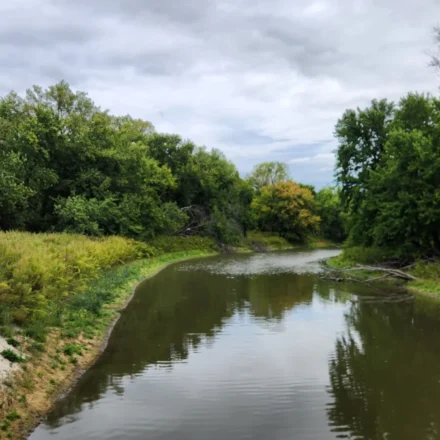
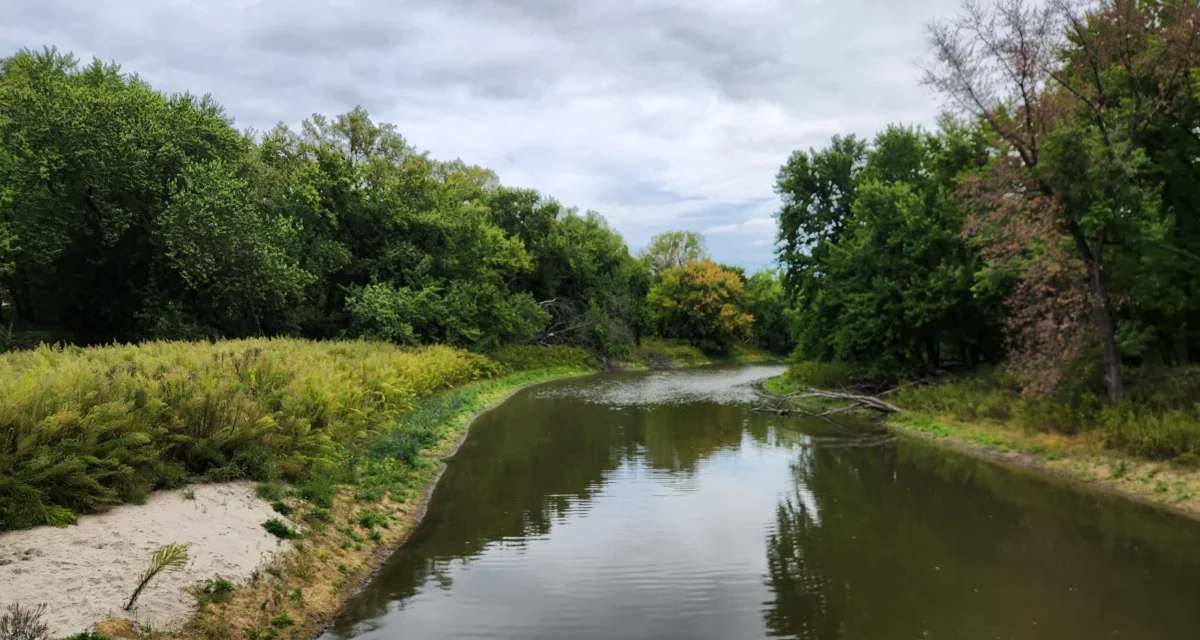
The story of the Minnesota River is one of deep, structural transformation. Before European settlement, the river basin was a natural sponge, featuring vast wetlands and meandering channels that held water back, filtering it naturally and releasing it slowly.
Over the last 150 years, the hydrology of the basin has been fundamentally altered. To maximize arable land, the state’s landscape has been re-engineered with an estimated 100,000 miles of private drainage tile—a subterranean network that remains largely unmapped, unregulated, and unaccounted for.
This transformation has created what experts call a “fire hose” effect. During rain events, water no longer soaks into the landscape; it is rapidly shunted into ditches and tile lines, creating high-velocity flows that scour the river’s soft, sandy banks. This process, known as bank erosion, turns the Minnesota River into the single largest source of sediment for the Upper Mississippi River, carrying tons of nitrogen and phosphorus downstream. These nutrients eventually fuel the infamous “dead zone” in the Gulf of Mexico, a vast area of the ocean where oxygen levels are too low to support marine life.
The MRC’s work is a direct response to this ongoing, man-made crisis. By tracking ditch projects—which are often approved by local authorities with little regard for cumulative downstream impact—the collaborative is attempting to impose a level of regional accountability on a system that is currently governed in silos.
Supporting Data: Tracking the "Absurd"
Tom Crawford maintains a detailed, living document: a spreadsheet that acts as the group’s central intelligence hub. It tracks the status of 17 drainage projects across 11 counties, recording engineering reports, project timelines, and formal commentary submitted by the MRC.
This data-driven approach is critical because, as Crawford points out, there is currently no central governance regarding drainage. “We don’t even have a sense of its scope,” he says. The group employs people like Steven Taff, a former professor of agricultural economics at the University of Minnesota, to “run the numbers.” When a county proposes a “redetermination of benefits”—a process used to justify the costs of ditch maintenance—Taff often finds the underlying economic and environmental assumptions to be deeply flawed.

One notable success involved the MRC’s investigation of a proposed ditch project in Jackson County. The collaborative’s review revealed that the project threatened a calcareous fen—a rare and sensitive type of wetland—and, upon further analysis, the group was able to demonstrate that the project offered a negative financial benefit. Their intervention effectively stopped a project that would have caused irreversible ecological damage while failing to provide a clear return on investment.
Official Responses and the Legal Battleground
The relationship between environmental advocates and the state’s regulatory bodies has been fraught with tension. A significant point of contention is the legal status of drainage outlets.
The Minnesota Center for Environmental Advocacy (MCEA) has been actively lobbying the Minnesota Pollution Control Agency (MPCA) to classify these agricultural drainage outlets as “point sources” of pollution, which would require them to be permitted and regulated under the Clean Water Act.
The battle reached a flashpoint this past August, when a Ramsey County District judge ruled in favor of the MPCA, agreeing that the agency lacks the authority to regulate these agricultural systems. The MCEA is currently appealing that decision. David Minge, with his background in the halls of Congress, views this as an inevitable legal showdown. “I expect that’s going to end up in court by the end of the year,” he predicts.
Simultaneously, the state has convened a water quality task force, spearheaded by Attorney General Keith Ellison. However, the process has been marred by internal friction. Peg Furshong, who represents Clean Up the River Environment on the task force, expressed frustration over the proceedings, noting that a small contingent of members utilized stalling tactics to avoid addressing the more difficult, systemic issues related to agricultural and mining impacts.
Implications: The Quest for a River Commission
The ultimate goal for many in the MRC is the creation of a permanent, powerful Minnesota River Commission. Proponents believe that the current patchwork of county-by-county management is insufficient to handle a river system that ignores political boundaries.
Scott Sparlin, representing the Coalition for a Clean Minnesota River, confirmed that while legislative efforts to create such a commission were delayed during the last session, the momentum is building. “After the elections, we will begin securing potential bill authors on both the House and Senate sides,” Sparlin stated.
The implications of this move are significant. A commission could potentially override the fractured local control that currently allows for the rapid expansion of drainage networks. It would provide a centralized forum for balancing the needs of the agricultural industry with the mandate to restore the health of the river.
Conclusion: A Labor of Love
For volunteers like Minge and Crawford, the work is a labor of endurance. Despite the millions of dollars spent over the last thirty years and the countless hours of advocacy, the river remains in a precarious state. Climate change is exacerbating the problem, with more frequent and extreme rainfall events pushing the current drainage infrastructure to its breaking point.
Yet, there is a newfound sense of hope. “It feels like there’s more diligence or willingness to enforce environmental rights,” Crawford says. The MRC’s success in pushing for better practices—such as the grant they helped Lyon County secure for a water storage area—proves that when technical expertise is combined with persistent, organized advocacy, progress is possible.
As the MRC looks toward the next legislative session, their message remains consistent: the Minnesota River is not merely a drain for the state’s agricultural fields, but a vital, living ecosystem that requires a unified, regional strategy. Whether that strategy will be realized through a new commission or through continued legal pressure remains to be seen, but as long as the MRC holds its weekly meetings, the river will have its most dedicated watchdogs standing guard.