















































Crisis in the Classroom: Minnesota State Faces Reckoning Over Controversial $25 Million Bailout Plan

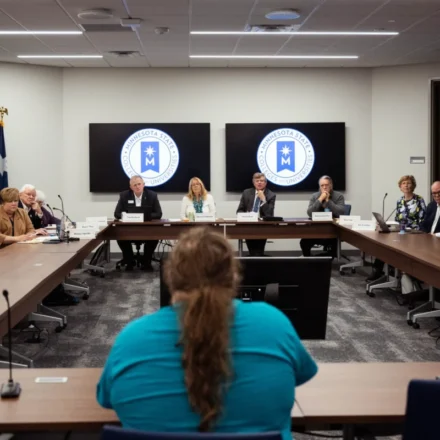
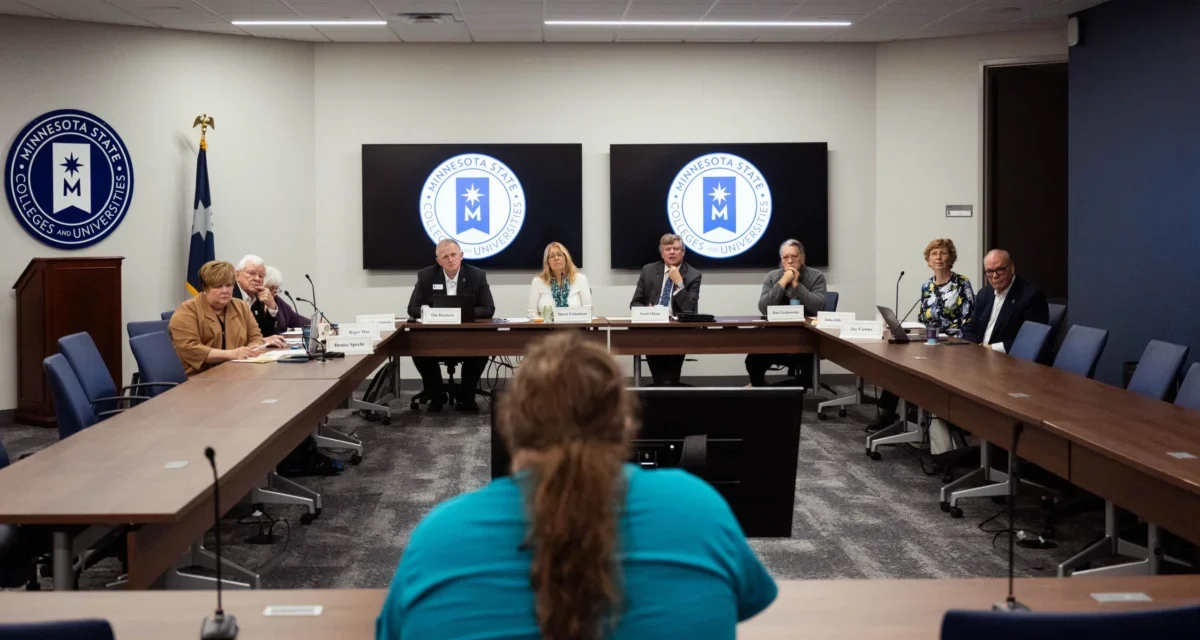
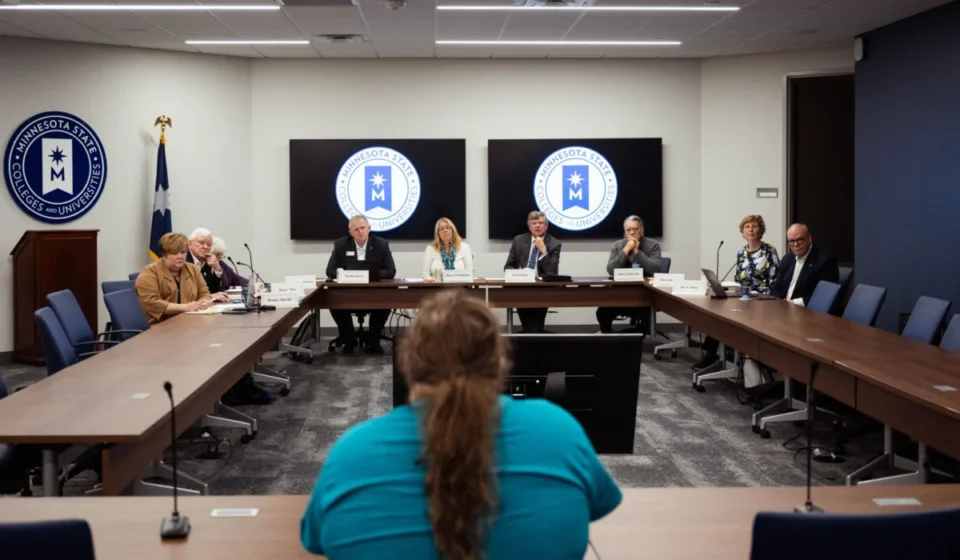
The Minnesota State university and college system, an academic cornerstone serving 270,000 students across 33 campuses, is currently navigating its most precarious financial chapter in three decades. As the Board of Trustees prepares for a pivotal vote on October 14, the system finds itself embroiled in a bitter debate over a proposed $25 million annual reallocation of funds—a "stopgap" measure designed to rescue two of its most financially distressed universities by drawing resources away from healthier, primarily two-year, institutions.
This high-stakes financial maneuver comes as the system confronts a staggering $31.5 million deficit, a figure projected to more than triple by 2028 if significant structural changes are not implemented. The proposal has ignited a firestorm of criticism from faculty, students, and campus administrators who argue that the plan treats the symptoms of a terminal illness while ignoring the underlying systemic rot.
The Proposal: A High-Stakes Financial Lifeline
The plan, if approved, would authorize the Minnesota State system to siphon up to $25 million annually for the next four years to stabilize “financially challenged institutions.” Under the current framework, St. Cloud State University and Bemidji State University would be the primary beneficiaries, slated to receive $10 million and $4.8 million, respectively.
System officials, including Vice Chancellor for Facilities and Finance Bill Maki, admit the move is “somewhat unprecedented” in the system’s history. However, they argue that without this immediate cash infusion, these universities face a total collapse of their reserve funds. For St. Cloud State, which has seen its enrollment drop by 5,400 students over the past two decades and has already exhausted its once-substantial $19 million reserve, the funding is framed as a matter of survival.

Yet, the burden of this rescue falls disproportionately on two-year colleges. According to an analysis of the proposal, two-year institutions would contribute approximately three times as much as their four-year counterparts to the emergency pool. This has created a deep sense of betrayal among community college leaders, who feel they are being penalized for their fiscal responsibility.
A Chronology of Decline: From Warnings to Urgency
The current crisis did not emerge overnight; it is the culmination of years of deferred maintenance, demographic shifts, and stagnant state support.
- 2005–2015: The system attempted smaller-scale interventions, shifting $5.5 million to support struggling schools. Unlike the current plan, these funds were not drawn from the operating budgets of peer institutions.
- 2016: An internal report explicitly warned that the system was heading toward a future that was “financially unsustainable” due to declining enrollment and an excess of underutilized physical infrastructure. The report warned, "We cannot and must not wait… or we will only compound the challenges."
- 2023–Present: St. Cloud State, struggling to bridge its own fiscal gap, suspended nearly 200 academic majors, minors, and certificates. Workforce reductions at the university have reached 40% over the last 15 years.
- September 2026: Chancellor Scott Olson announced a radical systemwide redesign. The announcement served as a sobering acknowledgement that the status quo is dead, with potential campus closures and mergers now on the table for discussion in January.
- October 2026: The Board of Trustees prepares to vote on both the $25 million bailout and a separate $24.3 million plan to fund the demolition of excess, aging, or underutilized facilities.
Supporting Data: The Anatomy of a Deficit
The systemic financial distress is rooted in a "perfect storm" of economic pressures. Chancellor Olson has pointed to a combination of constrained state funding, the compounding effects of inflation, and a conscious effort to keep tuition affordable for students, which limits the system’s primary revenue stream.
The financial disparity is stark. While some institutions have managed to maintain healthy reserves, others are operating in the red. The system’s own projections indicate that eight institutions—five of which are universities—concluded the 2026 fiscal year in poor financial health.

Furthermore, the "cost of doing business" has changed. With 80% to 85% of operating budgets tied up in salary and benefits, the 5% budget reduction proposed by the state is not merely a bookkeeping exercise—it is a threat to the core labor force. As Lori Kloos, president of St. Cloud Technical and Community College, noted, these cuts have direct, immediate impacts on the ability of schools to maintain the high-tech training environments, such as welding and automotive labs, that are vital to Minnesota’s workforce.
Official Responses: Between Survival and Equity
The divide between the system’s central office and the individual campuses has never been wider.
Chancellor Scott Olson has taken a pragmatic, if unpopular, stance. During a recent town hall at Century College, he addressed calls from faculty to simply shutter St. Cloud State. "Given their scale, given what they mean to the economy of central Minnesota, I guess I believe it’s worth another try at saving them," he said. He maintains that the closure of such a large institution would "strand all kinds of people," including the roughly 10,600 students currently enrolled.
Conversely, the faculty and student body are sounding the alarm. Kevin Lindstrom, president of the Minnesota State College Faculty, argues that the plan is fundamentally flawed. "Those places work really hard to stay afloat and to serve their communities," Lindstrom said. "They don’t have a margin for error, and this will impact them disproportionately."

The student perspective, represented by organizations like LeadMN, is equally critical. Former vice president Marco Loera Alvarez noted that reallocating resources "risks creating similar financial pressures for the very institutions that are currently serving students effectively."
The Implications: Beyond the Bandage
The ramifications of the October 14 vote extend far beyond the immediate budget cycle.
1. The End of Local Autonomy
The shift toward centralizing funds marks a transition from a collection of independent campuses to a more rigidly managed, top-down system. If the system succeeds in moving money between schools to balance the ledger, the traditional independence of individual college presidents may be permanently curtailed.
2. The Threat of Campus Closures
The recent closure of the Minnesota State Community and Technical College’s Detroit Lakes campus is widely viewed as a "canary in the coal mine." With the system actively planning to demolish excess facilities, the footprint of the Minnesota State system is set to shrink. This raises existential questions about the role of the public university system in rural Minnesota. If community colleges and regional universities are closed, the "education deserts" in greater Minnesota could widen, forcing students to commute longer distances or abandon higher education entirely.

3. The Legislative Burden
The system is pinning much of its future hope on a $25 million request to the state legislature for one-time funding, alongside another $25 million for infrastructure demolition. If the legislature proves unwilling to provide this "bailout," the system’s internal redistribution plan will become the only remaining option, setting the stage for even more severe inter-campus conflicts.
4. The Cultural Reckoning
Perhaps the most significant implication is the loss of institutional trust. As Chancellor Olson admitted, the warnings from 2016 were "put on a shelf." The current climate of skepticism among faculty and staff is a direct result of a decade of inaction. The decision to move forward with the bailout, despite widespread condemnation, suggests that the system is prioritizing institutional survival over the consensus of its stakeholders.
Conclusion: A System at the Crossroads
As Minnesota State stands on the precipice of its next vote, it is clear that the "temporary" measures currently being debated are merely delaying a much more profound transformation. Whether the system can successfully navigate this financial crisis through internal restructuring, or whether it will succumb to the pressures of demographic decline and rising costs, remains to be seen.
For now, the thousands of students, faculty, and staff across Minnesota’s 33 campuses are left in a state of uncertainty, waiting to see if the institution they serve can evolve to meet the challenges of the 21st century or if it will be dismantled by the weight of its own past inertia. One thing is certain: the era of "business as usual" for Minnesota State has officially come to an end.