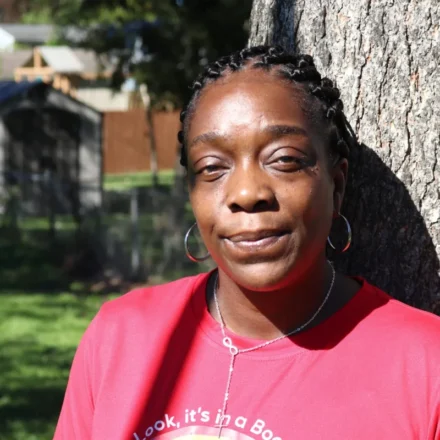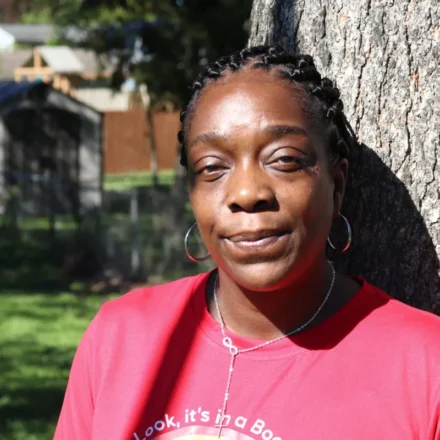


















































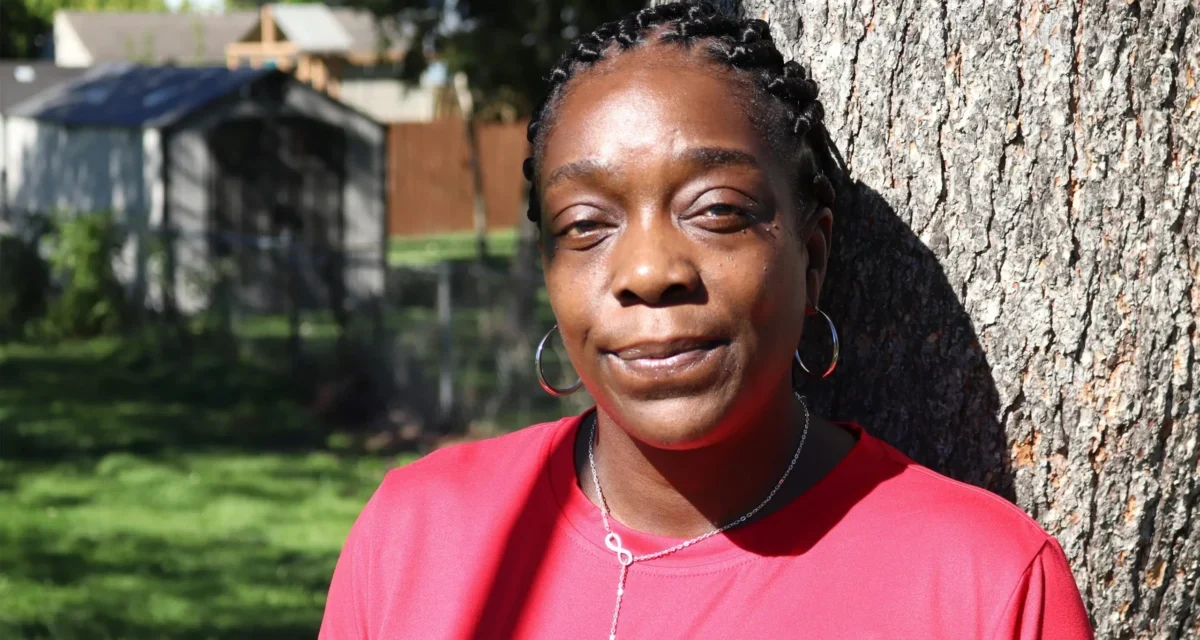





LANSING, Mich. — For Christina Starks-Clay, the math of modern American healthcare has become an exercise in quiet desperation. Standing in a sweltering line for a U.S. Senate town hall held by candidate Abdul El-Sayed, she pulled out her smartphone to show a screenshot of a $1,000 cashier’s check. It was a payment she had secured from the bank that very morning—a down payment on her son’s mounting dental bills. Despite being employed as a special education paraprofessional and carrying what is considered "good" insurance, she remained in the red, still owing $389. Weeks earlier, her own routine dental cleaning had set her back $600.
"I’m telling myself, ‘Tina, you were in a position for this moment to do this,’" she said, reflecting on the struggle to stay afloat. "A lot of people couldn’t do what I had to do today. I couldn’t do it. But I did. So I need to hear: How are you going to make this better for everyone?"
Starks-Clay is one of millions of Americans trapped in a system where insurance does not guarantee affordability, and where medical necessity often clashes with the cold reality of a bank balance. As the political climate heats up in Michigan, the debate over "Medicare for All"—a proposal to replace the current fragmented insurance landscape with a government-funded, universal system—has moved from the fringes of progressive theory to the center of the state’s electoral battleground.
The Anatomy of a Healthcare Crisis: Main Facts
The current U.S. healthcare landscape is defined by a paradox: the nation spends more per capita on health than any other developed country, yet it remains the only one among its peers that does not provide universal coverage. In Michigan, the tension is palpable. At El-Sayed’s town hall, the crowd was a cross-section of a state in pain. One man spoke of his brother’s crushing medical debt; a professor emeritus at Michigan State University expressed deep anxiety over his grandchildren’s future, noting that his adult children were struggling to meet a $9,000 insurance deductible.
Healthcare workers in attendance provided perhaps the most sobering testimony, describing patients who routinely choose between life-saving medication and basic sustenance. The data supports these anecdotes. According to recent polling from Gallup, fewer than half of Americans now report that they can comfortably afford the cost of their healthcare. This financial instability has turned "Medicare for All" into a powerful, if polarizing, shorthand for radical, systemic change.
A Chronology of the Policy Shift
The journey of Medicare for All from an academic concept to a campaign rallying cry has been marked by distinct political cycles. In the decade following the 2010 passage of the Affordable Care Act (ACA), the nation saw significant strides in coverage. The uninsured rate was cut nearly in half, and the prohibition of denials based on preexisting conditions became a cornerstone of the American insurance market.
However, the last two years have been characterized by what many experts call a "rollback" of these gains. The expiration of enhanced tax subsidies and legislative shifts at the federal level have seen premiums spike and Medicaid rolls contract. In Michigan, a battleground state where the political pendulum has swung sharply, the impact has been severe. Estimates from the Urban Institute suggest that up to 355,000 Michiganders are projected to lose Medicaid coverage by 2028 due to recent federal legislative changes.
"We are now, in the past two years, in an era where the progress of the last decade is being reversed," says Jonathan Oberlander, a professor at the University of North Carolina-Chapel Hill and a specialist in the politics of healthcare reform.
This sense of backtracking has fueled the current enthusiasm for a total system overhaul. El-Sayed, a physician and former public health director for the city of Detroit, has championed this cause since his 2018 gubernatorial bid. For supporters, his consistency is his greatest asset. In an environment of uncertainty, voters are looking for a definitive, long-term plan to lower costs.
Supporting Data and Public Opinion
According to a new KFF health tracking poll, support for Medicare for All is currently at its highest level in at least a decade. Two-thirds of Americans now favor the expansion of a government-run health program. However, researchers point out a critical nuance: the public’s support is highly sensitive to how the policy is framed.
"When we ask people what they want to hear from candidates in regard to healthcare, the answer is consistent: a plan to bring down costs," explains Ashley Kirzinger, director of survey methodology at KFF.
The economic arguments surrounding the proposal are equally complex. While critics often cite a $4 trillion annual price tag as a deterrent, proponents argue that the status quo is even more expensive. A recent preprint study from Yale University researchers suggested that while the implementation of universal health coverage would require an investment of roughly $4.2 trillion, it would simultaneously save the economy $1 trillion in healthcare spending and prevent an estimated 114,000 deaths annually.
Official Responses and Political Maneuvering
The debate in Michigan has split along predictable, yet intense, partisan lines. Republican candidate Mike Rogers, El-Sayed’s opponent, has made the rejection of Medicare for All a cornerstone of his platform. During a recent press conference, Rogers characterized the proposal as an overreach that would destabilize the insurance market.
"If the government is going to give you something, they have to take it away from someone else," Rogers stated. His campaign argues that forcing millions of Americans off their private insurance plans would be a catastrophic disruption.
However, political analysts like Oberlander suggest that the debate is less about the technical accuracy of these claims and more about the psychological impact. "It doesn’t matter if the fears that they’re spreading are actually accurate," Oberlander noted. "Politically, what matters is if they can scare people."
The Democratic camp, meanwhile, is attempting to pivot the conversation toward the human cost of the status quo. For supporters like Darleana Ash, who works in a medical diagnostics lab, the choice is clear. "If you’ve got somebody who is 75, 80 years old, guess what? They’re going to go without the medication because they’ve got to eat," she said, highlighting the stark reality that for many, healthcare is currently a luxury, not a right.
Implications for the Future of American Healthcare
The implications of the Michigan race reach far beyond the state’s borders. If a candidate running on a platform of total system reform can gain traction in a swing state, it suggests that the appetite for "radical" change is growing even among those who might have previously been skeptical.
Yet, the barriers to implementation remain substantial. Even if El-Sayed were to secure a Senate seat, the prospect of dismantling the private insurance industry faces monumental opposition from the powerful healthcare lobby and entrenched interests in Washington.
For voters like Thomas "Jermaine" Carey, a community activist in Detroit, the skepticism remains high. Despite the rallying cries and the promise of change, he sees the heavy influence of political action committees and corporate lobbyists as an insurmountable wall. "It’s still America," Carey said. "You still have the super PACs and the lobbyists that control everything."
The story of Cindy Lou Coolich, a retiree who saw her life dismantled by a medical crisis, perhaps best captures the stakes. After a bout of sepsis left her disabled, she lost her 15-acre horse farm and her financial independence. She only regained a sense of stability through the death of her ex-husband, which allowed her to claim his Social Security benefits.
"So now I’m doing quite well!" she laughed at the town hall. But the humor was dark—a biting commentary on a system that requires personal tragedy to provide a safety net.
As the election cycle continues, the debate over Medicare for All will likely remain the defining issue for voters concerned about the intersection of health, wealth, and survival. Whether this debate leads to a fundamental restructuring of the American social contract or remains a "shiny object" of progressive politics, the urgency expressed by voters in Lansing suggests that the status quo is no longer viewed as sustainable. For the millions currently choosing between a pharmacy receipt and a grocery bill, the question is no longer whether they can afford to change the system, but whether they can afford not to.