








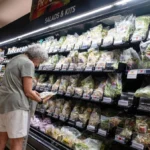











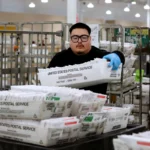



























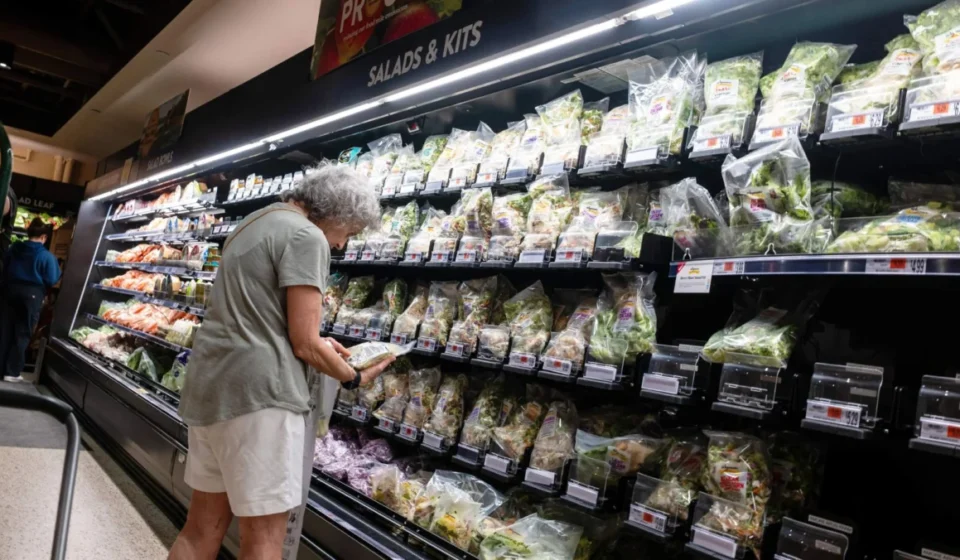

The dinner table, once a sanctuary from the volatility of national politics, has become the latest arena for a heated, high-stakes ideological battle. As the United States approaches the midterm elections, the safety of the nation’s food supply has transcended consumer advocacy to become a potent political weapon, with Democrats and the Trump administration locked in a war of rhetoric over the integrity of what Americans eat.
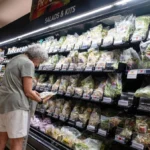
This "food fight" was ignited by a summer of health crises. A massive, record-breaking outbreak of cyclosporiasis—a parasitic infection—sent shockwaves through the country, sickening nearly 20,000 people and forcing major restaurant chains like Chipotle and Taco Bell to pull staple items like lettuce and jalapeños from their menus. Coupled with the recall of tens of thousands of pounds of imported meat, these events have eroded public confidence, leaving voters to wonder if their next meal might carry a hidden, life-altering cost.
The Chronology of a Public Health Crisis
The severity of the current situation is rooted in a spring and summer marked by persistent warnings from the Centers for Disease Control and Prevention (CDC). From May through August, the country grappled with what is now officially the largest recorded outbreak of cyclospora in history. To put the scale into perspective, while the same period in 2025 saw roughly 1,180 laboratory-confirmed cases, 2026 recorded nearly 20,000.
As symptoms—often characterized by gastrointestinal distress—dominated late-night talk show monologues and social media discourse, the economic impact began to bleed into the agricultural sector. Farmers were forced to plow fields of perfectly good produce under as consumer demand for fresh greens plummeted, creating a ripple effect that hit the American pocketbook just as inflation remained a primary concern for the electorate.
While food recalls occur annually, the confluence of high-profile restaurant involvement and the sheer volume of illnesses elevated this year’s crisis to a level that captured the attention of the national consciousness. "It’s thousands of people," noted Teresa Murray, consumer watchdog director at the U.S. Public Interest Research Group (PIRG). "It makes it more real."
Supporting Data: Parsing the Reality of Risk
Despite the political furor, the statistical landscape of food recalls is complex. According to PIRG, there have been approximately 200 food recalls so far in 2026, a figure broadly consistent with historical trends. However, the type of recalls tells a more concerning story. Data from Trace One indicates a 21% increase in total recalls between 2021 and 2025, with a disproportionate rise in "Class I" recalls—those involving products that pose a significant risk of serious illness or death.
The disconnect between official government narratives and consumer sentiment is widening. A July survey by Quinnipiac University revealed that a majority of registered voters lack confidence in government oversight of food safety. This distrust is echoed by a GS1 US poll, where 94% of U.S. adults expressed concern regarding the frequency of recalls. Furthermore, data released in September by the University of Illinois and Purdue University showed that consumer confidence in the safety of the U.S. food system dropped to 30% in August, down from 40% just ten months prior.
Critics, including former FDA officials, argue that the government’s own messaging is obfuscating the issue. When the FDA recently claimed on social media that 2026 recalls are at their lowest levels in a decade, independent analysts pointed out that the agency’s data was conflating food recalls with those of medical devices and pharmaceuticals. Susan Mayne, the former director of the FDA’s Center for Food Safety and Applied Nutrition, publicly challenged the assertion, calling the HHS data "incorrect" and misleading.
The Political Fracas: Democrats vs. The Trump Administration
Democrats have seized upon these health concerns as a centerpiece of their midterm messaging. High-ranking party members, including Sen. Elizabeth Warren (D-Mass.), have framed the outbreaks as a direct consequence of the Trump administration’s budgetary priorities. Warren, who has launched an inquiry into the government’s response to the cyclospora outbreak, characterized the situation as a "failed response" fueled by corruption and political influence.
The Democratic National Committee has actively used social media to highlight recalled food items, specifically targeting Health and Human Services (HHS) Secretary Robert F. Kennedy Jr., calling for his resignation and describing his leadership as a "disaster."
Conversely, the Trump administration has dismissed these criticisms as "scaremongering." HHS senior adviser Calley Means has countered that the administration is successfully identifying and neutralizing threats, suggesting that Democratic attacks are merely disingenuous attempts to undermine a functional regulatory system. The FDA, in a rare public defense of its recent performance, urged the public on social media not to "believe the fake news," maintaining that the government’s response to foodborne illness has been both rapid and effective.
Implications: Regulatory Rollbacks and Public Safety
The current political tension is not merely rhetorical; it is tied to tangible changes in regulatory policy. The administration’s decision to withdraw a Biden-era rule intended to curb salmonella in poultry, along with the delay of a critical traceability mandate—which would have allowed for the rapid identification and removal of contaminated foods from supply chains—has alarmed food safety advocates.
Moreover, the administration’s focus on increasing beef imports from countries like Brazil and Argentina, despite warnings regarding their food safety compliance, has raised eyebrows. Critics point to the European Union’s ban on Brazilian beef as a cautionary tale that the U.S. seems to be ignoring in favor of trade-heavy policies.
"There’s a level of hypocrisy," says Sarah Sorscher of the Center for Science in the Public Interest. "They promise to make our food safer while eviscerating the very agencies and programs that detect and prevent these outbreaks."
The administration, however, maintains that its response remains robust. HHS spokesperson Grace Davis Jamison emphasized that FDA and CDC teams dedicated to outbreak investigation remain fully staffed and operational. According to the administration, the recent policy delays were simply a response to industry feedback regarding compliance timelines, not a retreat from safety standards.
The Future of the American Diet
The long-term implications of this politicized environment extend beyond the ballot box. If the public remains wary of fresh produce and government-regulated meat, the public health consequences could be severe. As Sandra Eskin of Stop Foodborne Illness noted, "If you want people to eat real food, fresh fruits and vegetables, they have to be safe."
The current environment, characterized by a mix of genuine public health crises and intense political opportunism, has left consumers in a state of hyper-vigilance. While epidemiologists suggest that the overall trend of fewer people becoming ill per outbreak—thanks to better detection—is a positive sign, the scale of the 2026 cyclospora crisis has fundamentally altered the public’s perception.
As the midterm elections approach, the debate over food safety will likely continue to simmer. For voters, the question is no longer just about the price of groceries, but about the reliability of the system that brings them to the table. Whether this leads to a shift in federal oversight or simply reinforces the partisan divide remains to be seen, but one thing is clear: the safety of the American food supply has become a litmus test for the government’s ability to protect its citizens in their most basic daily activity.