


















































A Symphony of Light and Existential Dread: Minneapolis Arts Week Unites Modernist Icons

This week, the cultural heartbeat of Minneapolis finds itself rhythmically tethered to the 20th century, as two of the city’s most prestigious institutions—the Minnesota Orchestra and the Guthrie Theater—present bold, contemporary reinterpretations of seminal modernist works. Through a convergence of high-tech digital art and raw, existential stagecraft, both the Minnesota Orchestra’s "Firebird" and the Guthrie’s "Waiting for Godot" are forcing audiences to confront how classic narratives resonate in an increasingly complex, digitized, and politically polarized landscape.
Main Facts: A Convergence of Innovation
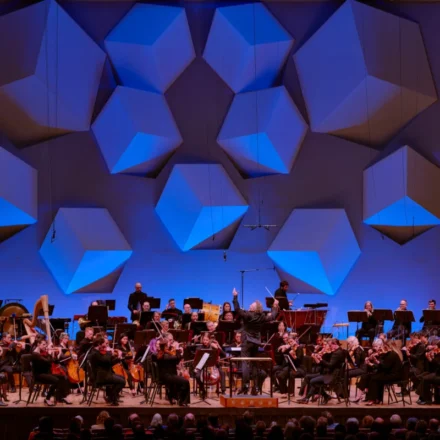
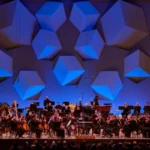
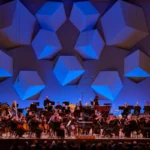
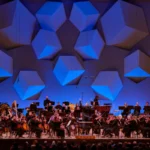
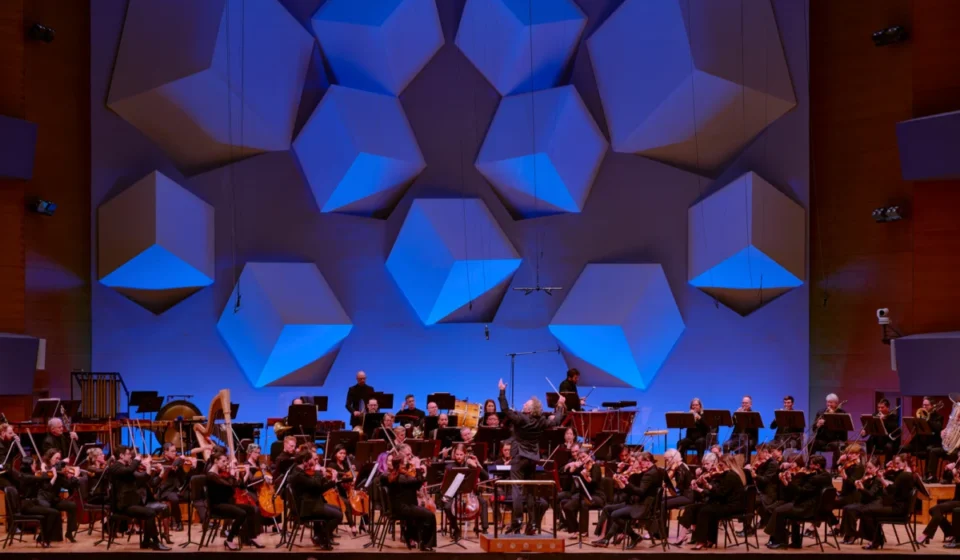
At Orchestra Hall, the Minnesota Orchestra is launching its ambitious multi-year "Sound Unbound" series. This initiative seeks to dismantle the traditional, static concert-hall experience by integrating immersive visual collaborations. For the season opener, BAFTA-winning designer Tal Rosner has transformed the hall’s iconic, cube-adorned back wall and ceiling into a massive, reactive canvas. Using advanced video mapping, Rosner is choreographing a visual narrative that mirrors Igor Stravinsky’s 1910 masterpiece, "The Firebird."
Simultaneously, across downtown Minneapolis, the Guthrie Theater is staging a high-profile production of Samuel Beckett’s 1953 existential masterpiece, "Waiting for Godot." Directed by the Guthrie’s artistic director, Joseph Haj, the production leans into the play’s inherent minimalism, casting a sharp, contemporary light on themes of isolation, power, and the endurance of hope in the face of systemic collapse.
Chronology: The Evolution of Modernism
To understand the weight of these performances, one must look at the historical trajectory of the pieces themselves.
Stravinsky’s "The Firebird" was born out of the fertile, avant-garde environment of Sergei Diaghilev’s Ballets Russes in Paris. At the time, the work was a revolutionary bridge between traditional Russian folklore—tales of Prince Ivan, the sorcerer Koschei, and the magical Firebird—and the impending explosion of modernism. By 1913, that modernism had arrived in full, violent force with the premiere of Stravinsky’s "The Rite of Spring," a performance so jarring it famously incited a near-riot in the audience.
Decades later, in the aftermath of the horrors of World War II and the fight against mid-century fascism, Samuel Beckett penned "Waiting for Godot." It was a play that stripped the stage of everything extraneous, leaving only two men, a tree, and the agonizing wait for a salvation that never arrives.
Today, these works are being revisited not as museum pieces, but as living dialogue. Tal Rosner’s digital interpretation of "The Firebird" acknowledges the history of the music while utilizing 21st-century video mapping to ensure the story feels immediate. Similarly, Joseph Haj’s "Godot" at the Guthrie arrives during a period described by many critics as a resurgence of "end times fascism," rendering Beckett’s bleak, circular dialogue terrifyingly pertinent.
Supporting Data and Creative Methodology
The Visual Architecture of "The Firebird"
Tal Rosner’s approach to the Minnesota Orchestra’s stage is one of mathematical precision. The hallmark of the hall—the acoustic cubes lining the walls and ceiling—served as both a challenge and a muse for the designer.
"Almost every design decision I made is rooted in the fact that the cubes are the projection surface," Rosner explains. By treating the architecture as a three-dimensional pixel array, he creates a visual experience that is site-specific; it is a performance that, by definition, cannot be replicated in any other venue.
Rosner, whose background includes communication design and a youthful dream of working for MTV, has evolved into a collaborator who prioritizes the ensemble over the individual. "It’s not just like, ‘Look at me! Look at me!’ Now it’s a much more holistic approach," he says of his work with the orchestra’s lighting crew. His imagery is metaphorical rather than literal—golden ribbons serve as the princesses, and rhythmic pulses mirror the tension of the folklore narrative. It is a synthesis of sound and light that aims to communicate the "rhythms and colors" of the score to a modern audience, regardless of their prior familiarity with the ballet.
The Minimalism of the Guthrie’s "Godot"
If Rosner’s work is an explosion of color and technology, the Guthrie’s "Godot" is a study in silence and human frailty. Samuel Beckett was notoriously protective of his scripts, embedding specific pauses and stage directions into the text. Director Joseph Haj has honored this structural rigor while pushing the performances toward a visceral, present-day relevance.
The cast—featuring David Strathairn as Vladimir and Jimmy Kieffer as Estragon—navigates the play’s brutal minimalism with a magnetic chemistry. Despite a minor slip in dialogue during the opening night—a moment that highlighted just how fragile and precise Beckett’s rhythm truly is—the production finds its power in the second act. The addition of Darron L. West’s immersive sound design creates a sensory environment that amplifies the existential dread, forcing the audience to sit with the discomfort of two men "desperately grasping at their last strands of hope."
Official Perspectives: The Philosophy of Collaboration
Both the Orchestra and the Guthrie have emphasized that these performances are not intended as mere revivals.
For the Minnesota Orchestra, "Sound Unbound" represents a strategic pivot toward broader community engagement. Music Director Thomas Søndergård, who conducts the "Firebird" program (alongside George Walker’s "Icarus in Orbit" and Prokofiev’s Concerto No. 2), views these collaborations as essential to keeping the symphonic tradition vibrant. By inviting artists like Rosner to occupy the "blank slate" of the concert stage, the orchestra is signaling that the concert hall is an evolving environment.
At the Guthrie, Joseph Haj’s vision for "Godot" centers on the question of how to keep hope alive when the world feels bleak. By casting a modern eye on the play’s origins in the French Resistance, the production invites viewers to reflect on their own roles in a polarized society. The performance serves as a reminder that the "disquieting stir" caused by 20th-century innovations is not a relic of the past, but a necessary provocation for the present.
Implications: The Future of Cultural Programming
The dual success of these performances suggests a significant shift in how arts organizations approach "the classics." Audiences are increasingly seeking experiences that bridge the gap between historical intellectualism and contemporary visual culture.
- Interdisciplinary Integration: The success of the Minnesota Orchestra’s projection mapping proves that technology is no longer a distraction from classical music, but an enhancer. When integrated with respect for the score, visual art can demystify complex compositions for younger or uninitiated audiences.
- The Urgency of Existentialism: The Guthrie’s "Godot" proves that classic plays are most effective when they reflect the anxieties of the current moment. By leaning into the "end times" atmosphere of the text, the theater has transformed an absurdist classic into a relevant political statement.
- The Role of the Institution: By acting as a canvas for artists like Rosner or a platform for directors like Haj, Minneapolis’ major institutions are evolving from passive performance venues into active curators of modern culture.
As the Minnesota Orchestra concludes its weekend performances of "The Firebird" and the Guthrie continues its run of "Waiting for Godot" through October 11, the city remains a focal point for this artistic dialogue. These are not merely performances; they are mirrors held up to a world in transition, reminding us that whether through the flickers of a projected ribbon or the silence of a Beckett pause, the arts remain our most potent tool for navigating the complexities of the human condition.
The convergence of these two high-caliber productions reinforces the idea that innovation in the arts does not require the destruction of the past, but rather a courageous, intelligent, and often technologically bold conversation with it.