




















































A Symphony of Light and Existential Dread: Minneapolis’ Weekend of 20th-Century Innovation

This week, Minneapolis serves as a high-stakes laboratory for 20th-century masterworks, as two of the city’s premier cultural institutions—the Minnesota Orchestra and the Guthrie Theater—revisit iconic compositions through the lens of modern, high-tech, and socially resonant interpretation.
At Orchestra Hall, the "Sound Unbound" series kicks off with a daring visual re-imagining of Igor Stravinsky’s The Firebird, while across town, the Guthrie Theater presents a stark, urgent staging of Samuel Beckett’s Waiting for Godot. Together, these productions underscore the enduring power of modernist art to challenge, comfort, and provoke audiences in an era defined by technological saturation and political volatility.
The Canvas of Cubes: Reimagining The Firebird
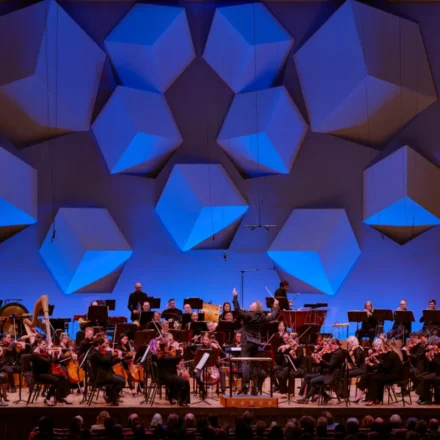
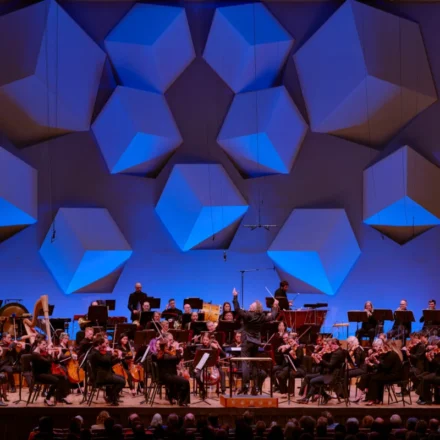
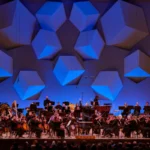
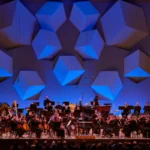
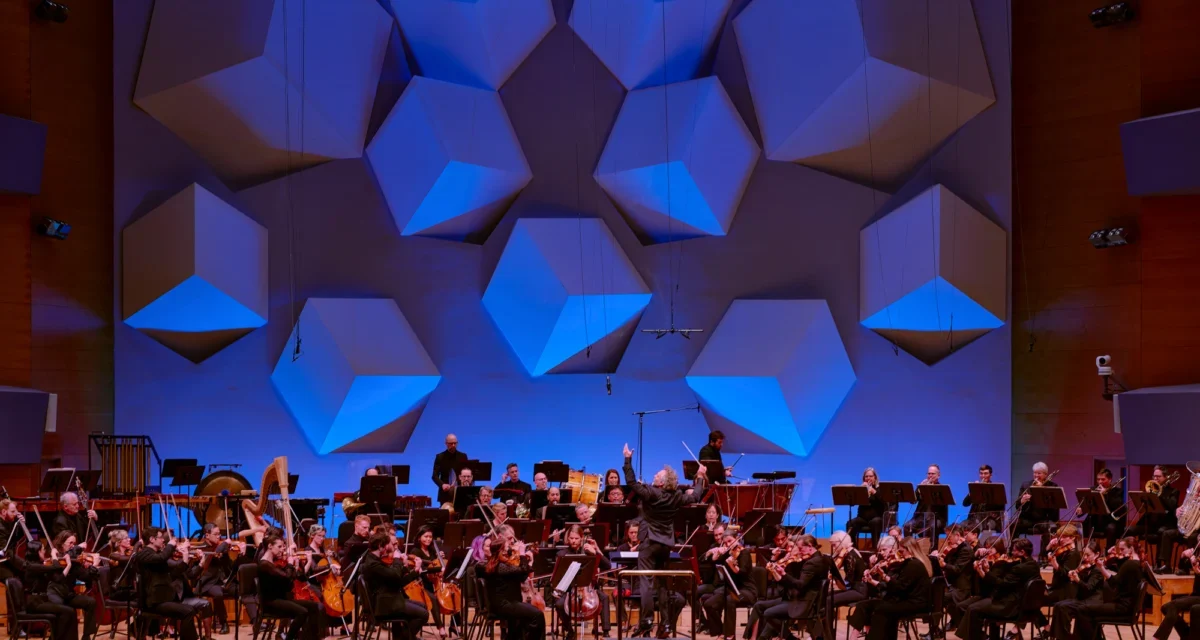
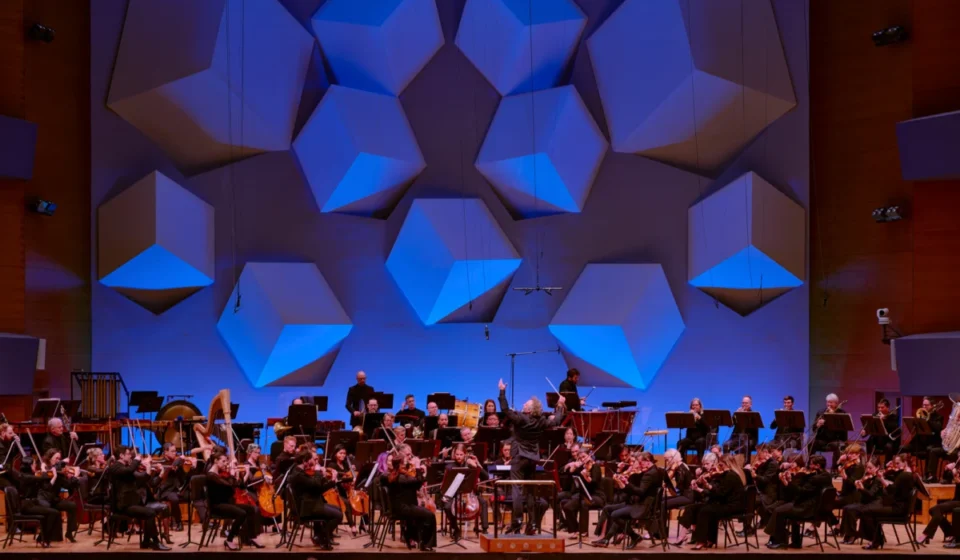
The Minnesota Orchestra’s season opener is defined by a bold departure from traditional concert presentation. The iconic, sound-diffusing cubes that adorn the back wall and ceiling of Orchestra Hall are being transformed into a high-tech, interactive canvas. BAFTA-winning London-based designer Tal Rosner has been tapped to curate a visual landscape that acts as a kinetic companion to Stravinsky’s legendary 1910 score.
The Technological Leap: Video Mapping as Narrative
Rosner is utilizing "video mapping," a sophisticated projection technique that aligns digital imagery with the physical geometry of an architectural space. By treating the individual cubes as distinct, modular projection surfaces, Rosner has crafted a visual narrative that mirrors the folklore of Prince Ivan, the malevolent sorcerer Koschei, and the ethereal Firebird.
"Almost every design decision I made is rooted in the fact that the cubes are the projection surface," Rosner explained. "All the design elements are in constant consideration of the layout of the cubes, so the mapping is very, very, very accurate. It’s a piece that is going to be impossible to replicate anywhere else."
A Chronology of Modernism
Stravinsky’s The Firebird is a foundational text of musical modernism. Commissioned by Sergei Diaghilev for the Ballets Russes, the work brought the folk-infused, rhythmically adventurous style of Russian modernism to the European stage. It served as a vital bridge toward the 1913 premiere of The Rite of Spring, a performance so radical it famously incited a public outcry.
By layering contemporary digital artistry over this century-old score, the Minnesota Orchestra is contextualizing the "scandalous" nature of Stravinsky’s original vision, reminding modern audiences that the piece was once the vanguard of artistic rebellion.
Supporting Data: The Collaborative Process
The production is the result of deep interdisciplinary cooperation. Rosner, whose background spans communication design and a youthful ambition to work for MTV, has shifted his focus toward the grander canvas of the orchestra.
"If you work with an orchestral piece, the scope of what you can do and the canvas to do it on is much bigger," he noted.
Key to the success of this project is a shift in artistic philosophy. Rosner emphasizes that his collaboration with the orchestra’s in-house lighting crew is built on a rejection of individual ego. "As the years progressed, I’m much more aware of everyone else on the team," he said. "It’s not just like, ‘Look at me! Look at me!’ Now it’s a much more holistic approach."
This holistic strategy allows for the visual cues to be "suggestive and metaphorical." For example, the 12 princesses in the narrative are represented not by literal depictions, but by flowing golden ribbons—a choice that forces the audience to engage with the music’s emotional rhythm rather than merely watching a literal reenactment.
Official Perspectives: Striving for Resonance
Music Director Thomas Søndergård leads the orchestra in this performance, which also features George Walker’s 2004 composition Icarus in Orbit and Sergei Prokofiev’s Concerto No. 2 in G minor for Piano and Orchestra, featuring soloist Vadym Kholodenko.
The integration of visual art into the classical concert experience is a pillar of the "Sound Unbound" series. By inviting visual artists to treat the symphony as a collaborative partner rather than a background element, the Minnesota Orchestra is attempting to redefine the boundaries of the concert hall. For Rosner, the goal is simple: to make the music feel communicative to both those who know the original choreography and those experiencing the piece for the first time.
Existential Echoes at the Guthrie Theater
While the Minnesota Orchestra experiments with light and color, the Guthrie Theater is engaging with the darker, stripped-back reality of Samuel Beckett’s Waiting for Godot. Directed by the Guthrie’s artistic director, Joseph Haj, this production arrives at a moment when the play’s themes of stagnation, waiting, and existential dread seem particularly pertinent.
The Weight of Silence
Beckett famously left little room for directorial license in his scripts, meticulously documenting every pause and silence. Haj, however, has managed to breathe new life into the minimalist text. The production features David Strathairn as Vladimir and Jimmy Kieffer as Estragon—a pairing that finds both the comedy and the crushing weight of their characters’ perpetual waiting.
Implications: The Politics of Despair
The urgency of this production is grounded in history. Beckett wrote Godot while serving in the French Resistance against fascism. Today, as contemporary discourse grapples with what critics have labeled "end times fascism," the image of two men waiting for a salvation that never arrives resonates with a new, sharper edge.
The play forces a difficult question: How does one maintain hope when the world appears to be collapsing? The production uses Darron L. West’s immersive sound design to heighten this sense of impending, unseen menace, ensuring that the audience feels the "existential plight" of the characters in their bones.
Comparative Analysis: The Modernist Legacy
The proximity of these two productions—the visual splendor of The Firebird and the stark, bleak brilliance of Waiting for Godot—provides a comprehensive view of the 20th-century artistic legacy.
- Technological Integration: While the Orchestra uses technology to expand the sensory experience, the Guthrie uses minimalist staging to force the audience to confront the absence of distraction.
- Narrative Structure: Both works rely on repetition and rhythmic precision. Whether it is Stravinsky’s driving musical motifs or Beckett’s precise, circular dialogue, the effectiveness of both productions hinges on the performers’ ability to master the internal logic of the work.
- Cultural Context: Both institutions are positioning these works not as museum pieces, but as active, living conversations about the state of our world.
Logistics and Attendance
For those wishing to witness these artistic explorations, both productions run concurrently through the end of the month.
- Minnesota Orchestra: The Firebird will be performed on Friday, Sept. 25, at 8 p.m. and Saturday, Sept. 26, at 7 p.m. at Orchestra Hall. Tickets range from $64 to $159.
- Guthrie Theater: Waiting for Godot runs through Oct. 11, with multiple showtimes throughout the week. Tickets range from $25 to $91.
Final Thoughts: A Disquieting Stir
As these productions take to the stage, Minneapolis establishes itself as a hub for high-level artistic risk-taking. Whether through the digital projection of golden ribbons on the walls of Orchestra Hall or the palpable, silence-filled tension on the Guthrie stage, the message is clear: the innovations of the past century have lost none of their capacity to stir the soul. In a world of fleeting digital trends, the depth and rigor of Stravinsky and Beckett remain essential touchstones for a society seeking meaning in the midst of uncertainty.