












































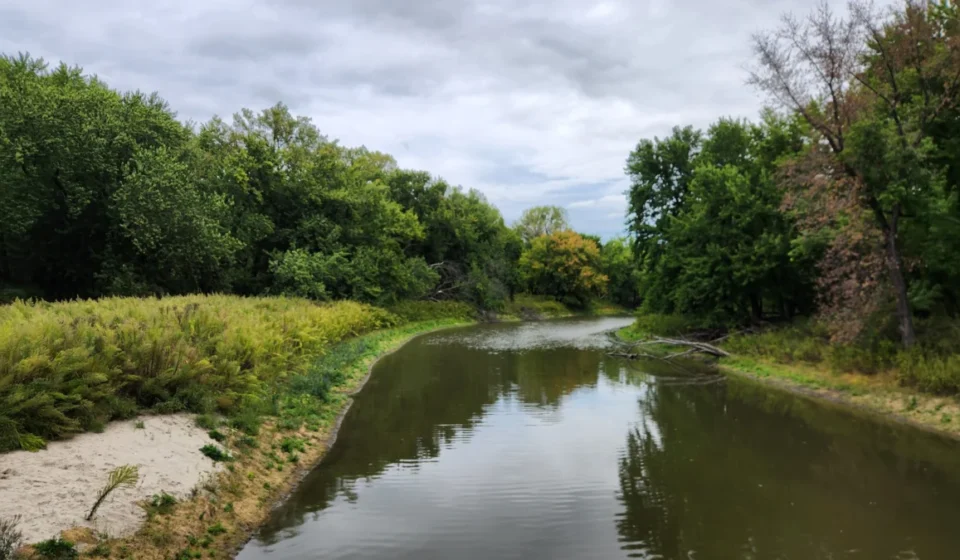
Guardian of the Watershed: How a Grassroots Coalition is Challenging the Status Quo on the Minnesota River

In 1992, Minnesota Governor Arne Carlson stood before the public and articulated an ambitious, moral imperative: to restore the Minnesota River to a state of health. At that time, the river was already suffering from decades of degradation, yet the path forward seemed paved with optimism. To put the timeline into perspective, Tom Crawford, a central figure in modern environmental advocacy, had not yet been born. David Minge, then a newly minted congressman representing the expansive, agricultural landscape of western Minnesota, was just beginning his career in Washington.
Three decades later, the river remains one of the most polluted in the United States, yet the fight for its restoration has evolved from political rhetoric into a sophisticated, granular, and highly technical grassroots operation. Crawford and Minge now find themselves as unlikely allies within the Minnesota River Collaborative (MRC), a powerhouse of volunteer expertise that has become a persistent, data-driven thorn in the side of status-quo environmental management.
The Mechanics of a Silent Crisis
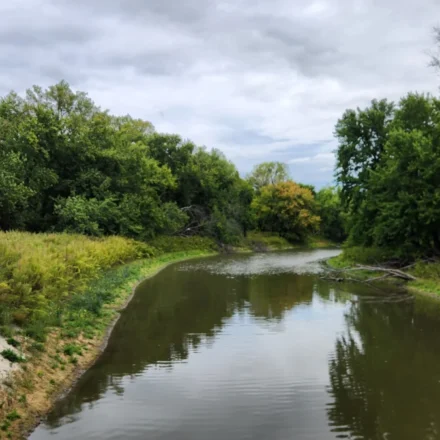
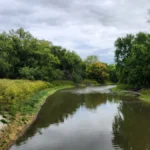
The Minnesota River is a classic study in the consequences of altered hydrology. While the public often envisions pollution as industrial pipes spewing sludge, the crisis in the Minnesota River basin is fundamentally a story of land management and the "fire hose" effect.
Pre-settlement, the river’s watershed functioned like a sponge. Wetlands, prairie grasses, and meandering stream channels allowed water to infiltrate the soil, recharging aquifers and releasing water into the river system gradually. Today, the landscape is dominated by intensive agriculture. A vast, intricate, and largely unregulated network of subsurface drain tiles—estimated to stretch over 100,000 miles—acts as a high-speed conduit, dumping rainfall directly into ditches and streams.
This artificial acceleration creates massive surges in water volume and velocity during rain events. The result is a river that acts like a pressure washer, scouring its own banks, stripping away topsoil, and carrying staggering amounts of sediment and fertilizer runoff toward the Mississippi River. This cocktail of nitrogen and phosphorus is the primary engine behind the "dead zone" in the Gulf of Mexico, where oxygen-starved waters cannot support aquatic life.
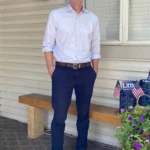
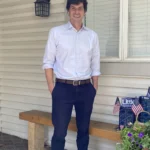
"The more water that flows into the river, the more erosive the river becomes," explains 31-year-old Tom Crawford, who represents the Izaak Walton League and Friends of the Minnesota Valley. "Those soft, sandy banks of the Minnesota River get chewed up and sent down into the Gulf."
A Chronicle of Advocacy: From Policy to Persistence
The MRC is not a traditional protest group. It is a coalition of roughly 50 volunteers—engineers, hydrologists, retired lawyers, and former state agency officials—who bring a level of professional rigor to their advocacy that most government agencies struggle to match.
The collaborative’s work is methodical. They hold weekly virtual meetings to dissect specific drainage projects, track engineering reports, and monitor potential environmental impacts. They have moved beyond the "best management practices" of the past, such as simple ditch buffers or minor grassed waterways. Instead, the MRC operates at a "high level," scrutinizing the cumulative impact of drainage projects on the entire basin.
Their work has achieved what few thought possible: they have forced the Minnesota Department of Natural Resources (DNR) and other agencies to pay attention. "We’ve moved the needle within the DNR," Crawford notes.
The group’s influence is most visible in their legal and administrative filings. By inserting themselves into the bureaucratic process—often as an amicus party in court cases—they force a public accounting of projects that might otherwise sail through with minimal oversight. For example, in a recent case involving Limbo Creek in Renville County, the coalition’s intervention helped highlight the risks of drainage expansion. In another instance, their advocacy helped Lyon County secure a grant for a critical water storage project, proving that when drainage is managed with foresight, the environmental toll can be mitigated.
Data as a Weapon: The Power of Accountability
Perhaps the most significant tool in the MRC’s arsenal is a meticulously maintained spreadsheet curated by Crawford. It tracks the status of 17 major drainage projects across 11 counties, recording every engineering report, project timeline, and agency comment.

This level of transparency is radical in a state where drainage governance is notoriously fragmented. "There’s no central government or governance around drainage," Crawford explains. "We don’t even have a sense of its scope. There’s no requirement that these people [landowners installing tile] are to notify anybody."
By filling this information gap, the MRC allows the public and regulators to see the "big picture" of how individual projects contribute to the larger ecological collapse of the watershed. Former University of Minnesota professor Steven Taff, a key member of the collaborative, uses this data to conduct economic audits, often demonstrating that the projected benefits of certain drainage projects are fundamentally flawed or based on outdated, skewed metrics.
Legal and Official Friction
The path to restoration is not without significant friction, particularly regarding the question of regulatory authority. A major point of contention currently moving through the court system is whether agricultural drainage outlets should be classified as "point sources" of pollution under the Clean Water Act.
The Minnesota Center for Environmental Advocacy (MCEA) has led the charge, arguing that the Minnesota Pollution Control Agency (MPCA) has the authority to regulate these outlets. In a significant setback, a Ramsey County District judge ruled in August that the MPCA lacks this specific authority. The MCEA is currently appealing that decision.
David Minge, now 84, remains a key voice in this struggle. He points out that the legal battle is not merely about jurisdiction, but about the fundamental duty of the state to protect its natural resources. "I expect that’s going to end up in court by the end of the year," Minge says, highlighting the inevitability of the conflict as environmental groups continue to pressure the state to modernize its approach to water governance.
Implications for the Future: The Push for a River Commission
As the MRC looks toward the future, the conversation is shifting from individual projects to systemic reform. The collaborative is actively pushing for the creation of a "Minnesota River Commission," a body that would centralize authority and provide the long-term, landscape-scale planning that is currently nonexistent.
While a legislative push in the previous session was stalled, organizers are already preparing for the post-election landscape. "After the elections, we will begin securing potential bill authors on both the House and Senate sides," says Scott Sparlin, representing the Coalition for a Clean Minnesota River.
However, the road ahead is fraught with political peril. Recent efforts to convene a water quality task force were met with what some participants described as "stalling tactics" from a minority of members who sought to avoid discussing the more difficult realities of industrial agriculture and mining. The failure to extend the mandate of that task force has left some advocates feeling "frustrated and disheartened," yet the MRC remains undeterred.
Conclusion: A New Standard of Stewardship
The Minnesota River remains a casualty of an era where economic efficiency was prioritized over ecological integrity. Yet, in the persistence of the MRC, there is a glimmer of a new paradigm. By combining the historical wisdom of elder statesmen like David Minge with the technological and analytical energy of the younger generation like Tom Crawford, the coalition has created a model of citizen oversight that is as resilient as the river they seek to save.
The challenges—climate change, unregulated tile drainage, and a fragmented regulatory landscape—are monumental. But for the 50 members of the Minnesota River Collaborative, the mission is clear: to ensure that the "Land of 10,000 Lakes" finally takes responsibility for the lifeblood that connects them. The river, long neglected, is finally finding its voice, and in the halls of the DNR and the courtrooms of the Twin Cities, that voice is becoming impossible to ignore.