

























































Minnesota’s 2nd District: A High-Stakes Democratic Primary in the Shadow of Angie Craig’s Legacy

WASHINGTON D.C. – Minnesota’s 2nd Congressional District is bracing for a fiercely contested Democratic primary on August 11, as three hopefuls vie to succeed Representative Angie Craig. Craig, who has successfully held the historically "purple" district for Democrats for four terms, is now embarking on a new political chapter, challenging for retiring Senator Tina Smith’s seat. While Craig has declared her neutrality in the House race, her formidable legacy and recent political maneuvers cast a long, complex shadow over the contest, shaping strategies and voter perceptions.
The race to represent CD-2 – a geographically diverse district encompassing the southern Twin Cities suburbs and expansive rural farm areas – is more than just a battle for a congressional seat; it is a critical test of the Democratic Party’s ideological direction in a crucial swing district. Voters, signaling a broader desire for change, are scrutinizing the candidates’ platforms, their electability, and their alignment with the shifting political landscape.
Craig’s Enduring Influence and the Challenge of Succession
Angie Craig’s tenure in the 2nd Congressional District has been defined by her ability to bridge partisan divides. She successfully wrested control of the seat from Republican hands in 2018 and, through a consistently moderate stance, broadened her appeal across a diverse electorate, consolidating Democratic power in a district long considered a bellwether. Her pragmatic approach, often emphasizing local issues and economic development, allowed her to secure victories even in challenging cycles. This track record, however, presents a nuanced challenge for the three Democrats seeking to replace her: Matt Little, a former state senator and mayor of Lakeville; state Senator Matt Klein; and state Representative Kaela Berg.
Craig’s decision to remain neutral in the primary is ostensibly aimed at letting the voters decide, a common practice for departing incumbents. Yet, her influence is undeniable. Her moderate brand, which proved successful in the general election, now clashes with the rising tide of progressive activism within the Democratic-Farmer-Labor (DFL) Party. This internal dynamic forces each candidate to carefully calibrate their relationship with Craig’s legacy, balancing the need for broad appeal with the demands of an energized progressive base.
The Contenders: Ideologies and Strategies
The three DFL candidates represent distinct ideological lanes, each hoping their strategy will resonate with the district’s diverse primary electorate.
Matt Little: The Endorsed Progressive
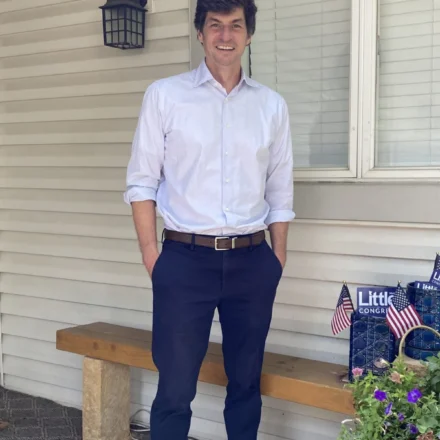
Matt Little, a former state senator and Lakeville mayor, stands as the most progressive candidate in the field. He has secured the coveted DFL Party endorsement, a significant organizational advantage that provides campaign infrastructure, volunteer support, and a unified message from the party apparatus. Despite this, Little has explicitly stated he is not seeking Craig’s personal endorsement. “It’s not something we’ve sought because she’s made it very clear she will not endorse,” Little said, acknowledging Craig’s declared neutrality.

Little’s progressive platform aligns him with the newer wave of Democratic activism that has gained traction in recent years, particularly in the wake of significant social and political shifts. His campaign emphasizes issues such as climate action, healthcare reform, and economic equity, aiming to mobilize the district’s left-leaning voters. The challenge for Little, as political observers note, will be to maintain this progressive enthusiasm while demonstrating an ability to appeal to the broader moderate electorate that has historically defined CD-2.
Matt Klein: The Moderate Standard-Bearer
State Senator Matt Klein, a physician at the Mayo Clinic in Rochester, positions himself squarely within Craig’s moderate tradition. Klein openly expresses his desire for Craig’s endorsement, stating, “I would be honored to have it.” He sees himself as a natural successor, echoing Craig’s emphasis on pragmatism and cross-partisan cooperation. Klein believes that his moderate stance is not merely a preference but a strategic necessity for the 2nd District.
"This is the last swing district in Minnesota," Klein asserted, highlighting the perpetual electoral tightrope walk. "To hold it, you have to bridge a [partisan] divide." His campaign focuses on responsible governance, accessible healthcare, and economic stability, aiming to attract not only moderate Democrats but also unaffiliated voters and disaffected moderate Republicans who have previously supported Craig. Klein’s strategy relies on the hope that the two progressive candidates, Little and Berg, will split the left-leaning vote, thereby clearing a path for his nomination.
Kaela Berg: The Progressive Woman’s Voice
State Representative Kaela Berg, who represents Burnsville in the Legislature and works as a flight attendant, is the third candidate in the DFL primary. Like Little, Berg identifies as a progressive and has actively sought Craig’s endorsement, eager to highlight their shared work and close relationship, including successful collaborations on local infrastructure projects.
Berg also champions a significant narrative for her campaign: gender. She is the only woman in the race and a prominent member of the "Blue Collar Brigade," a national group of five House candidates with strong ties to organized labor who have launched a joint fundraising effort. "I’m the only woman in the Blue Collar Brigade, and the only woman in the race," Berg stated. "That matters right now. I love an ally and a great dude, but women’s voices are needed right now.” This focus resonates particularly strongly in a district that has been represented by a woman for four terms. Hamline University political science professor David Schultz observes that "because of Craig, many voters in the 2nd District view it now as a female seat," a perception Berg aims to leverage. Her candidacy has also earned her the backing of Emily’s List, a powerful organization that supports pro-choice female candidates, providing crucial financial and strategic support, including producing campaign advertisements.
The Laken Riley Act: A Progressive Litmus Test
A key factor complicating Craig’s influence and impacting the progressive wing of the DFL is her controversial vote for the Laken Riley Act. This Republican-sponsored legislation allows the Department of Homeland Security to detain and deport noncitizens charged with – not just arrested for or convicted of – offenses such as burglary, shoplifting, or assault on a law enforcement officer. While Craig has since expressed regret for her vote, stating she hopes her "risky new strategy will stop Flanagan’s momentum" in her Senate primary, the decision alienated many progressive Democrats.

Professor Schultz points out the direct impact on the House primary: "Little is trying to run as the candidate furthest to the left. And he’s concerned that because of (Craig’s) support for the Laken Riley Act, progressives may not support him if he has her endorsement." This sentiment could push newly energized DFLers toward Berg, the other progressive in the race, who has a cleaner slate on this particular issue. The Laken Riley Act underscores the ideological chasm that has widened within the Democratic Party, forcing candidates to clearly define their stances on immigration and criminal justice.
Fundraising Dynamics and Campaign Resources
Campaign finance is often a strong indicator of a candidate’s viability and reach. In a district known for expensive races, the current fundraising figures reveal the challenges facing the candidates. Craig herself was a prolific fundraiser, amassing approximately $8.3 million in her last reelection bid in 2024, which she won by a significant nearly 14-percentage-point margin over Republican Joe Teirab. That level of fundraising, however, is not being replicated in the current primary.
According to the latest Federal Election Committee (FEC) filings as of June 30:
- Matt Little has raised nearly $900,000, including a $155,000 personal loan to his campaign.
- Matt Klein leads the DFL field, having raised more than $1 million.
- Kaela Berg has raised $355,000.
For comparison, the presumptive Republican nominee, state Senator Eric Pratt, has raised about $462,000. Klein’s fundraising advantage could be crucial in a tight primary, allowing him greater reach in advertising and grassroots organizing. Berg’s lower fundraising, despite Emily’s List support, suggests a greater reliance on grassroots enthusiasm and the "woman’s seat" narrative. Little, with the DFL endorsement, benefits from party resources that may not be fully reflected in his individual FEC filings.
Expert Analysis: Navigating Endorsements and Demographics
Political scientists offer various perspectives on the complexities of this primary. University of Minnesota political science professor Larry Jacobs notes that an incumbent’s decision to avoid endorsing a successor is "not unusual," reflecting a "sense of ‘letting the voters decide.’" This allows Craig to avoid alienating any faction of her party while she focuses on her own competitive Senate primary against Lt. Gov. Peggy Flanagan. Indeed, endorsing the "wrong" candidate could cost her votes in her own statewide race, as Schultz points out.
The ideological split within the DFL primary, particularly between Little and Berg, is a significant point of discussion. Klein himself acknowledges this, hoping that having two progressives on the ballot will indeed split the vote, thereby "open[ing] a path for Klein" to win the nomination, as Jacobs agrees. Klein’s track record in the state Senate, representing a suburban district, has demonstrated an ability to appeal to unaffiliated voters and even some moderate Republicans – the same formula that propelled Craig to victory. However, the post-"Operation Metro Surge" landscape has seen a surge of progressive activists in the district and across the state, adding an unpredictable element to the primary.

Schultz also highlights the delicate balance Berg faces: while she stands to benefit from the perception of CD-2 as a "female seat" due to Craig’s tenure, a direct endorsement from Craig "may alienate the progressive voters she needs now," especially given Craig’s Laken Riley Act vote. However, Schultz concludes, "But saying, ‘Let’s keep this seat in a woman’s hand’ won’t hurt her."
Looking Ahead: The General Election Challenge
Regardless of who emerges victorious from the Democratic primary on August 11, the nominee will face a formidable challenge in the general election against Republican state Senator Eric Pratt. Pratt, who lives in Prior Lake and represents a senate district covering most of Scott County, embodies the conservative wing of the district. Klein frequently reminds voters that the primary winner must pivot to the center to successfully compete against the Republican candidate. "We need a Democrat who can win every cycle," Klein stresses, questioning whether a progressive candidate can secure victory in the district’s less progressive areas.
Analysts generally agree that Democrats now hold an advantage in CD-2, which is often described as leaning Democratic. However, the extent of that lean remains fluid and subject to the national political climate, presidential election dynamics, and the specific appeal of the candidates. The winner of the DFL primary will need to not only energize their base but also effectively articulate a vision that resonates with the district’s diverse and often independent-minded voters.
The enduring characteristic of Angie Craig’s legacy, beyond her political moderation, is her reputation as a "hard worker" with "extensive relationships with people in the district," as Jacobs notes. Whoever inherits the mantle will face the monumental task of replicating that deep connection and tireless effort, along with the significant fundraising necessary to defend one of the nation’s most consistently competitive congressional districts. The August 11 primary will not only select a new Democratic standard-bearer but will also offer a clearer picture of the DFL’s ideological direction and its strategy for holding onto a crucial seat in the U.S. House of Representatives.