






















































The Silicon Prairie of Power: How Minnesota Became a Global Epicenter for Microgrid Innovation

In the suburban landscape of Bloomington, Minnesota, just northeast of the busy I-494 and Highway 100 interchange, stands a building that defies traditional corporate architecture. With its sharp angles and metallic sheen, the headquarters of Open Access Technology International (OATI) resembles a futuristic sailboat or perhaps a high-tech sentry standing at attention. While its exterior captures the eye, the true significance of the facility lies in the silence of its data center and the expertise of the electrical engineers within.
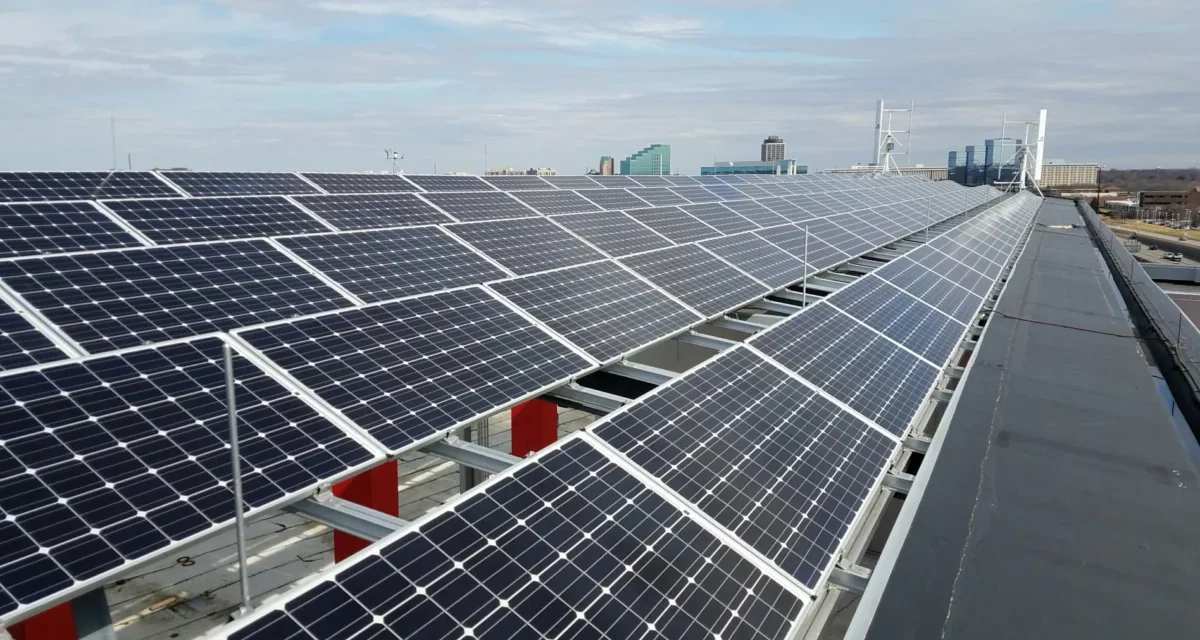
Inside, high-powered servers facilitate the movement of electricity across the majority of North America’s high-voltage transmission lines. However, OATI is no longer just managing the "macro" grid. The company is at the forefront of a burgeoning movement to decentralize power through microgrids—self-contained energy systems that can operate independently of the traditional utility provider.
Minnesota, often associated with medical technology and retail giants, has quietly transformed into a premier hub for microgrid technology, design, and manufacturing. From the modular hardware of Minneapolis-based Syncris to the academic rigor of the University of St. Thomas, the state is building a resilient energy future that promises to shield consumers from rising costs, extreme weather, and the vulnerabilities of an aging national infrastructure.
Main Facts: The Architecture of a Microgrid Powerhouse
A microgrid is essentially a localized energy system that can disconnect from the traditional centralized power grid and operate autonomously—a state known as "islanding." Minnesota’s dominance in this sector is not accidental; it is the result of a concentrated ecosystem of software developers, hardware manufacturers, and research institutions.
Key Industry Players
- OATI (Open Access Technology International): A titan in grid software, OATI provides the digital "brains" for over 150 electric cooperatives. Their proprietary "GridMind" platform synchronizes diverse energy sources—solar panels, batteries, and cogeneration plants—to ensure seamless transitions between grid-tied and islanded modes.
- Syncris: A Minneapolis startup focused on democratizing microgrid hardware. By developing modular, "stackable" inverters, Syncris aims to lower the engineering barriers that have historically made microgrids prohibitively expensive for smaller facilities.
- Microgrid Initiatives: A consultancy led by industry veteran Michael Burr, focusing on the strategic development of tribal, local, and state energy projects.
- The Center for Microgrid Research (University of St. Thomas): A nationally recognized facility providing hands-on training and advanced testing for the next generation of power engineers.
The Economic Footprint
According to the Minnesota Department of Employment and Economic Development (DEED), the state exported approximately $2.3 billion in "IT-related electrical equipment" last year. This figure underscores the state’s transition from a legacy manufacturing base to a high-tech exporter of energy intelligence.
Chronology: From Industrial Giants to Distributed Intelligence
The roots of Minnesota’s microgrid influence stretch back decades, long before "resilience" became a buzzword in the energy sector.
The Legacy Era (1970s–1990s)
The foundation was laid by multinational corporations that established a massive footprint in the Twin Cities. Honeywell, Siemens, IBM, Eaton, and Johnson Controls created a deep pool of talent specializing in power electronics and industrial controls. These companies provided the technical DNA for the specialized firms that would follow.
In the late 1980s, Minnesota became a hotbed for the "independent power" movement. Trade publications like Independent Energy magazine were founded here, documenting the early shift away from monolithic utility monopolies toward a more fragmented, competitive energy market.
The Software Revolution (1995–2015)
Founded in the mid-90s, OATI capitalized on the deregulation of the energy market. Their software became the industry standard for buying and selling large blocks of electricity across North America. As the grid grew more complex, OATI expanded into Distributed Energy Resource Management Systems (DERMS), allowing utilities to manage thousands of smaller "nodes" like home batteries and electric vehicles.
The Modern Resilience Push (2016–Present)
As climate change accelerated the frequency of extreme weather events—from California wildfires to North Carolina hurricanes—the demand for "islanding" capability surged. In Minnesota, this manifested in projects like the Red Lake Nation solar initiative (2023) and the Resilient Minneapolis Project (scheduled for 2024), which focus on using microgrids to protect vulnerable populations during prolonged outages.
Supporting Data: The Value of "Grid Edge" Stability
The move toward microgrids is driven by more than just environmental idealism; it is grounded in harsh economic and technical realities.
The Cost of Instability
For industrial and commercial users located at the "grid edge"—the remote ends of distribution lines—power quality is a multi-million dollar issue. Zach Edmond, COO of Syncris, notes that many customers suffer from "power quality" issues rather than total blackouts. Repeated voltage fluctuations can degrade sensitive machinery, shortening the lifespan of equipment from 20 years to seven. One Syncris customer reported losing hundreds of thousands of dollars annually due to these micro-disruptions, a problem that onsite microgrids effectively solve by "smoothing" the incoming current.

Export and Manufacturing Prowess
The $2.3 billion in electrical exports represents a significant portion of Minnesota’s economy. Companies like Pequot Lakes-based Hunt Technologies (now part of Landis+Gyr) led the way in advanced metering infrastructure, proving that rural Minnesota could compete on a global scale. Today, Syncris continues this tradition by manufacturing its modular inverters locally, ensuring that the economic benefits of the energy transition remain within the state.
Academic and Research Support
The University of Minnesota, in collaboration with three other Midwestern universities, is currently spearheading research to harden microgrids against cyber threats. This research is critical as the grid becomes more digitized. Simultaneously, the University of St. Thomas remains the only institution in North America offering a dedicated, hands-on microgrid training environment, ensuring a steady pipeline of talent for the local industry.
Official Responses: Perspectives from the Front Lines
Industry leaders emphasize that the shift toward microgrids represents a fundamental change in the relationship between consumers and utilities.
David Heim, OATI Vice President and Chief Strategy Officer:
"It’s cool that we are a [Twin Cities] company doing all this right here in our backyard, not out in Silicon Valley," Heim noted. He argues that the potential for microgrids is nearly limitless. "I don’t see much of an upper limit. If anything, there’s a lower limit to microgrids’ potential size due to fixed costs like trenching and wires."
Mary Brown, OATI Senior Executive VP and Chief Legal Officer:
Brown points out that as federal energy policies shift and tariffs potentially increase electricity costs, distributed resources will become essential for financial survival. She highlights that technology has advanced to the point where DERMS can "effortlessly orchestrate entire neighborhoods’ worth of cars, home batteries, and solar arrays" to reduce costs and stabilize the grid.
Michael Burr, Founder of Microgrid Initiatives:
Burr attributes Minnesota’s success to a cultural "self-reliant streak." He notes, "Minnesota’s place in the microgrid industry also has been driven by the longstanding efforts of Minnesotans to achieve greater energy sustainability, independence, and self-reliance."
Greg Mowry, Syncris Co-Founder:
Mowry, who observed energy poverty during humanitarian trips to Africa, focuses on the need for simplicity. "Our costs per unit are really low once you hit volume manufacturing," he said, comparing their modular inverters to "Lego blocks" that allow users to expand their systems without the need for expensive, custom re-engineering.
Implications: The Sovereign Future of Energy
The rise of Minnesota’s microgrid industry carries profound implications for social equity, national security, and economic policy.
Tribal Sovereignty and Economic Leverage
For tribal nations like the Red Lake and White Earth Nations, microgrids are a tool for political leverage. By generating their own power, these nations gain "a seat at the table" when negotiating with large utilities. This "energy sovereignty" allows tribes to demand concessions and ensures that critical community functions—such as schools and medical clinics—remain operational even when the external grid fails.
Urban Resilience and Equity
The "Resilient Minneapolis Project" serves as a blueprint for urban energy equity. By installing microgrids at public schools in disadvantaged neighborhoods, the city provides "resilience hubs" where residents can charge medical devices, find climate-controlled shelter, and maintain communication during disasters. This shifts the view of energy from a commodity to a vital public safety infrastructure.
A Bulwark Against Global Volatility
As the U.S. faces rising electricity prices driven by aging infrastructure and changing federal policies, Minnesota’s homegrown expertise provides a buffer. The state is no longer just a consumer of energy; it is a developer of the systems that manage it.
The modular, software-driven approach pioneered in the Twin Cities suggests a future where the "grid" is no longer a single, fragile web, but a robust ecosystem of interconnected cells. In this new paradigm, Minnesota is not just a participant—it is the architect. By combining legacy manufacturing strength with cutting-edge AI and modular hardware, the state has ensured that the next revolution in power will be designed, built, and managed from the heart of the Midwest.