
















































By [Your Name/Journalistic Staff]
David Doty, the U.S. District Judge whose gavel shaped the modern landscape of professional football, passed away this past Saturday at the age of 96. His death, confirmed by officials in the District of Minnesota, marks the end of a judicial career that spanned nearly four decades and touched the lives of thousands—from the common citizen to the most iconic figures in the National Football League.
Doty, a man characterized by a rare blend of stern judicial discipline and genuine, down-to-earth humility, leaves behind a legacy that is inextricably linked to the prosperity of the NFL. While his courtroom in Minneapolis presided over countless civil and criminal proceedings, he is perhaps best remembered by the public for his pivotal role in labor-management relations that transformed the league from a collection of loosely governed teams into a modern, multi-billion-dollar juggernaut.
A Life of Service and Jurisprudence
Before he was the man holding the NFL’s labor fate in his hands, David Doty was a man of service. Born in 1929, he would have turned 97 just three days after his passing. His life was defined by a commitment to the public good, beginning with his enlistment in the United States Marine Corps. That disciplined, duty-bound background would follow him into the courtroom, defining his approach to the law.
Following his military service, Doty pursued a legal education at the University of Minnesota, graduating in 1961. He spent the next 26 years in private practice, honing the legal acumen that would eventually catch the eye of President Ronald Reagan. In 1987, Reagan appointed Doty to the federal bench in the District of Minnesota. He served with distinction, taking senior status in 1998, but remarkably, he never truly retired. Even in his final months, Doty remained an active jurist, handling cases until shortly before his death.
Chief U.S. District Judge Patrick Schiltz reflected on Doty’s character in a poignant statement following the news. “Judge Doty devoted his entire professional life to serving others—as a Marine, as a lawyer who served not only clients but his community in many ways, and as a U.S. District Judge for nearly four decades,” Schiltz said. “Despite his remarkable accomplishments, he was a genuinely humble man. He treated everyone—from the guy who shined his shoes to Justices of the U.S. Supreme Court—the same way: with kindness and compassion and a sincere interest in their lives.”
The 1992 Ruling: Birth of the Modern Free Agency Era
To understand the NFL as it exists today, one must look at the legal environment of the late 1980s. Following a contentious player strike in 1987 that decimated the regular season, the NFL Players Association (NFLPA) found itself in a gridlock with team owners. At the heart of the conflict were the league’s restrictive rules regarding player movement, which essentially bound players to their teams indefinitely.
When the NFLPA filed suit, the case landed on Judge Doty’s desk. It was an assignment that would define his career.
Initially, Doty was cautious. He urged both sides to exhaust collective bargaining before looking to the courts for a resolution. He famously refused to trigger a mass exodus of some 300 players onto the open market, recognizing the potential for systemic chaos. However, as it became clear that the league was unwilling to budge on the issue of player autonomy, Doty shifted his stance. In 1990, he granted the players the right to pursue individual antitrust litigation.
The turning point arrived in 1992. The NFL was operating under "Plan B," a restrictive system that allowed teams to protect only 37 players from free agency. A jury of eight women, presiding over a trial that lasted more than three months, ultimately struck down the system. Doty, in a decisive move, ruled in favor of the players who had sued for unrestricted free agency.
This ruling was the catalyst for the landmark Reggie White class-action lawsuit. The resulting settlement, signed in 1993, ushered in the modern era of free agency and a salary cap—a compromise that allowed players the freedom to negotiate their worth while providing owners the financial stability they craved.
Chronology of a High-Stakes Jurisdiction
Doty’s influence did not end with the 1993 agreement. For decades, he maintained jurisdiction over the labor disputes that could not be settled through the NFL’s internal arbitration process. His courtroom became the final arbiter for the league’s most contentious issues:
- 1987: Appointed to the U.S. District Court by President Ronald Reagan.
- 1990: Rules that players can pursue antitrust claims against the NFL, effectively ending the league’s monopoly on player contracts.
- 1992: Presides over the trial that strikes down the "Plan B" free agency system.
- 1993: The settlement of the Reggie White lawsuit establishes the foundation for the modern NFL salary cap and free agency system.
- 2008: Rules in favor of Michael Vick, allowing the quarterback to retain $16 million in bonus money despite his legal troubles.
- 2015: Sides with the NFLPA and Adrian Peterson in his appeal against a league-imposed suspension.
- 2014: Recuses himself from a collusion case, passing the mantle to Judge Michael Davis.
The Impact on Player Rights and League Parity
The implications of Judge Doty’s judicial legacy are still felt on every Sunday of the NFL season. The "parity" that the league markets so effectively—where any team can reasonably hope to contend for a Super Bowl—is a direct result of the salary cap and free agency structures that Doty forced the league to adopt.
His rulings were never about siding blindly with the players or the owners. His approach was rooted in the law, not the sport. In 2008, he ruled that the Atlanta Falcons could not recoup $16 million in bonuses from Michael Vick after the quarterback was imprisoned for his role in a dogfighting operation. It was a ruling that surprised many, but it was grounded in the strict interpretation of the contract language at the time.
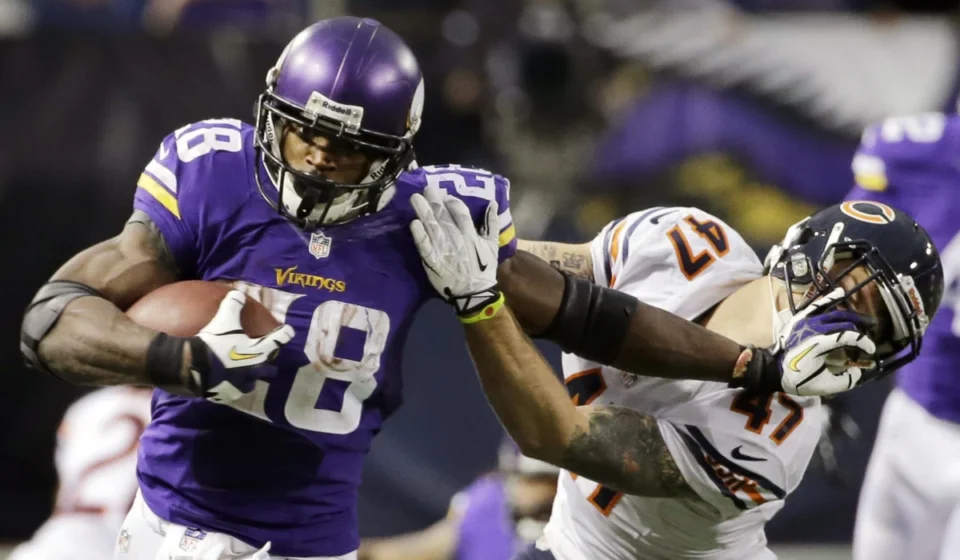
Similarly, in 2015, when the NFL suspended Vikings star Adrian Peterson following a child abuse case, Doty once again intervened in the appeal process, siding with the NFLPA. These decisions cemented his reputation as a jurist who viewed the league as a business entity subject to the same laws as any other corporation.
Official Responses and Legacy
The NFL issued a formal statement following the announcement of his death, acknowledging the gravity of his influence. "Judge Doty devoted his life to public service and the law, presiding over NFL-related litigation for many years during his distinguished career," the league said. "We express our sincere condolences to his family, friends and colleagues."
Beyond the legal briefs and the headlines, those who worked with him remember a man who never let the weight of his high-profile cases diminish his humanity. "I will particularly miss his sense of humor," Judge Schiltz noted. "He always had a smile on his face."
As the NFL continues to evolve, the framework of the current Collective Bargaining Agreement still carries the DNA of the precedents Doty set. He was, in every sense, the silent architect of the modern game. He ensured that while the NFL remained a business, it was a business that had to operate within the bounds of fairness and the rule of law.
David Doty’s tenure as a judge was a testament to the importance of the judiciary in American life. He showed that a single, steady hand could balance the interests of a billion-dollar industry with the fundamental rights of its workers. He leaves behind a court, a league, and a community that are fundamentally better for his service.