





















































For much of early summer, Minnesotans enjoyed a reprieve from the acrid, hazy skies that had defined the state’s recent warm seasons. Residents spent their July days under clear, blue horizons, lulled into a sense of normalcy by temperatures that remained slightly below average and humidity levels that kept the landscape lush. But as the calendar turned toward the middle of the month, that fragile tranquility vanished.
A sudden outbreak of wildfires in the Superior National Forest, ignited by a severe lightning storm on July 6, has transformed the state’s atmosphere into a thick, smoke-choked corridor. This development marks a grim turning point in a summer that climate experts had long warned could become volatile. As over a dozen active fires now burn across northern Minnesota—including three within the iconic Boundary Waters Canoe Area Wilderness (BWCAW)—officials are grappling with a reality that feels increasingly permanent: the era of the "Great American Smokeout" is far from over.
A Chronology of the Outbreak: From Lightning to Lockdown
The descent into crisis was swift. On July 6, a convective weather system tracked across the northern border, delivering a barrage of lightning strikes to the tinder-dry forests of the Arrowhead region. While the moisture from the storm was welcome, the electrical activity acted as a spark for a landscape primed for combustion by prolonged heat.
By mid-week, the Minnesota Incident Command System (MICS) confirmed more than a dozen active fires. The situation necessitated immediate and drastic action. On Tuesday, the U.S. Forest Service made the difficult decision to close the Boundary Waters Canoe Area Wilderness to public access. At the time of the closure, estimates suggested that between 6,000 and 10,000 recreationalists were navigating the wilderness.
Emergency management agencies, led by spokesperson Karen Harrison, mobilized a massive communication effort to reach those in the backcountry. By Wednesday, officials estimated that 90% of those campers and canoers had been contacted and were in the process of evacuating. However, the logistical challenges were immense. Smoke density reached levels that grounded aerial support, leaving firefighters to combat the blaze from the ground in some of the most rugged terrain in the Midwest.
"There will be fire on the landscape until fall," Harrison warned during a press briefing on Thursday. "Some of these fires will be burning until the first deep snow cover."
The regional impact extended beyond state lines. Further north, the Royal Canadian Air Force conducted a daring evacuation of 11 Minnesota teenagers and four staff members from an Ontario provincial park, located roughly 175 miles north of the border, as their base camp became threatened by advancing flames.
Supporting Data: A State Under Pressure
The current crisis is not an isolated incident but rather the latest chapter in a broader climatic shift. According to the Minnesota Pollution Control Agency (MPCA), the state has issued more air quality alerts due to wildfire smoke in the last five years than at any other point in its recorded history.
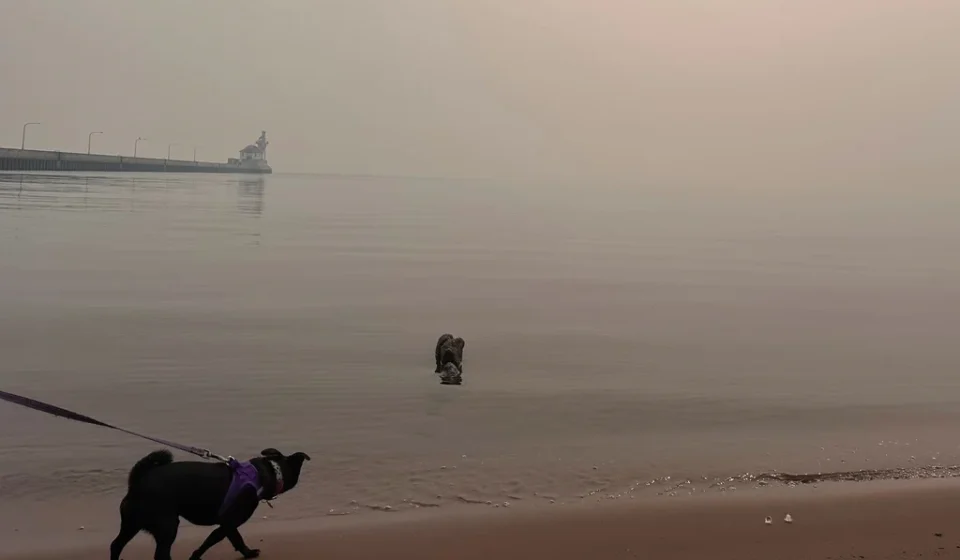
The data provided by the MPCA and the National Weather Service (NWS) paints a stark picture. On Tuesday, an air quality alert was issued for much of the state, encompassing the Twin Cities metro area, central counties, and the entire Arrowhead region. The alert, which remains in effect through Friday morning, warns that the concentration of fine particulate matter—the result of both local fire activity and incoming Canadian smoke—poses significant risks to public health.
Meteorologists have been tracking the volatility of the region since late June. Matt Taraldsen, an MPCA meteorologist, noted that the persistence of an El Niño pattern has contributed to a long-term drought scenario. This drought, combined with the extreme heat waves of mid-July, created a "perfect storm" of conditions. Brennan Dettmann, a meteorologist at the NWS office in Chanhassen, noted that the region had been "spoiled" by a cool start to the season, but the shift to a hot, humid, and dry pattern effectively turned the forests into fuel.
The scope of the challenge is global. The National Institutes of Health (NIH) recently designated 2023 as a "turning point" for North American wildfires, citing that 46 million acres burned across the continent that year. The smoke from these fires was so pervasive that it reached European air space, and 98% of Canada’s population was exposed to at least one day of unhealthy air quality.
Official Responses and Tactical Challenges
Managing the current crisis requires a delicate dance of international cooperation and local resource allocation. The MPCA maintains an hourly data exchange with the NWS, ensuring that residents have the most current information possible. Furthermore, regular conference calls are held between forecasters in the Upper Midwest, the U.S. Forest Service, and their counterparts in Ontario, Canada, to monitor the transboundary movement of smoke.
Despite concerns regarding federal budget constraints, the NWS Chanhassen office continues to maintain full operational capacity. This includes the twice-daily launch of weather balloons at 6 a.m. and 6 p.m. These high-altitude probes, which ascend nearly 20 miles into the atmosphere, provide the critical data on pressure, temperature, and humidity required to build accurate predictive models.
"The equipment takes a beating," Dettmann said, noting that while some sensors are recovered after the balloons burst and parachute back to Earth, many are lost to the remote wilderness, effectively becoming casualties of the very climate data collection process they are designed to support.
International Perspectives: The View from the Frontlines
While Minnesota grapples with its current crisis, the experience of neighboring regions in Canada provides a glimpse into the precarious nature of life in the Boreal forest. In Flin Flon, a mining town straddling the Manitoba-Saskatchewan border, the mood is one of cautious relief.
Local reporter Ron Dobson described a summer that, until recently, felt "normal" due to a series of fortuitous rains. However, he emphasized that this is a temporary state of grace. "If it gets really dry, it could change," Dobson said. His community remains scarred by the trauma of last summer, when wildfires nearly decimated the town. In the nearby settlement of Denari Beach, many homes were lost, and residents are still engaged in the slow, painful process of rebuilding.
The logistical vulnerability of these remote regions is a recurring theme. "They have one little road that goes for 100 kilometers," Dobson noted. "If that road gets cut off, they’re in trouble." The recent evacuation of Lynn Lake—Manitoba’s premier sport-fishing destination—due to encroaching wildfires further underscores the reality that even the most remote, pristine wilderness areas are no longer safe from the reach of the fire season.
The Long-Term Implications for Minnesota
The implications of this year’s wildfires are profound. For a state that prides itself on its outdoor culture, the loss of access to the Boundary Waters and the recurring health risks posed by smoke are not merely inconveniences—they are fundamental shifts in the way of life.
Historically, Minnesota’s air quality issues were often linked to distant fires, such as those in California or the Pacific Northwest. However, the trend observed since 2021 shows that the source has shifted northward. The "Great American Smokeout of 2025," as described by the Minnesota State Climatology Office, was characterized by smoke transported on northerly and northwesterly winds from the massive forests of Manitoba and Saskatchewan.
As the climate continues to warm, the duration of these events is likely to extend. Forecasters have already predicted 12 to 16 days of sustained smoke coverage for Minnesota between late July and early August.
For the residents of Minnesota, the message from the forest is clear: the environment is changing. The forests that once stood as cool, wet buffers against the heat are now active participants in a regional climate crisis. Whether through the implementation of more stringent fire bans, the expansion of emergency communication networks, or the adaptation of public health strategies to accommodate "smoke seasons," the state is being forced to evolve.
As Karen Harrison noted, the fire will stay on the landscape until the snow flies. Until then, Minnesotans are learning to live under a new, hazy sky—a stark reminder that in the face of a changing climate, the boundary between wilderness and civilization is becoming increasingly blurred.