

























































From Real Estate Disruptor to Industrial AI Pioneer: Eric Wu’s Next Act with NavigateAI

After steering Opendoor through nearly a decade of radical market shifts—culminating in the volatile period of rapid interest rate hikes that upended the real estate sector—Eric Wu spent 2023 in a period of calculated silence. Having led one of the most ambitious startups of the last decade, Wu could have easily retreated into the comfortable, low-stakes world of venture capital. Yet, the gravitational pull of the artificial intelligence revolution proved impossible to ignore.
"I knew if I looked back in 10 years and didn’t do something related to [AI]," Wu reflected during a summer interview, "I’d probably regret that."
That conviction has birthed his latest venture, NavigateAI. The startup aims to address one of the most stubborn bottlenecks in the modern global economy: the massive, widening chasm in the skilled labor market for physical construction. By building AI-powered "copilots" for field laborers, Wu is attempting to digitize the manual world, transforming the way data centers, homes, and infrastructure are built.
The Chronology of a Pivot
Wu’s career has been defined by his attempt to bring efficiency to traditionally offline markets. As the co-founder and CEO of Opendoor, he pioneered the iBuying model, leveraging data to streamline home sales. However, the post-2022 macroeconomic environment, characterized by frozen housing markets and climbing borrowing costs, forced a strategic reset for the industry and, ultimately, for Wu.
After stepping down from the helm of Opendoor, Wu spent a year assessing the technological landscape. He identified that while AI was being rapidly integrated into white-collar workflows—coding, legal drafting, and marketing—the "physical" world of construction remained largely untouched by the current wave of generative AI.
In May, Wu officially emerged from his hiatus with the launch of NavigateAI. Backed by a $25 million seed round at a $225 million post-money valuation, the company arrived with a powerhouse cap table. Led by Elad Gil, the round included Khosla Ventures, Fifth Wall, and strategic industry players like Lennar and Helix Electric. The presence of angel investors such as Tony Xu (DoorDash), Apoorva Mehta (Instacart), and Brian Armstrong (Coinbase) underscores the Silicon Valley consensus that Wu’s pivot is one of the most significant founder-led transitions in recent memory.
The Looming Crisis: Construction’s Labor Gap
NavigateAI is not merely a software play; it is a response to a looming industrial crisis. The construction industry is currently suffering from a severe worker shortage that threatens to derail the massive infrastructure build-out required for the AI boom.
According to the Associated Builders and Contractors, the U.S. construction industry requires approximately 349,000 additional workers this year just to meet current demand. This deficit is exacerbated by three compounding factors:
- The Demographic Cliff: The average age of skilled tradespeople is rising, with a significant portion of the workforce nearing retirement.
- Policy Shifts: Increasingly aggressive immigration enforcement has reduced the influx of labor that historically fueled the sector.
- The Data Center Gold Rush: The demand for AI infrastructure has created an unprecedented need for hyper-scale construction.
Consider the scale of modern projects: A large data center campus that once required 750 workers at its peak now demands thousands. Meta’s Hyperion campus in Louisiana is projected to require 5,000 workers, while OpenAI’s "Stargate" project in Texas is estimated to involve upwards of 6,400. Kelly, the global staffing firm, reports that 90% of data center operators now cite staffing shortages as the primary constraint on their ability to scale.
Product Mechanics: The "Hands-Free" Expert
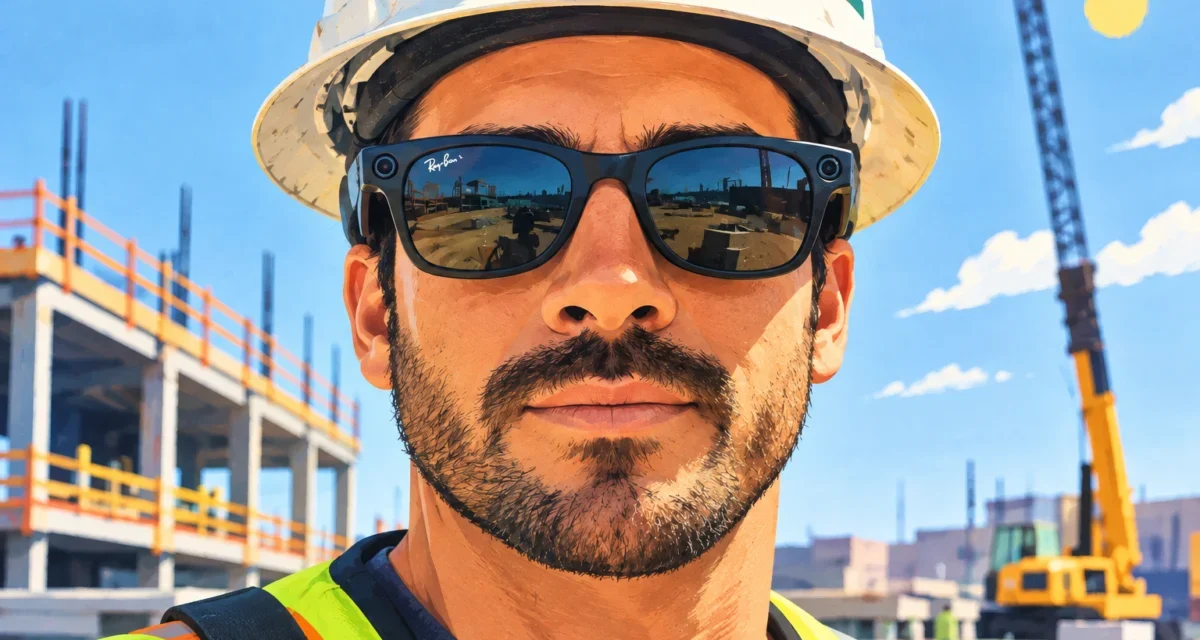
NavigateAI functions as a digital coach designed for the field. The core product operates via smartphone or, more critically, through Meta’s AI glasses. By utilizing a hands-free, voice-activated interface, a construction worker can point their camera at a site and receive real-time guidance.
The software can interpret visual data to verify if an installation meets building codes, ensure torque specifications are accurate, and instantly retrieve manufacturer manuals or internal company policies. To facilitate adoption, NavigateAI is partnering with AIM, a Meta-backed trade school, to integrate the tool into the training pipeline.
However, human psychology remains a hurdle. Wu notes a clear divide in adoption: younger, digital-native workers embrace the AI assistant with ease, while veteran journeymen—who have spent 30 years relying on intuition and physical experience—are more skeptical of "strapping a computer to their face."
Business Model: Capturing Value
NavigateAI has moved away from traditional usage-based SaaS pricing toward a "share of value" model. By aligning incentives with the developer, NavigateAI captures a percentage (roughly 20%) of the cost savings it helps generate. Given that firms like Lennar spend approximately $9 billion annually on labor and materials, even a marginal 5% to 10% efficiency gain represents hundreds of millions in potential value.
Furthermore, the long-term play is data. Every task performed with NavigateAI generates "egocentric video"—labeled footage of workers performing physical tasks correctly or incorrectly. This dataset is likely to become an invaluable training set for future robotics companies looking to automate construction tasks entirely.
Implications and Challenges
Despite the high-profile backing and the clear market need, NavigateAI faces significant headwinds:
- The Attribution Dilemma: Proving that a project was completed faster or cheaper because of NavigateAI is fraught with complexity. Variables like weather, supply chain fluctuations, and crew composition make exact attribution difficult, potentially leading to friction with clients.
- Liability and Safety: In the construction industry, a mistake can lead to catastrophic failure. If NavigateAI’s software clears an installation that later fails, the legal and ethical liability remains a murky, potentially litigious area.
- The Competitive Moat: While Wu claims his competitors—like Buildots or OpenSpace—are focused on project management rather than individual labor, the barrier to entry for major LLM providers (Google, OpenAI, Meta) is technically low. NavigateAI’s survival depends on creating a proprietary dataset and workflow integration that is too costly for a generalist AI model to replicate.
A Founder’s Philosophy: Avoiding the Boardroom
Perhaps the most telling aspect of Wu’s new venture is his structural approach to governance. Having taken Opendoor public via a SPAC in 2020, Wu is acutely aware of the burdens of public company management. He reports that he currently has no board of directors and intends to delay forming one as long as possible.
For Wu, this is a tactical decision to remain focused on product-market fit and customer relationships rather than the administrative theater of shareholder management. Whether this "lean" approach can survive as the company scales remains to be seen.
For now, the project serves as a test case for whether AI can truly move out of the air-conditioned office and onto the muddy, high-stakes floor of a construction site. If Wu succeeds, he won’t just be building another startup; he will be defining the new standard for the industrial laborer of the 21st century.
Disclaimer: When you purchase through links in our articles, we may earn a small commission. This does not affect our editorial independence.