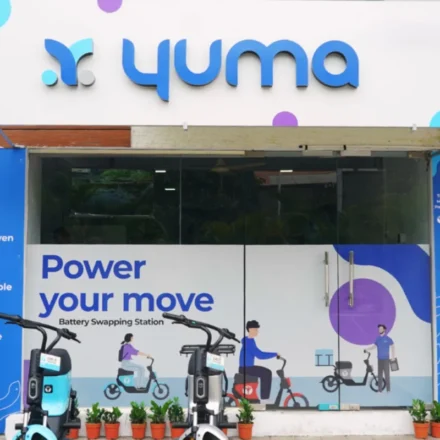

























































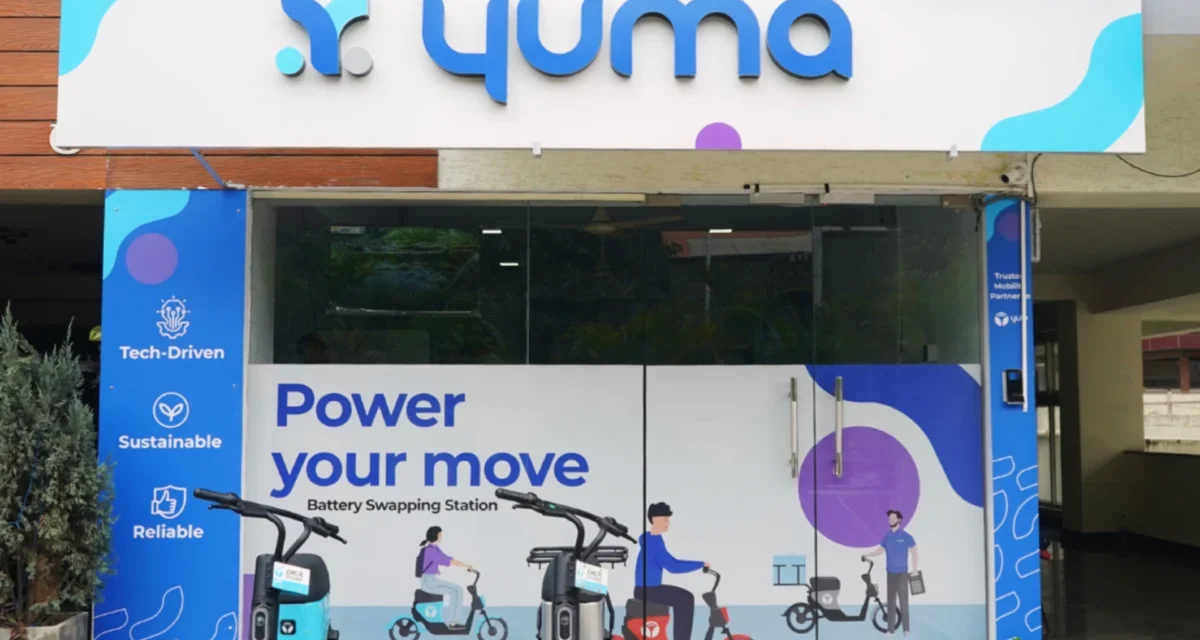

While the global electric vehicle (EV) industry has seen various players abandon battery-swapping models in favor of proprietary fast-charging networks, a different narrative is unfolding in India. For Canadian automotive manufacturing giant Magna International, the Indian market—characterized by a massive density of two- and three-wheelers and a booming gig economy—represents the ideal ecosystem for the "swapping" model to reach maturity at scale.
Magna has doubled down on this belief with a fresh $35 million investment in Yuma Energy, a Bengaluru-based battery-swapping powerhouse. This injection of capital marks a significant pivot in the ownership structure of the joint venture, further cementing Magna’s commitment to the Indian micromobility sector.
The Strategic Investment: Expanding the Footprint
The $35 million infusion serves as an expansion of Magna’s initial 2022 commitment, which saw the company allocate $77 million across two Indian ventures: $25 million directly into the mobility startup Yulu, and $52 million into the creation of Yuma Energy.
Yuma Energy, which spun out as an independent entity in early 2023, has evolved into a critical piece of India’s green infrastructure. With this new investment, Magna is increasing its stake beyond the original 51% majority share, leading to the dilution of Yulu’s 49% stake. While the specific terms of the new ownership split remain undisclosed, the move signals that Magna views Yuma not merely as a portfolio company, but as a central pillar of its long-term strategy for international micromobility.
Muthu Subramanian, Managing Director of Yuma Energy, emphasized that the capital will be deployed aggressively. The company intends to double its current fleet of approximately 100,000 batteries and significantly expand its network of 400+ swapping stations over the next 12 to 18 months.
A Chronology of Growth
The trajectory of Yuma Energy mirrors the rapid acceleration of India’s transition to electric transport:
- September 2022: Magna International announces a $77 million investment into India’s micromobility ecosystem, partnering with Yulu to explore localized battery-swapping solutions.
- Early 2023: Yuma Energy is officially spun out as a joint venture, tasked with developing AI-powered battery-swapping infrastructure.
- 2023–2025: Yuma scales its operations, reaching a milestone of 60 million successful battery swaps and deploying 100,000 batteries across 18 Indian cities.
- August 2026: Yulu raises an additional $93 million to fuel its own e-bike expansion, creating an immediate need for Yuma’s infrastructure to keep pace.
- Late 2026: Magna announces a further $35 million investment in Yuma, signaling confidence in the venture’s path to profitability.
The Economic Engine: Why India is Different
The skepticism surrounding battery swapping in Western markets—often citing high capital expenditure and the difficulty of standardizing batteries across different manufacturers—is met with a different set of realities in India.
The primary driver is the "gig economy." India’s delivery and ride-hailing sectors rely heavily on two- and three-wheelers. For a delivery rider, time is quite literally money. Conventional fast charging requires a vehicle to be tethered to a wall for 30 to 60 minutes, during which time the rider is off the road and losing potential income.
"With Indian gig workers’ high runtime on a daily basis, an EV makes absolute sense in terms of cost of ownership," Subramanian explains. "Uptime is important."
Yuma’s solution reduces that downtime to under two minutes—a simple "swap and go" operation. This operational efficiency is the cornerstone of their value proposition. Currently, only 10% to 15% of vehicles used by gig workers in India are electric, leaving a vast, untapped market for operators who can provide the necessary convenience to encourage a full transition from internal combustion engines.
Supporting Data: Operational Performance
Yuma’s financials reflect a company in a high-growth, "build-ahead-of-demand" phase. While the company is not yet profitable at the aggregate level, the unit economics are proving the model works:
- Volume: Over 60 million swaps performed since inception.
- Infrastructure: 400+ active stations with over 2,500 individual charging units.
- Revenue: Ended the financial year in March 2026 with approximately ₹1 billion (approx. $10.5 million) in revenue.
- Profitability: Several of Yuma’s early-stage stations have already reached EBITDA-positive status, providing a roadmap for the rest of the network. The company expects to reach overall EBITDA break-even within the next two quarters.
Beyond Yulu: Diversifying the Ecosystem
Initially, Yuma’s success was inextricably linked to Yulu, its parent company and primary client. However, that reliance is shifting. Currently, 15% to 20% of swaps originate from non-Yulu customers, a figure the firm expects to grow to 25% within the next two years.
Yuma has successfully integrated its battery technology with more than 10 vehicle platforms, including models from Kinetic Green, Motovolt, BGauss, and Quantum Energy. This move toward interoperability is vital. By positioning itself as a universal infrastructure provider rather than a captive supplier for one brand, Yuma is insulating itself against market volatility and positioning its network as a utility, much like a gas station network.
Furthermore, Yuma holds a distinct competitive advantage through vertical integration. Unlike many competitors that source components from third parties, Yuma designs and manufactures its own battery packs in Chennai and its own charging units in Bengaluru. This end-to-end control allows for better AI integration, predictive maintenance, and overall hardware optimization.
Implications and Future Roadmap
The immediate future for Yuma involves geographical expansion. Beyond its current footprint in cities like Bengaluru, Mumbai, Delhi, and Hyderabad, the firm plans to enter Chennai and Pune.
Looking beyond the 18-month horizon, the company has its sights set on the global stage. "Southeast Asian markets including Vietnam and Thailand, as well as parts of Africa, could be attractive because of their large two-wheeler markets," says Subramanian. These regions share similar demographic and economic profiles to India—high two-wheeler density and a nascent but growing delivery economy—making them prime candidates for the Yuma model.
The Challenges Ahead
Despite the optimism, the path to sustained profitability remains capital-intensive. Building infrastructure ahead of demand is a risky game; it requires high upfront investment in land, grid connectivity, and inventory. As Subramanian noted, "The unit economics will play out at scale."
The company must also navigate the evolving regulatory landscape of the Indian EV sector, where government subsidies and standards for battery safety and interoperability are in constant flux. However, by securing the backing of a manufacturing powerhouse like Magna, Yuma is better positioned than most startups to navigate these headwinds.
Final Thoughts
Magna International’s decision to deepen its investment in Yuma Energy is a calculated move that acknowledges the unique characteristics of emerging markets. While the West may be cooling on battery swapping, India is proving that for the right use case—high-frequency, high-uptime commercial transport—swapping is not just viable; it is the most efficient path to electrification.
As Yuma moves toward its goal of breaking even and expands its reach to new cities, the global automotive industry will be watching closely. If Yuma succeeds in making battery swapping a ubiquitous, profitable utility in India, it may well provide the blueprint for the electrification of two-wheelers in the rest of the developing world.