











































Minnesota School Districts and Teachers Union File Federal Suit to Restore “Sensitive Locations” Policy

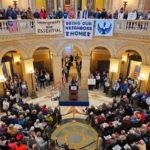
A high-stakes legal battle over the boundaries of immigration enforcement has reached the U.S. District Court, as a coalition of Minnesota school districts and the state’s largest teachers union, Education Minnesota, filed a landmark lawsuit on Wednesday. The plaintiffs are demanding the immediate reinstatement of a decades-old federal policy that historically prohibited immigration enforcement activities at or near "sensitive locations," such as schools, churches, and hospitals.
The lawsuit, which names Department of Homeland Security (DHS) Secretary Kristi Noem, ICE Director Todd Lyons, and other high-ranking federal officials as defendants, represents a direct challenge to the enforcement philosophy of the current administration. At the heart of the litigation is the January 20, 2025, repeal of the "sensitive locations" memo—a policy shift that has transformed school parking lots and bus stops into staging grounds for immigration raids, effectively turning the educational environment into a site of profound instability.
A Legacy of Protection Dismantled
For over three decades, the "sensitive locations" policy served as a bedrock of American immigration enforcement, reflecting a bipartisan consensus that schools should remain sanctuaries for learning, regardless of the immigration status of students or their families. From 1993 until early 2025, immigration agents were strictly required to obtain advance, written approval before conducting investigative or enforcement activities near protected areas. School bus stops were explicitly designated as off-limits.
This protections were reaffirmed as recently as 2021 by then-DHS Secretary Alejandro Mayorkas, who emphasized that the agency could fulfill its mission without denying children access to their education or families access to their places of worship. However, the current administration views these guidelines as an unnecessary impediment to law enforcement.
“Criminals will no longer be able to hide in America’s schools and churches to avoid arrest,” the DHS declared in a press release following the repeal. “The Trump Administration will not tie the hands of our brave law enforcement, and instead trusts them to use common sense.”
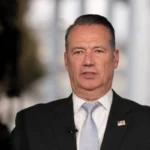
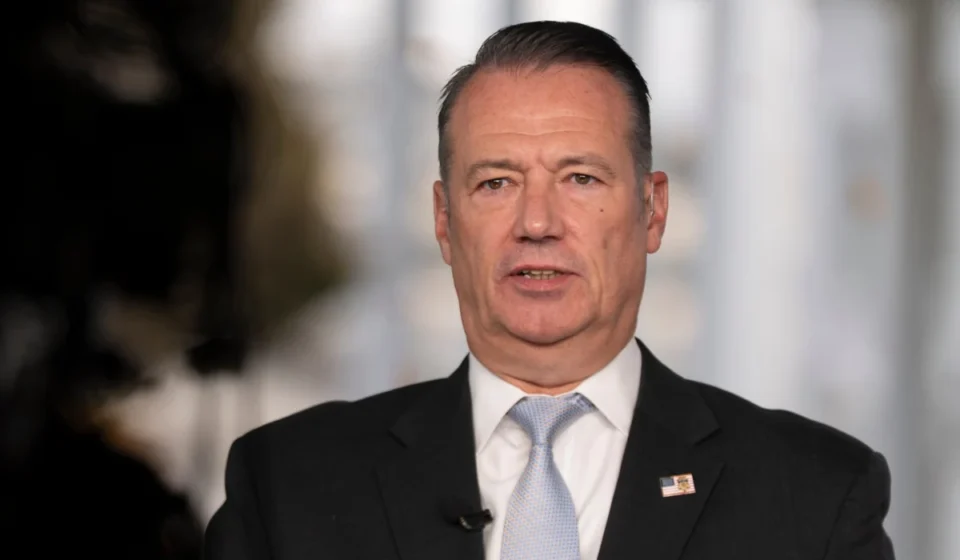
ICE Director Todd Lyons echoed this sentiment during a press conference in Nogales, Arizona, on Wednesday. “We didn’t need any new laws,” Lyons asserted. “We just need the ability to enforce the ones we have.”
Chronology of a Crisis: From Policy Shift to Classroom Panic
The impact of the January 2025 policy change was immediate and, according to educators, catastrophic for the school climate in Minnesota.
- January 20, 2025: The federal "sensitive locations" policy is officially rescinded.
- January 2026: A wave of enforcement activity surges in the Twin Cities. Reports emerge of ICE agents occupying school parking lots, trailing school board members, and, in several documented instances, physically engaging with staff and students near school property.
- Late January 2026: The death of Minneapolis mother Renee Good during an ICE operation intensifies local fear. Despite claims from White House border czar Tom Homan that enforcement actions are being "de-escalated," school administrators report that the intensity of operations remains unchanged.
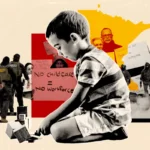
- February 1, 2026: Five-year-old Liam Conejo Ramos, whose image went viral globally while he was being detained, is released from a Texas facility and returned to his home in Columbia Heights, Minnesota, thanks to the intervention of Rep. Joaquin Castro.
- February 2, 2026: The morning after Liam’s return, ICE agents are reported stationed in a school parking lot in Columbia Heights. The district subsequently receives a bomb threat, prompting a total disruption of the school day.
- February 4, 2026: The coalition of Minnesota school districts and Education Minnesota files their federal lawsuit, seeking an injunction to stop the raids near schools.
Supporting Data: The Cost of Fear
The legal complaint details a harrowing reality for Minnesota students and staff. In districts like Fridley, which has been forced to cancel all classes twice due to the proximity of enforcement activities, the disruption is absolute. The lawsuit lists specific grievances: day care workers pulled from their vehicles, students detained at bus stops, and school vans stopped while transporting children to class.
The resulting absenteeism has hit historic highs. In Rochester, Superintendent Kent Pekel reports that January absenteeism was 42% higher than in the previous December. Among English learner services, the spike reached 116%, and among Latino students, 108%. Across the state, more than a third of children are frequently absent or have transitioned to virtual learning options out of fear that leaving their homes will lead to family separation.
For districts, the financial and operational strain is immense. Duluth Public Schools has spent over $500,000 on security planning, with Superintendent John Magas noting that half of his administrative team’s time has been diverted from academic leadership to crisis management.
“We know students can’t learn unless they feel safe,” Magas said. “Right now, there is a great sense of lack of safety, especially among our historically underserved students, based on what we are seeing.”
Official Responses and Administrative Defiance
While the DHS has yet to issue a formal response to the lawsuit, the administration remains firm in its stance. The legal filing argues that the DHS violated the Administrative Procedure Act (APA) by failing to perform a rigorous analysis of the impacts such a policy shift would have on the nation’s educational infrastructure.
Critics of the policy, including the plaintiffs, point out that the administration’s actions contradict the stated goal of public safety. By creating a climate of terror, they argue, the government is alienating immigrant communities, discouraging cooperation with law enforcement, and severely damaging the developmental trajectory of thousands of children.
"The budget negotiations going on in Congress right now—we’ve heard a lot of things about body cams and things like that," Superintendent Magas said. "I haven’t heard a lot about a return to protected status."
Implications for the Future of Public Education
The lawsuit carries profound implications for the legal doctrine surrounding "sensitive locations." Should the court rule in favor of the Minnesota coalition, it could force a national reckoning regarding the limits of federal power in the vicinity of public institutions.
However, if the court upholds the administration’s right to ignore previous "sensitive locations" guidelines, the precedent could permanently alter the relationship between federal authorities and local school systems. For many districts, the concern is that the current atmosphere of surveillance will have long-term consequences for student engagement and academic outcomes.
In Rochester, where enrollment has recently shown a fragile rebound, the mood remains one of cautious anxiety. Superintendent Pekel notes that while his district hasn’t faced the same level of direct on-campus interference as others, the volatility of the situation remains a constant threat.
"One incident could wipe that out," Pekel warned, referring to the fragile trust families are attempting to maintain.
As the case winds its way through the U.S. District Court, educators across Minnesota are watching closely. For now, the schools remain open, but for many students, the threshold of the schoolhouse door no longer offers the safety it once promised. The lawsuit serves as a final, desperate plea from school administrators to restore a boundary that they argue is essential not just for the children of immigrants, but for the fundamental operation of the American public school system itself.
The battle is no longer just about immigration policy; it is about whether the classroom can remain a space apart from the political and enforcement conflicts of the wider world. Whether through judicial intervention or sustained public outcry, the outcome of this case will likely define the environment of public education for years to come.