


























































WASHINGTON, D.C. – The fight for the soul of American healthcare is playing out within the Democratic Party, creating deep fissures that stretch from the halls of Congress to town halls across Minnesota. As the nation grapples with escalating medical costs and a persistent crisis of the uninsured, Democrats are increasingly split between two distinct visions: the incremental reform of a “public option” and the transformative overhaul of “Medicare for All.” This internal ideological struggle is defining congressional and senatorial races in Minnesota, forcing candidates to navigate a complex political landscape shaped by progressive activism, entrenched industry interests, and the stark realities of constituent suffering.
The tension was palpable at a recent town hall in New Richland, where Jake Johnson, a Democrat vying to represent southern Minnesota’s 1st Congressional District, carefully sidestepped a direct endorsement of “Medicare for All.” Johnson, a self-described moderate seeking to unseat incumbent Republican Rep. Brad Finstad, expressed profound sympathy for those burdened by unaffordable health insurance and crippling medical debt. His proposed solution, however, aligned with the party’s centrist wing: “a strong public option to the health insurers we have now.” This policy would allow Americans to purchase a government-offered healthcare plan, designed to compete with private insurers and, in theory, drive down costs and expand access.
However, Johnson’s moderate stance immediately highlights the chasm within his own party. The public option, while intended to counter rising healthcare costs and reduce the number of uninsured, has been met with firm rejection by Democratic socialists and progressives. These influential factions, who have secured significant primary victories nationwide and made their mark in Minnesota through the DFL endorsement process, dismiss the public option and similar reforms as mere "nibbling around the edges." They argue that such proposals are insufficient, allowing insurers and pharmaceutical companies to continue profiting from illness and pain.
The Genesis of a Deep Divide: Public Option vs. Single-Payer
The debate over healthcare is not new, but its intensity has escalated in recent years, fueled by progressive activism that has revived calls to replace the United States’ fragmented system of private insurers and government programs like Medicaid and Medicare with a singular, government-run program: Medicare for All. This vision, championed by figures like Sen. Bernie Sanders (I-Vt.) and Rep. Pramila Jayapal (D-Wash.), proposes a comprehensive, universal healthcare system where all U.S. residents are guaranteed care as a human right, free from premiums, deductibles, and co-payments.
The public option, in contrast, represents a more market-oriented approach to reform. Its proponents envision a government-sponsored plan that would operate alongside private insurance, offering an alternative that could exert competitive pressure on private companies, theoretically leading to lower premiums and improved services across the board. The concept isn’t novel; it was initially a key component of the Affordable Care Act (ACA), the landmark legislation signed into law by former President Barack Obama. However, intense lobbying by health insurers and other powerful medical industry groups, coupled with opposition from some centrist Democrats, ultimately led to its removal from the final bill. The ACA instead established state-based marketplaces, such as MNsure, where individuals without employer-sponsored plans could purchase subsidized private coverage, ensuring no one could be denied for pre-existing conditions.
This historical context underscores the long-standing challenges in reforming American healthcare and the powerful forces arrayed against comprehensive change. The current internal Democratic split reflects a fundamental disagreement over the speed, scope, and philosophy of healthcare reform.
Minnesota’s Battleground: Congressional and Senate Races
The political viability of a candidate’s healthcare platform often correlates with the ideological leanings of their district. In Minnesota, this correlation is starkly evident. Jake Johnson’s cautious embrace of the public option in the 1st Congressional District, which gave President Donald Trump 55% of the vote in 2024, reflects a strategy to appeal to a broader, potentially more conservative electorate.
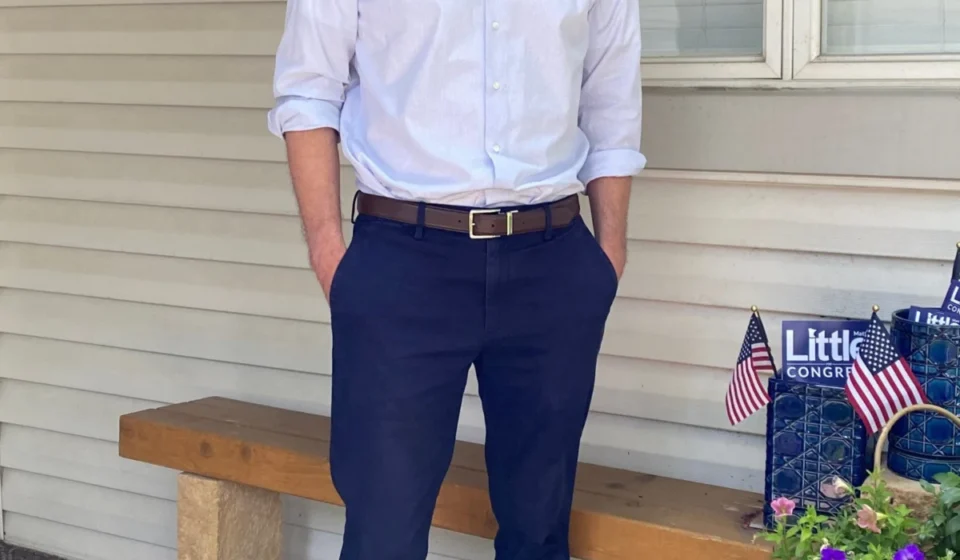
Just next door, however, in the 2nd Congressional District, the political landscape is markedly different. Former Vice President Kamala Harris won this district with 52% of the vote, and its DFL-endorsed candidate, Matt Little, is an ardent proponent of Medicare for All. Little, a former state senator and mayor of Lakeville, brings a deeply personal perspective to the debate. He recounts the harrowing experience of his gravely ill mother struggling for a year to access a specialist, despite having insurance. "And we were lucky to have insurance," Little emphasized, highlighting the systemic failures even for those with coverage.
Little has pledged to support the Medicare for All Act, sponsored by Rep. Jayapal and Sen. Sanders, which aims to guarantee comprehensive healthcare for every U.S. resident as a human right. This legislation would dramatically diminish the role of private insurers, allowing them only to sell supplemental plans, and would eliminate all out-of-pocket costs. Proponents argue that the substantial savings from ending premiums, deductibles, and co-payments, coupled with administrative efficiencies, would offset the higher federal income taxes required to fund the plan for most working Americans and businesses.
Little, who identifies as a progressive, believes the time is politically "ripe" for a single-payer system, similar to those in other industrialized nations – systems often derided by Republicans as low-quality "socialized medicine." He points to the Trump administration’s Medicaid cuts and the GOP Congress’s failure to extend enhanced Affordable Care Act subsidies, which helped approximately 90,000 Minnesotans afford health insurance, as evidence of a system in crisis. For Little, the public option is "just another handout to private insurance companies," and other proposed reforms are merely "nibbling around the edges" of a profound national problem.
The 2nd Congressional District race also features other Democrats, further illustrating the party’s internal divisions. State Rep. Kaela Berg, also running as a progressive, displays a more flexible approach than Little. While acknowledging the energizing power of "Medicare for All," Berg believes in supporting "anything that gives people more health coverage now, whatever that looks like… while we continue to fight for Medicare for All." Berg’s stance may reflect the pragmatic realities faced by union activists like herself; organized labor is split on Medicare for All. While some unions, including the United Auto Workers and the Association of Flight Attendants (Berg’s own union), support it, others strongly oppose it, viewing employer-provided healthcare as a powerful bargaining chip that they are reluctant to relinquish.

The third Democrat in the 2nd District race, state Sen. Matt Klein, an internist at the Mayo Clinic, echoes a similar sentiment to Berg. He is a "firm believer that we need to get to universal healthcare" and would "support whatever bill advances that" if elected. However, as a physician, Klein leans towards the public option, a position that aligns with powerful medical organizations. The American Medical Association (AMA) and the American Hospital Association (AHA) are staunchly opposed to Medicare for All, arguing it would limit patient choice, stifle physician autonomy, and disrupt the existing healthcare infrastructure.
The U.S. Senate Race: A Defining Issue
The healthcare debate extends to Minnesota’s U.S. Senate race, where the two leading Democratic candidates for retiring Sen. Tina Smith’s seat – Rep. Angie Craig and Lt. Gov. Peggy Flanagan – also present divergent paths to universal coverage.
Lt. Gov. Peggy Flanagan is a vocal advocate for Medicare for All, asserting that the current system is "broken" and that "people are ready" for a comprehensive overhaul. She dismisses the idea of starting with a public option as a stepping stone, arguing, "You should not start at the bottom because you are going to get even less." Flanagan believes that anything less than pushing for Medicare for All from the outset would be a compromise that ultimately fails to address the core issues. She acknowledges the political hurdles, noting that a complete healthcare overhaul would necessitate Democratic control of both the White House and Congress.
Rep. Angie Craig, on the other hand, is firmly in the public option camp. Just last week, she introduced the "Medicare-X Choice Act," legislation designed to create a public option within the existing Affordable Care Act exchanges. Craig asserts that this public option would "give the insurance companies some competition," thereby leading to lower premiums and better coverage for all Americans. Her approach emphasizes leveraging market forces and incremental reform rather than a complete system overhaul.
However, critics of the public option, including Medicare for All proponents like Matt Little, argue that such a system could inadvertently harm the very people it aims to help. They suggest that a public option might primarily attract older and sicker individuals, leaving private insurers to enroll healthier, younger individuals. This "adverse selection" could benefit private insurers by allowing them to pay out fewer claims and increase profits, while the public option could become burdened with higher costs, potentially undermining its effectiveness.
Craig also champions other reforms, such as a bill to hold health insurance companies accountable for above-average denial rates and legislation aimed at reducing prescription drug costs. These proposals reflect a strategy of tackling specific pain points within the existing system, rather than dismantling and rebuilding it entirely.
The Broader Implications and Future Outlook
The deep division within the Democratic Party over healthcare is not confined to Minnesota; it mirrors a national struggle. While more than 100 U.S. House Democrats, including Minnesota Reps. Ilhan Omar (D-5th District) and Betty McCollum (D-4th District), co-sponsor Jayapal’s Medicare for All bill, and Sen. Tina Smith has co-sponsored Sanders’ version, other prominent Democrats, such as Rep. Kelly Morrison (D-3rd District), a physician like Sen. Klein, have not. This varied support underscores the complexity of the issue and the diverse political calculations at play.
The immediate implication of this intra-party split is clear: the establishment of a single-payer system in the United States faces formidable challenges and is unlikely to materialize in the near future. The political will and consensus required to fundamentally transform a system as vast and complex as American healthcare are simply not yet present. Powerful lobbying efforts from the healthcare industry, including pharmaceutical companies, private insurers, and major medical associations, represent significant hurdles to any radical change. These groups wield immense financial and political influence, actively working to preserve their interests within the current framework.
Nevertheless, the robust debate itself signals a profound dissatisfaction with the status quo. Should Democrats gain control of the White House and both chambers of Congress, a surge of healthcare legislation is highly probable. The focus would undoubtedly be on reversing the alarming increase in uninsured Americans and making healthcare more affordable. This could mean a renewed push for the public option, an expansion of ACA subsidies, or other targeted reforms.
The conversation, however, has fundamentally shifted. Progressive activism has brought Medicare for All from the fringes to the forefront of national discourse, forcing every Democratic candidate to articulate their vision for healthcare reform. Even if a single-payer system remains an aspirational goal, the pressure from the progressive wing ensures that the party’s platform will lean towards greater government involvement and universal access.
Ultimately, the internal Democratic debate reflects a nation at a crossroads. The American healthcare system, with its blend of cutting-edge innovation and profound inequities, remains one of the most contentious issues in politics. The choices made by candidates like Jake Johnson, Matt Little, Angie Craig, and Peggy Flanagan in Minnesota, and their counterparts nationwide, will not only shape their political careers but also determine the future accessibility, affordability, and quality of medical care for millions of Americans. The path forward remains fraught with political peril and ideological contention, but the urgency for change is undeniable.