





















































Beyond the Hustle: Inside London’s "Lift House" and the Rise of Sustainable Tech Innovation

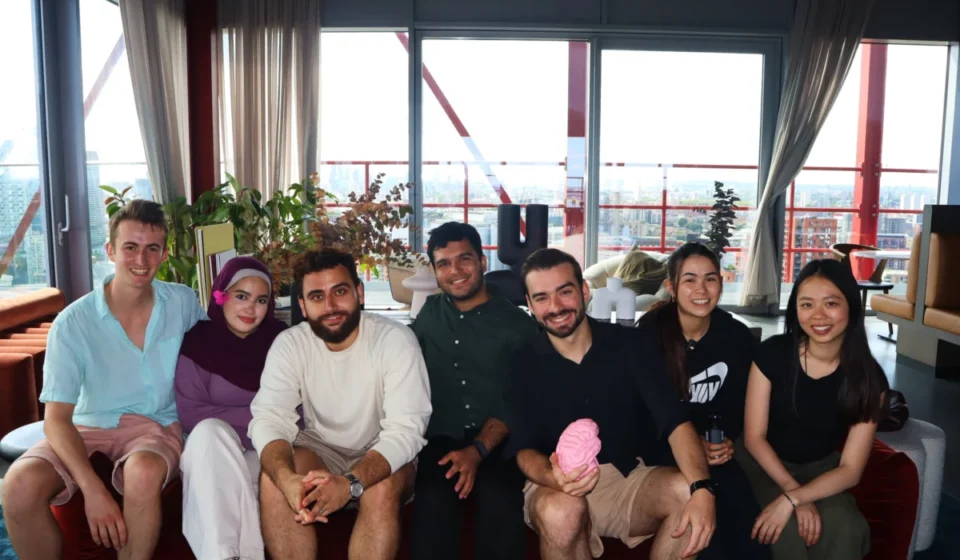
In the polished, glass-fronted developments of East London, overlooking the tranquil waters of the capital, a quiet revolution is taking place in the way the next generation of tech titans lives and works. Six founders, all in their twenties, have established the "London Island Founder House"—colloquially known as "Lift House"—with a mission that stands in stark, intentional opposition to the frantic, high-burnout "hacker house" culture synonymous with Silicon Valley.
While San Francisco’s legendary incubator homes are often characterized by 72-hour coding sprints, illegal warehouse dwellings, and a "996" work culture that prioritizes raw output over human health, Lift House is betting on a different philosophy: "Londonmaxxing." This emerging trend suggests that founders can achieve global market dominance without sacrificing their sanity.
The Core Philosophy: Holistic Ambition
"The goal here is a holistic improvement in life, rather than the ’12 weeks, Demo Day is coming’ mentality that dominates the Valley," says 26-year-old Rowan Aldean, a founder who previously sold his company for millions and now leads an applied AI startup.
Launched in March 2026, Lift House functions as both a high-intensity startup workspace and a co-living sanctuary. Its name is a double entendre: it refers both to the physical elevator in their six-story building and the house’s mission to "uplift" tech founders. Unlike the performative, gala-heavy culture of San Francisco, the residents of Lift House favor a quiet, deliberate approach to innovation, drawing inspiration from UK success stories like DeepMind—an organization that has secured Nobel Prizes and pushed the boundaries of AI without the "song and dance" of traditional startup PR machines.

A Chronology of the London Founder Ecosystem
The arrival of the Lift House marks a maturation point for the London tech scene. Historically, the UK’s startup environment has been defined by a conservative approach to risk and a cultural aversion to the "hustle-at-all-costs" mindset.
- Pre-2024: The London ecosystem operated primarily through fragmented networks and traditional office spaces. There was little concept of the "hacker house" as a living-working hybrid.
- 2024: The emergence of "The London Founder House," as reported by Sifted, brought the concept to the forefront. It served as a proof-of-concept, requiring residents to have already raised at least $500,000, and explicitly rejected the idea of work-life balance. Though it wound down in 2025, it set the stage for the current generation of co-living spaces.
- March 2026: Lift House launches. It shifts the paradigm from "hustle until you drop" to "optimize your life to build better."
- July 2026: The house becomes a focal point for the "Londonmaxxing" trend, emphasizing fitness, mental health, and community as tools for professional longevity.
The Data: The Engine Behind the Ambition
London’s pivot toward AI is not merely anecdotal; it is backed by massive capital inflows. According to Dealroom, London AI startups have raised a staggering $12 billion in 2026 alone, accounting for the vast majority of the $14.7 billion raised by the city’s entire startup sector.
The concentration of wealth is significant: six companies, including Wayve, Superintelligence, and ElevenLabs, have each secured funding rounds exceeding $500 million. Many of these firms were birthed by alumni of DeepMind, proving that the UK’s academic-to-commercial pipeline is finally yielding a high return on investment. This massive influx of capital has emboldened a new generation of founders, like those at Lift House, to take "big swings" on ambitious projects while maintaining a lifestyle that would be considered dangerously "slow" by West Coast standards.
The Daily Grind: Journaling vs. Demo Day
The lifestyle at Lift House is a carefully curated blend of professional rigor and personal maintenance. The house does not impose a mandatory "exit date" or a graduation day; instead, residency is flexible, with some founders staying for a month and others planning for six-month stints.

A Typical Sunday at Lift House
The group practices communal journaling, a routine introduced by 28-year-old resident David Amor. As the founder of a brain-coaching company, Amor believes that understanding the biological mechanics of the brain is the ultimate competitive advantage. The journaling sessions track non-work metrics: time spent in nature, nutritional intake, and physical movement.
Professional Schedules
There is no "standard" day at the house, but there is a clear focus on peak performance:
- David Amor: Up by 8 a.m., he allows himself 30 seconds to wake up before diving into high-focus work. His morning ritual includes a cold shower, which he credits for a 250% dopamine spike.
- Luke (AI-marketing founder): Begins his day at 8:30 a.m. with a team call alongside his co-founder, Varun.
- Rowan Aldean: Generally starts after 10 a.m., unless there is a high-stakes investor call, prioritizing cognitive rest over artificial start times.
Evenings are reserved for community bonding, such as volleyball matches in local leagues, piano sessions in the common area, or rooftop dinners where residents host investors and researchers. Presence Plumb, a tech strategist and resident, views these dinners as a way to maintain an authentic, balanced environment that rejects the "tech bro" archetype.
The "Tall Poppy" Dilemma: A Cultural Contrast
When asked why Lift House feels uniquely British, Aldean offers a wry observation: "We drink tea together like Brits, and in SF, folks just drink filtered coffee."

Beyond the humor, the differences are profound. In the United States, failure is often rebranded as a "learning experience" and celebrated. In the UK, founders must navigate "Tall Poppy Syndrome"—a cultural phenomenon where the media builds successful individuals up, only to ruthlessly tear them down if they become too successful or exhibit too much bravado.
"There is a shame associated with failure here," one resident noted. This has led to a more cautious, deliberate pace of growth. However, this environment has its benefits. As Aldean points out, London startups are more likely to sell to large, slow-moving corporations rather than to other startups. This creates a more stable, albeit harder to penetrate, revenue stream that doesn’t rely on the "fickle social capital" of the Valley.
Implications: The Road to America
Despite the success of the "Londonmaxxing" model, the gravitational pull of the United States remains an existential reality for these founders. The UK offers affordable, world-class talent from institutions like Oxbridge and a strategic time zone for global operations, but the U.S. offers the world’s largest economy and an unparalleled density of growth-stage capital.
"It’s almost like a factory line," says Varun. "You start here, and then you expand there, or vice versa."

American investors frequently pressure British founders to relocate, sometimes making it a condition of their investment. While the residents of Lift House currently cherish the balance and lifestyle that London provides, they are not immune to the lure of the American market. The tension is palpable: they are building sustainable, human-centric companies, but they are playing on a global stage where the rules are often written by those who believe in the 996 grind.
Conclusion: A Model for the Future?
The Lift House is more than just a place to sleep and code; it is an experiment in whether the next wave of global tech innovation can be built on a foundation of wellness, community, and, dare we say, tea.
As the house lease winds down with about a year remaining, the founders are committed to the experiment for as long as possible. They are proving that the "startup bro" culture is not a prerequisite for success. By optimizing for human performance rather than just machine-like output, they are creating a new blueprint for the founder of the future—one who is just as concerned with their morning workout as they are with their seed-round valuation. In the quiet streets of East London, a different kind of "hustle" is taking root, and it just might be the most sustainable one yet.