









































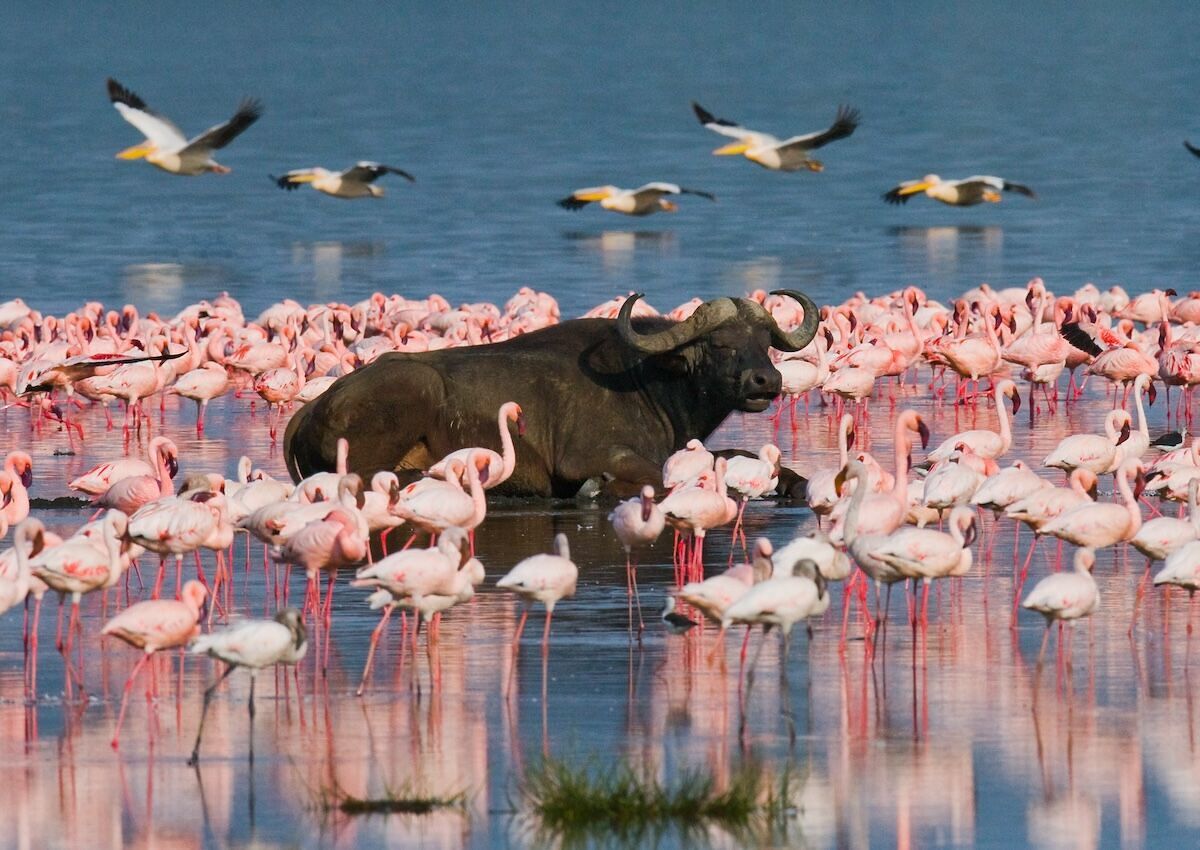
For decades, the image of Lake Nakuru has been synonymous with the breathtaking, surreal spectacle of hundreds of thousands of lesser flamingos blanketing its shores in a shimmering veil of fuchsia. It was a sight that defined the East African safari experience—a rhythmic, feathered carpet that seemed to pulsate against the alkaline waters of the Great Rift Valley. Today, however, that iconic image is becoming increasingly elusive. While flamingos still grace the lake, the reliable, wall-to-wall crowds that once made Nakuru a global wonder have grown unpredictable, leaving both researchers and safari-goers searching for answers.
The crisis is not merely a matter of bird migration patterns; it is a profound indicator of a shifting ecosystem. The very essence of the lake—its unique chemistry—is under siege, driven by a confluence of climate change and human interference.
The Chemistry of Collapse: A 20-Year Decline
The transformation of Lake Nakuru is rooted in a fundamental chemical shift. A landmark 2024 study published in the journal Current Biology utilized two decades of satellite telemetry to monitor several critical flamingo habitats across East Africa. The findings were stark: rising water levels are effectively "drowning" the lake’s productivity.
As the lake’s volume expands due to increased rainfall, the water becomes diluted. For the lesser flamingo, which relies on a highly specialized diet of cyanobacteria—specifically Arthrospira fusiformis—this dilution is catastrophic. These algae thrive only in hyper-alkaline environments. As the pH levels of the lake drop, shifting from caustic alkalinity toward a more neutral state, the algae populations collapse.
Between 2009 and 2022, Lake Nakuru’s surface area swelled by a staggering 91 percent. During that same window, the density of the vital algae that sustains the flamingo population is estimated to have plummeted by nearly 50 percent. For the birds, the choice is binary: adapt or starve. Consequently, the massive flocks have been forced to abandon their ancestral home in search of sustenance elsewhere.
A Chronology of Change: From Stable Haven to Volatile Ecosystem
To understand the current state of Lake Nakuru, one must look at the timeline of its environmental evolution:
- The 1980s–2000s: The "Golden Age" of the flamingo. During this period, the lake maintained a relatively consistent water level and salinity, allowing the cyanobacteria to flourish. It was during this era that Nakuru became a globally recognized conservation success story, eventually earning status as a sanctuary for the endangered black and white rhino.
- 2009–2012: The onset of the shift. Researchers began noting significant fluctuations in water levels, initially attributed to cyclical weather patterns. However, the intensity of the rainfall began to deviate from historical norms.
- 2019–2021: The "Great Floods." Unprecedented rainfall in the Rift Valley region led to massive inundation. The lake overflowed its banks, swallowing surrounding infrastructure and fundamentally altering the shoreline topography.
- 2022–Present: The "New Normal." The lake has stabilized at a much higher water level than historical averages. The flamingo population at Nakuru is no longer resident; it has become transient, appearing in smaller numbers and often departing abruptly as food sources fail to recover.
The Dual Drivers: Climate Change and Human Encroachment
The rising water levels are not the result of a single cause, but rather a "double-tap" of environmental pressure.
The Climate Variable
Leading climate scientists have identified a direct link between global warming and the hydrology of the Rift Valley. A warmer atmosphere possesses a higher capacity for holding water vapor. Consequently, when meteorological conditions trigger rainfall, the resulting precipitation is significantly more intense. This shift in the climate regime has turned once-predictable rainy seasons into periods of potentially volatile lake expansion.
The Human Factor: Degradation of the Watershed
While the sky provides the water, the land determines how it reaches the lake. The Mau Forest complex, the largest indigenous montane forest in East Africa and the primary water catchment area for the Rift Valley lakes, has faced significant degradation.
Historically, the dense vegetation of the Mau complex acted as a massive sponge, absorbing rainfall and releasing it gradually into the lake basin. As forests have been cleared for human development, agriculture, and settlement, the land has lost its ability to regulate water flow. Now, when it rains, water rushes over the bare, compacted soil, carrying sediment and pollutants directly into Lake Nakuru. This rapid runoff exacerbates the flooding and alters the chemical composition of the lake, further stripping the water of its ability to support the delicate cyanobacteria colonies.
Official Responses and Scientific Inquiry
The shift has not gone unnoticed by the stewards of the land. Edward Karanja, Senior Warden at Lake Nakuru National Park, acknowledged the gravity of the situation at a 2022 conservation conference. He noted that the rising water levels have fundamentally "altered the flamingo habitat," leading to a measurable decline in bird populations.
Aidan Byrne, the lead author of a 2024 study regarding Rift Valley lake health, has been vocal about the need for more rigorous data. In an interview with Africa Geographic, Byrne emphasized that while the decline at Nakuru and neighboring Lake Bogoria is evident, the migratory nature of these birds makes tracking complex. "Local monitoring shows numbers falling from hundreds of thousands to just a few thousand during high-water events," Byrne noted, adding that "more regular and widespread counts are required" to fully map the movement of these birds across the East African corridor.
Implications for the Future: A Shifting Safari Landscape
The flamingos are not necessarily dying; they are relocating. Observations indicate that flocks are increasingly pivoting to alternative sites like Lake Bogoria, Lake Elementaita, and, crucially, Lake Natron in Tanzania—their primary breeding ground.
However, this provides only a temporary reprieve. These lakes are subjected to many of the same pressures, including sedimentation from deforestation and unpredictable shifts in rainfall. If the entire chain of Rift Valley lakes continues to lose its unique alkalinity, the lesser flamingo will face an existential threat to its breeding and feeding cycles.
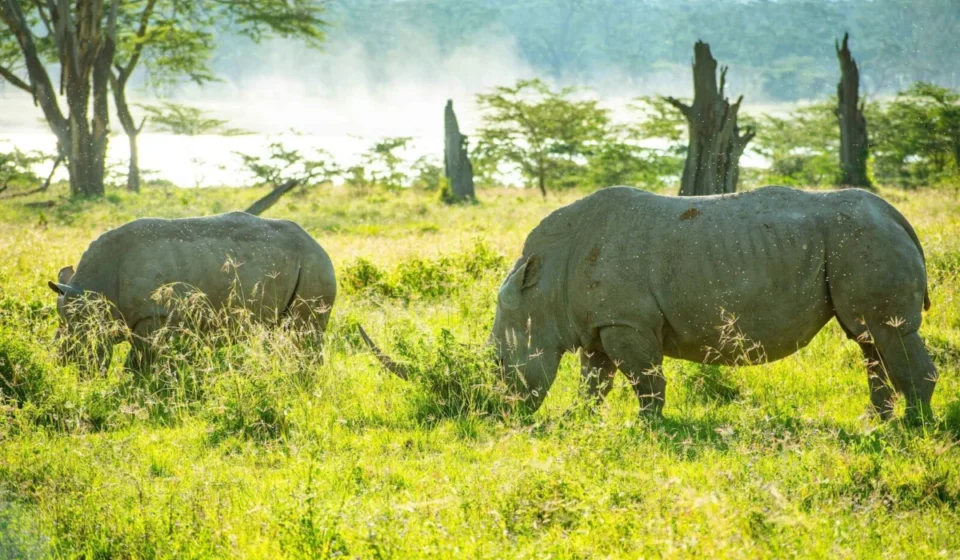
For the traveler, this necessitates a paradigm shift. The "guaranteed" flamingo spectacle of the late 20th century is a thing of the past. However, Lake Nakuru remains an essential destination. As a pioneering rhino sanctuary, it continues to offer one of the best opportunities in Kenya to view both black and white rhinos in the wild. With Rothschild’s giraffes, lions, leopards, and over 450 species of birds, the park’s ecological value transcends its famous, albeit currently diminished, pink residents.
Practical Advice for the Modern Visitor
For those planning a visit, flexibility is the key to success.
- Timing: The best window for visiting remains January through March, which typically offers the best chance of witnessing larger flocks. July through October provides clearer, drier conditions, though the light and the birds may vary.
- The "Loop" Strategy: Rather than pinning all hopes on Nakuru, savvy travelers are now incorporating Lake Bogoria and Lake Elementaita into their itineraries. Because these lakes function as an interconnected system, a period of low activity at one is often balanced by a gathering at another.
- Logistics: The drive from Nairobi is approximately 100 miles, taking two to three hours via the well-maintained Nairobi-Nakuru highway. For those looking for an immersive experience, staying within the park—at lodges like Sarova Lion Hill or the Flamingo Hill Camp—is highly recommended to capitalize on dawn and dusk game drives.
- Navigating Fees: Accessing the park requires planning. Entry fees for non-residents ($90 for 24 hours) must be paid via the KWS eCitizen portal in advance. Ensure you have your digital ticket ready, as payment is no longer accepted at the gates.
While the "pink shoreline" may be less reliable than it once was, Lake Nakuru’s story is far from over. It serves as a living laboratory, illustrating the intricate, fragile balance between human development, climate change, and the natural world. To visit Nakuru today is to witness an ecosystem in transition—a poignant reminder that nature’s greatest spectacles are not static, but must be nurtured and protected if they are to endure for the next generation.