























































In a digital landscape where the velocity of cyberattacks is accelerating at an unprecedented rate, Apple has just unveiled its most comprehensive security response to date. With the rollout of the 26.5.2 software update, the tech giant has patched a record-shattering number of vulnerabilities across its entire ecosystem. This massive remediation effort serves as a watershed moment in cybersecurity, signaling the formal arrival of the "AI Arms Race," where both ethical researchers and malicious actors leverage generative artificial intelligence to hunt for—and exploit—systemic flaws.
Main Facts: A Watershed Moment for Ecosystem Security
The scope of the 26.5.2 update is staggering. Apple’s latest release addresses a combined total of hundreds of vulnerabilities, ranging from critical kernel memory corruption bugs to more nuanced flaws within the WebKit engine and WebDAV protocols.
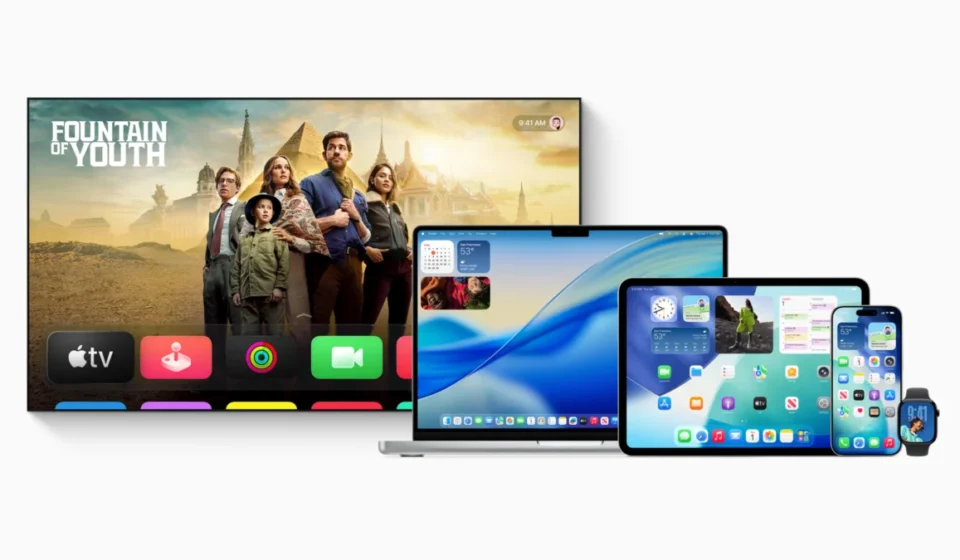
To quantify the scale: Apple has patched 87 security vulnerabilities in iOS and iPadOS 26.6, with a further 155 patches deployed specifically for the macOS environment. The company’s secondary platforms—watchOS, tvOS, and visionOS—have each received approximately 100 individual security fixes.
What distinguishes this update from previous iterations is the source of these discoveries. For the first time, official release notes are peppered with credits to AI-assisted tools, including references to Anthropic’s Claude, various coding agents, and AI-adjacent research labs. This shift represents a transition from human-only code auditing to a symbiotic relationship between human expertise and machine intelligence. The reliance on AI to identify these bugs confirms that Apple is moving aggressively to utilize advanced modeling to harden its software before attackers can weaponize the same technologies.
Chronology: The Evolution of Automated Vulnerability Discovery
The journey to this record-breaking patch cycle began months ago, fueled by the rapid integration of AI into the cybersecurity research community.
- Early 2026: Research teams begin integrating advanced Large Language Models (LLMs) into their vulnerability assessment workflows. These models, capable of scanning millions of lines of code in seconds, begin identifying complex memory corruption issues that previously escaped human scrutiny.
- The Calif.io Benchmark: A pivotal moment occurred when researchers from Calif.io demonstrated the terrifying efficiency of AI in exploit development. Using Anthropic’s "Mythos Preview" model, the team successfully engineered a functional macOS kernel memory corruption exploit in a mere five days—a process that would traditionally take highly skilled human teams weeks or even months.
- Project Glasswing: Apple began deepening its research collaborations, most notably with Anthropic via "Project Glasswing." This initiative focuses on using AI not just to find bugs, but to predict potential attack vectors before they are ever manifest in production code.
- The 26.5.2 Deployment: Following the identification of these flaws, Apple consolidated its findings into the massive update package released this week. The release notes serve as a public acknowledgement that AI is now the primary engine driving modern software maintenance.
Supporting Data: The Cost of Delay
While the sheer volume of patches is impressive, industry experts caution that the "security value" of these updates is contingent entirely on user adoption. Data from Fleet Device Management highlights a precarious reality: 79% of organizations fail to deploy critical security patches within a 24-hour window.
In the world of modern exploits, where AI-powered automation allows attackers to reverse-engineer patches and build working exploits within hours, a delay of even one day is catastrophic. The "patch gap"—the duration between the release of a fix and its installation—is currently the single largest vulnerability for enterprise networks.
Furthermore, the proliferation of AI within enterprise environments is outpacing governance. Many organizations are integrating AI coding tools into their internal development workflows without establishing the necessary version control or auditability. This "Shadow AI" creates a scenario where vulnerabilities are accidentally introduced into corporate environments by tools that are meant to optimize productivity, effectively expanding the attack surface faster than IT teams can secure it.
Official Responses and Expert Analysis
The security community has been vocal about the implications of this update. Adam Boynton, a senior security strategy manager at Jamf, emphasizes that while the numbers are record-breaking, the nature of the vulnerabilities is more concerning than their quantity.
"The WebKit fixes are easy to read as a phishing story, when they are actually something slightly different," Boynton noted. "The raw material for targeted spyware is browser engine memory corruption, and those chains are expensive enough that they get pointed at specific people—senior executives, journalists, anyone whose access justifies the cost. That is the honest reason to update promptly rather than eventually."
Boynton argues that this update is less about the "record count" and more about the "arms race." By using AI to identify these bugs, Apple is effectively forcing attackers to evolve their own methods. If Apple is using AI to patch holes, attackers will use AI to scan for the next hole before the patch is even fully propagated. This cycle of discovery and remediation has become a permanent feature of the modern digital landscape.
Furthermore, Apple’s recent acquisition of SigLens—a firm specializing in high-efficiency observability—suggests that the company is preparing to scale its internal AI-driven diagnostic capabilities. By integrating SigLens’ technology, Apple is likely building a future where their operating systems can detect anomalous behavior at the kernel level, effectively creating a self-healing security perimeter.
Implications: The New Normal
The 26.5.2 update signifies that the era of manual, reactive security patching is coming to an end. Several long-term implications are emerging from this shift:
1. The Democratization of Exploit Creation
As seen with the Calif.io case, AI lowers the barrier to entry for exploit development. Complex kernel-level attacks are no longer the sole domain of nation-state actors; they are becoming accessible to smaller, well-resourced criminal syndicates. This necessitates a move toward "zero-trust" architectures that assume the OS may have unpatched vulnerabilities at any given time.
2. The Acceleration of the Patch Cycle
The frequency of these massive updates is likely to increase. As AI tools continue to find more bugs, Apple will face pressure to release smaller, more frequent "micro-patches." For users and IT administrators, this means the days of quarterly or even monthly update cycles are over; continuous, automated patching is becoming a mandatory requirement for maintaining system integrity.
3. The Need for AI Governance
The risks highlighted by the Fleet Device Management report—namely that AI is being used in enterprises without proper oversight—suggest that the next major security crisis may not come from Apple’s code, but from the third-party AI tools used by businesses to manage their own digital infrastructure. Companies must prioritize auditing the AI agents they integrate into their dev-ops pipelines.
4. The Human Element
Despite the surge in AI involvement, the "human in the loop" remains vital. The interpretation of these vulnerabilities—deciding which are high-risk, how to prioritize them, and how to communicate them to the public—remains a deeply human task. The security researchers at the helm of these tools act as the final check against potential AI "hallucinations" or misclassifications, ensuring that the fixes Apple deploys are robust and effective.
Conclusion: A Call to Action
The record-breaking nature of Apple’s 26.5.2 update should not be viewed as a sign of weakness, but as a demonstration of the company’s adaptation to a hostile digital environment. By leaning into AI, Apple is attempting to outpace the very threats that AI has helped create.
However, the technology is only as good as its deployment. The "arms race" will be won not just in Apple’s labs, but on the devices of the millions of users who must choose to click "Install." In an era where a kernel memory corruption bug can be identified by an AI agent in mere days, the decision to delay an update is no longer a minor oversight—it is a surrender of control.
As we move forward, the relationship between human ingenuity and artificial intelligence will continue to define the stability of our digital world. For now, the takeaway is clear: the threat landscape has changed, the tools of defense have evolved, and the urgency to maintain a secure, updated system has never been higher. Do not delay; update your devices today.