

















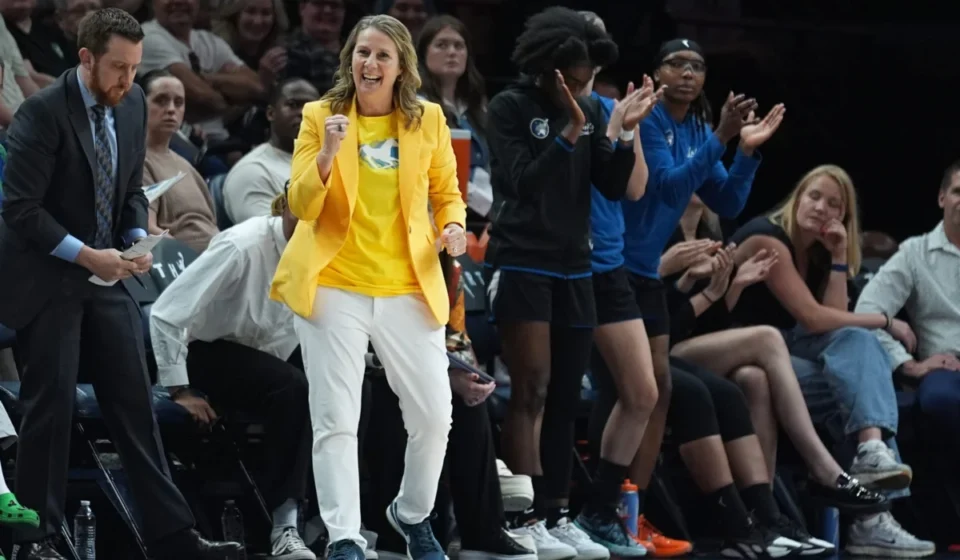

The narrative of the "mellowing" veteran coach is a staple of sports journalism—a tired trope suggesting that with age comes a softening of the edges, fewer outbursts, and a gentler approach to player management. However, for Cheryl Reeve, the head coach and president of basketball operations for the Minnesota Lynx, such a description misses the point entirely. To suggest Reeve has "mellowed" is to misunderstand the core of what makes her the most successful coach in WNBA history.
As she approaches her 60th birthday this September, Reeve remains a formidable, uncompromising force. She is an Air Force brat, a product of South Jersey’s grit, and a tactician who demands nothing short of excellence. While she has evolved, her evolution is not a retreat from intensity; it is a refinement of a championship-caliber philosophy.
The Standard of Excellence: Accountability Above All
Reeve’s brand of coaching is built on an unwavering, transparent standard. She defends her players with ferocity—a trait evidenced by her infamous ejection and $15,000 fine during the 2023 semifinals while shielding Napheesa Collier from what she perceived as officiating bias. Yet, she is equally comfortable calling out those same players publicly if she senses a drop in defensive effort or a disregard for the game plan.
A recent example occurred during a celebratory night honoring Naismith Hall of Famer Sylvia Fowles. Even amidst the festivities of a 101-93 victory over Portland, Reeve veered into critique. She pointedly remarked that the retired legends in attendance could have played better defense than her current squad. For a team boasting the league’s best record (20-6), this was a stark reminder: for Reeve, winning is not an excuse for sloppy execution.
"Cheryl is going to be honest," says All-Star guard Courtney Williams, who is in her third season with the Lynx. "She’s going to coach you hard, and if you’re built for it, you’re built for it. She has one of the greatest basketball minds I’ve been around. She holds everyone accountable, no matter if you’re the best player, the staff, or the ball kids. She really just has a standard, and she wants everyone to be at that standard."
A Chronology of Persistence
Reeve’s ascent to the top of the coaching pyramid was neither fast nor easy. Before becoming the architect of a dynasty, she spent nine seasons as a WNBA assistant across three different organizations, two of which ultimately folded.
A middle child with a background in computer science and an MBA from La Salle University, Reeve faced early pressure to abandon the uncertainty of women’s professional basketball for a more stable corporate path. She persisted, and in 2010, she secured the head coaching job in Minnesota after the franchise failed to reach an agreement with interim coach Jen Gillom.
Her arrival in Minneapolis signaled an immediate cultural shift. During her interview, she famously challenged the organization’s low expectations. "The goal for them was to make the playoffs," Reeve recalled. "And I just didn’t feel like that bar was high enough… The goal is to win a championship."
The early days were difficult—the team opened the 2010 season 2-9—but the foundation of her tenure was set by her willingness to be brutally honest. She famously told the press that the team was "bad," a statement that infuriated the front office but signaled to the players that the era of mediocrity was over. By 2011, bolstered by the arrival of Maya Moore and Reeve’s defensive-first identity, the Lynx began a seven-year run that included six Finals appearances and four championships.
Supporting Data: The G.O.A.T. Case
The statistical case for Reeve is staggering. On July 8, she surpassed Mike Thibault to become the winningest coach in WNBA regular-season history with her 380th victory. When combined with playoff success, her record is unmatched.
- WNBA Titles: 6 (4 as head coach, 2 as an assistant)
- Coach of the Year Awards: 4
- Executive of the Year Awards: 2
- All-Star Appearances (Head Coach): 5 (with a 6th on the horizon)
Beyond the hardware, her longevity in a league that frequently turns over its coaching staff is a testament to her adaptability. Whether through the trade for Fowles in 2015 or the recent shift toward volume three-point shooting, Reeve has consistently retooled her roster to match the evolution of the game.
Official Responses and Peer Perspective
Reeve’s impact extends beyond Minnesota. Peers recognize her not just for her victories, but for the specific, recognizable identity she instills in her teams.
"Cheryl’s the G.O.A.T.," says Toronto Tempo coach Sandy Brondello. "She’s one of the coaches I admire most in this league. Just the toughness of her teams, the way she prepares them, how they play—it’s a credit to the identity she wants them to play with. There have been fierce battles, but I think we appreciate each other and what we’ve done for this league."
Within her own locker room, there is a clear understanding that the "toughness" of the past has been augmented by wisdom. Reeve acknowledges that while she still pushes hard, she is now more selective about which battles to fight. She notes that she might allow a young point guard like Olivia Miles to play through mistakes that she would have pulled a veteran for a decade ago.
This growth also includes a recognition of the human element. At a recent press conference, Reeve openly admitted to a past interaction with Courtney Williams that she felt "broke her spirit"—a rare moment of vulnerability from a coach whose public persona is often defined by rigidity. Williams confirmed that the two moved past the incident, noting that their relationship is built on a foundation of mutual, direct honesty.
Implications: The Ongoing Mission
Reeve is not merely a basketball coach; she is a prominent voice for social progress. Whether she is wearing shirts advocating for women’s rights or investing in the Minnesota Aurora soccer club, she uses her platform to challenge systemic inequities. This, too, is part of her evolution as a person who understands that her influence extends far beyond the hardwood.
As she looks toward the future, her motivation remains simple: the pursuit of another ring. With a roster currently navigating the absence of stars and relying on the development of younger players, Reeve is proving that her coaching style is not a static set of rules, but a dynamic, living philosophy.
"Courtney Williams has never won a championship," Reeve said, her voice betraying the same passion that defined her first season in 2010. "I want it for them. Every day."
Cheryl Reeve has not mellowed in the traditional sense; she has deepened. She has moved from being a coach who demanded excellence to a leader who cultivates it across a diverse, changing landscape of players and priorities. In a league defined by rapid change, Reeve remains the constant, the standard-bearer, and the architect of a winning culture that refuses to settle for anything less than the pinnacle of the sport.