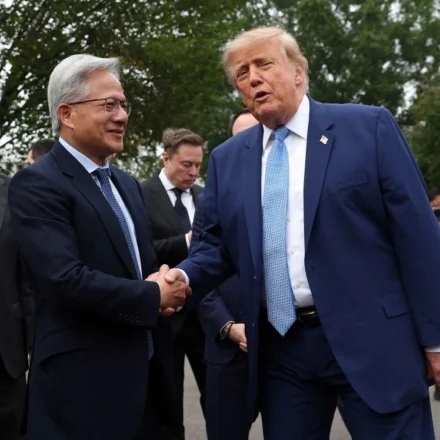






















































The corporate world and the halls of Washington D.C. remain locked in a volatile collision following the recent resignation and subsequent, swift reinstatement of Nvidia CEO Jensen Huang. At the epicenter of this firestorm is a sensational, yet still unproven, allegation: that Alice Huang, a former executive at the data-center firm Megaspeed, acted as an intelligence asset for the Chinese government, leveraging an intimate relationship with the Nvidia chief to compromise one of the United States’ most critical technology assets.
While the headlines have been dominated by accusations of espionage, the reality on the ground—pieced together through a labyrinth of classified memos, conflicting intelligence reports, and high-stakes political maneuvering—is significantly more opaque. As Jensen Huang prepares to face the Senate Banking Committee, the question remains whether this episode represents a genuine national security breach or a high-level political theater shaped by the shifting priorities of the current administration.
The Chronology of a Corporate Crisis
The narrative of the scandal began to take shape in the shadows of the executive branch long before it reached the public consciousness.
- March 2026: A highly classified memo is authored under the oversight of Secretary of State Marco Rubio. The document, circulated among senior White House officials, suggests concerns regarding Alice Huang’s ties to Chinese intelligence.
- May 2026: The memo serves as a briefing tool ahead of President Trump’s state visit to China, signaling that the administration was tracking potential risks involving Nvidia’s leadership.
- August 2026: Alice Huang formally departs Megaspeed. The company maintains that its business operations remain entirely legitimate, despite ongoing investigations into the illicit flow of chips.
- October 29, 2026: The New York Times publishes the first major exposé, detailing the alleged ties between the Huangs and the Chinese Ministry of State Security (MSS).
- November 12, 2026: Jensen Huang abruptly resigns as CEO of Nvidia after acknowledging an affair with Alice Huang.
- November 24, 2026: Following direct intervention from President Trump, who lobbied the Nvidia board, Jensen Huang is reinstated as CEO.
- Late November 2026: Attorney General Todd Blanche and other administration figures begin to publicly downplay the severity of the espionage allegations, suggesting that no concrete evidence of a coordinated "honey trap" exists.
The Intelligence Puzzle: Spy or "Useful Idiot"?
Central to the controversy is the nature of Alice Huang’s contact with the Ministry of State Security (MSS). Intelligence reports cited by the Times confirm that she maintained communication with an MSS officer from the spring of 2025 through the fall of 2026. This window of time directly overlaps with her romantic involvement with Jensen Huang.
However, the leap from "contact" to "espionage" remains unverified. The intelligence community is currently grappling with a nuanced distinction: is Alice Huang a formally recruited asset, or is she what intelligence professionals refer to as a "useful idiot"—an individual who, through personal ambition or proximity to power, provides valuable information to a foreign adversary without being an active, state-directed agent?
Further complicating the matter is the role of her husband, Kang Wei. Sources close to the investigation have indicated that Wei possessed even deeper ties to the MSS, with some reports suggesting he was a direct operative for the agency. This familial link creates a circumstantial web that is difficult to ignore, yet it fails to provide the "smoking gun" needed to prove that the Chinese government orchestrated the affair to target Nvidia.
The Wall Street Journal has offered a sobering perspective on the reality of doing business in China under the leadership of Xi Jinping. They note that many high-ranking corporate executives in China maintain routine, often informal, channels of communication with state intelligence services as a prerequisite for operating within the country. Consequently, an executive might share proprietary information—or even personal intelligence—as a matter of professional survival, without ever being formally deputized by the state.
Official Responses and Political Reversals
The most jarring aspect of the scandal is the rapid pivot in the White House’s rhetoric. When the allegations first surfaced, they were presented as grave threats to national security. Today, however, the tone has softened considerably.
Attorney General Todd Blanche, who transitioned from serving as President Trump’s personal defense attorney to the head of the Department of Justice, offered a striking assessment on Tuesday. "I have no reason to stand up here and say Nvidia is anything but a good corporate citizen," Blanche stated. This public vote of confidence followed President Trump’s own remarks, in which he suggested that a presidential pardon for Jensen Huang was an option, though he deemed it unnecessary.
This reversal has triggered intense scrutiny from congressional oversight committees. Senior intelligence officials reportedly informed Congress that there is no verified evidence that the MSS specifically directed Alice Huang to initiate an affair with the Nvidia CEO. This admission has led to the "alternate theory" that while the Chinese government may have exploited the situation, the affair itself was not a premeditated act of state-sponsored espionage, and therefore, Jensen Huang may not have violated any U.S. laws.
Yet, this shift in the official narrative coincides perfectly with the President’s vocal support for Huang’s return to Nvidia. Observers note that the alignment between the administration’s softened stance and the President’s personal lobbying of the Nvidia board is difficult to view as a coincidence. Whether this shift is the result of new, declassified intelligence or merely a desire to protect a critical American industry leader from the fallout of a scandal remains the defining question of the saga.
Implications for Corporate Governance and National Security
The Nvidia scandal serves as a grim case study in the intersection of private commerce and global geopolitics. For Nvidia, the stakes are existential. As the primary driver of the global AI hardware market, any suggestion that its leadership is compromised creates a ripple effect that threatens the stability of the entire tech sector.
1. The Erosion of Institutional Trust
The fact that the initial allegations were sourced from a memo written by Secretary of State Marco Rubio’s office, only to be downplayed later by the same administration, has severely eroded trust in the intelligence-sharing process. It raises the uncomfortable possibility that national security assessments are being weaponized or sanitized to serve the political survival of corporate leaders.
2. The Vulnerability of Global Executives
The case highlights the extreme vulnerability of U.S. executives operating in China. The "useful idiot" theory suggests that even if an executive is not a spy, they are high-value targets for coercion. If intelligence agencies cannot differentiate between a compromised asset and an unwitting source, the security clearance and operational freedom of American executives abroad may face severe, new restrictions.
3. The Future of Congressional Oversight
The upcoming appearance of Jensen Huang before the Senate Banking Committee is expected to be a watershed moment. Lawmakers, including the incoming chair of the House Intelligence Committee, Rep. Jim Himes, have expressed deep skepticism about the "no harm, no foul" narrative. However, as noted by observers, public hearings are rarely the venue where truly sensitive intelligence is revealed. The committee is likely to face a sanitized version of the truth, leaving the public to rely on leaks and anonymous sources to fill in the gaps.
Conclusion: A Lingering Shadow
As the dust begins to settle on the initial shock of Jensen Huang’s resignation and return, the underlying scandal has only grown more complex. The "crush of conflicting claims" from government sources has left the public with more questions than answers.
Did the Chinese government successfully penetrate the inner circle of one of the world’s most powerful tech companies? Or did a standard corporate investigation into illicit chip shipments balloon into a political witch hunt that ultimately collapsed under the weight of its own lack of evidence?
Until a transparent, independent investigation can reconcile the discrepancy between the initial classified memos and the current, more lenient government stance, the shadow of doubt will continue to hang over Nvidia. For now, the tech industry is left to wonder if the return of its golden boy marks the end of a crisis, or merely the beginning of a much deeper, more systemic confrontation between the world’s two largest economies.