






















































The Resurgence of the North: Target’s Return-to-Office Mandate and the Reawakening of Downtown Minneapolis

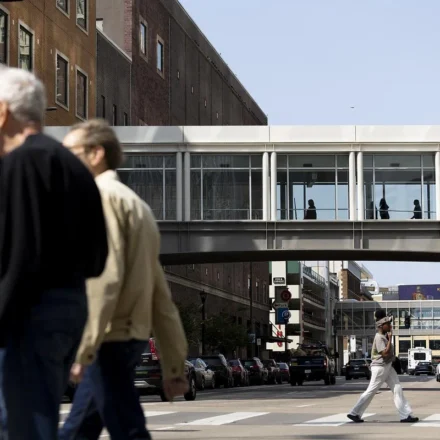
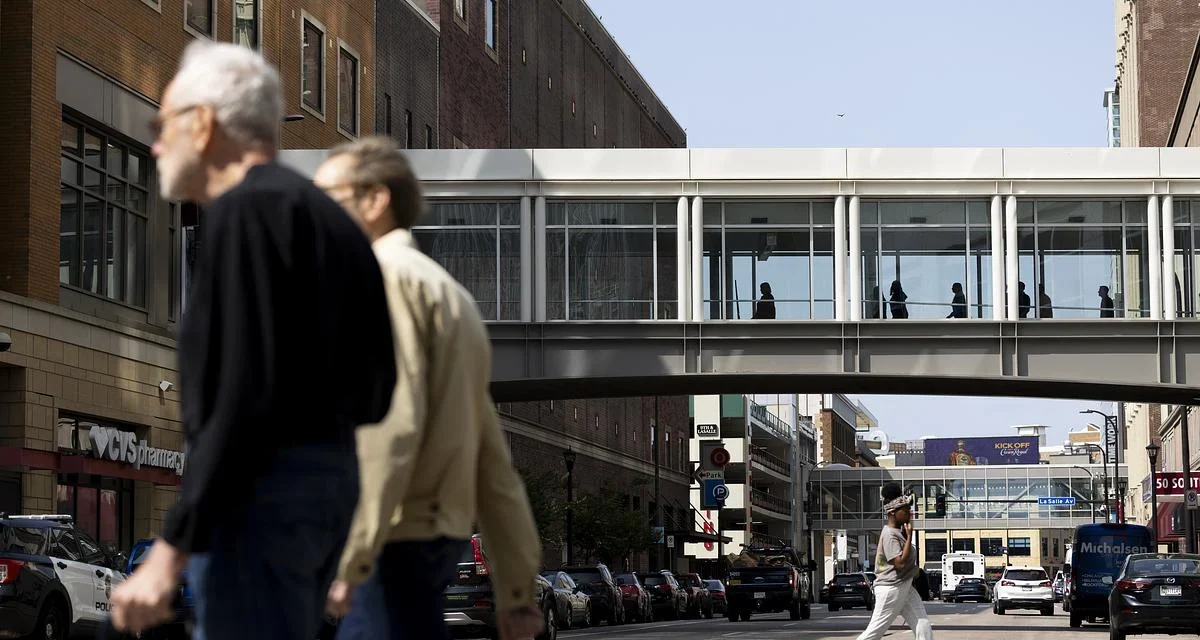
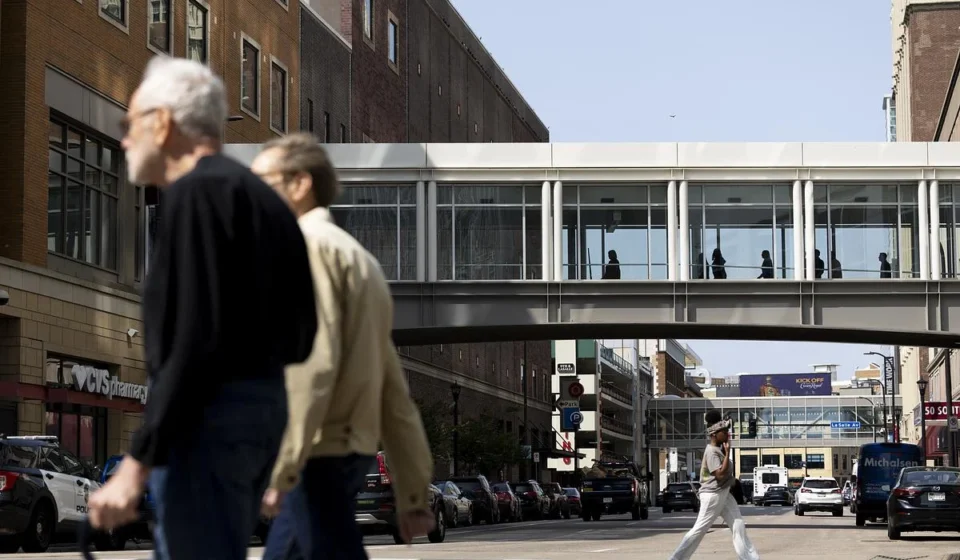
MINNEAPOLIS — For years, the skyways of downtown Minneapolis served as quiet monuments to a pre-pandemic era, echoing with more silence than footsteps. However, as of September 2025, the rhythmic clatter of professional life has returned with a newfound intensity. The catalyst? A sweeping return-to-office mandate from Target Corporation, one of the city’s most influential employers, which has sent thousands of workers back into the urban core and provided a much-needed jolt to the local economy.
Main Facts: The Sept. 2 Turning Point
The shift began in earnest on September 2, 2025, when Target’s commercial unit—a massive division of the retail giant—officially transitioned to a mandatory three-day-a-week in-person schedule. While many companies have experimented with hybrid models over the last three years, Target’s decision carries significant weight due to its sheer scale. As the second-largest employer in downtown Minneapolis, trailing only Hennepin Healthcare, Target’s workforce dictates the pulse of the central business district.
At the ground level, the impact was instantaneous. At Corner Coffee, a popular fixture located just steps from Target’s headquarters, the "Monday morning blues" have been replaced by a high-velocity rush. Store manager Mia Pariseau reported a dramatic shift in foot traffic.
“Monday mornings used to be slow,” Pariseau noted. “But this week, we got just slammed. I had at least five people lined up at any given time for about an hour straight, and it was just me and one other person here.”
This surge is not an isolated incident. According to the Minneapolis Downtown Council, in-person work levels have climbed to nearly 75% of their pre-pandemic benchmarks. With Target’s new policy now in full effect, officials expect that percentage to climb even higher in the coming months. The return signifies more than just filled cubicles; it represents a critical stress test for the city’s infrastructure, retail ecosystem, and social fabric.
Chronology: From "Ghost Town" to the New Normal
The road to this resurgence has been long and fraught with regional specificities. To understand the significance of the current moment, one must look at the timeline of Minnesota’s recovery compared to the rest of the United States.
- 2020–2021: The Great Exodus. Like most major American metros, Minneapolis became a "ghost town" during the height of the COVID-19 pandemic. However, Minnesota stayed remote longer than many of its peers. In 2021, Minnesota’s share of primarily remote workers stood at 21%, significantly higher than the national average of 17.9%, according to data from the Federal Reserve Bank of Minneapolis.
- 2022: The Slow Thaw. By 2022, the remote work share in Minnesota began to dip, falling to 16.9% as some firms initiated hybrid pilots. Yet, downtown remained visibly quieter than in the mid-2010s, with many service-sector businesses struggling to survive on Tuesday-through-Thursday foot traffic.
- June 2025: The Public Sector Lead. A major precursor to the current Target-led surge occurred in early summer. On June 1, 2025, Minnesota state government employees were required to spend at least 50% of their workdays in the office. This move was met with significant resistance, including threats of strikes and labor disputes, but it established a baseline for the "return to the core" movement.
- September 2025: The Private Sector Mandate. Target’s commercial unit officially returned to a three-day in-person requirement. This move aligned Target with 12 of the top 15 downtown employers who have now instituted formal back-to-office policies, effectively ending the era of total remote flexibility for the city’s largest professional cohorts.
Supporting Data: Mapping the Economic Recovery
The data supporting this revitalization paints a picture of a city in transition. While the 75% occupancy rate is a high-water mark for the post-pandemic era, it masks several structural changes in how the city functions.
Employer Trends
The Minneapolis Downtown Council tracks the policies of the "Top 15" employers, a group that includes heavyweights like Wells Fargo and Ameriprise Financial. As of September 2025, 80% of these organizations (12 out of 15) have moved away from fully remote work in favor of structured hybrid or full-time in-person models. This collective shift has created a "critical mass" effect, where the presence of more workers encourages more businesses to extend their hours.

Remote Work Statistics
The Federal Reserve Bank of Minneapolis has highlighted that Minnesota’s "stickiness" with remote work was a double-edged sword. While it showcased the state’s robust tech and corporate infrastructure, it delayed the recovery of the downtown service economy. The drop from a 21% remote rate in 2021 to the current environment suggests a return to traditional corporate norms, albeit with a hybrid twist.
The Resident Factor
Downtown Minneapolis is not just a place of work; it is home to approximately 60,000 residents. The vibrancy of the city now relies on a delicate balance between these residents and the daily influx of commuters. Officials note that while the "commuter" numbers are rising, the total "vibrancy index" is still tempered by the fact that many workers leave immediately after their shifts end.
Official Responses: Perspectives from the Ground and the Boardroom
The return to office has elicited a spectrum of responses, ranging from economic optimism to logistical frustration.
The Economic Advocate
Kittie Fahey, Senior Director of Advancement for the Minneapolis Downtown Council, views the return of Target employees as a vital step in the city’s evolution. "It’s more vibrant and exciting during the day," Fahey observed. However, she issued a call to action for both workers and business owners. "Go out for lunch, stay after and go meet friends, go do some things. Use all the resources we have. We’d love to see that [coming in, working, and going home] not be the direction anymore."
The Employee Experience
For many workers, the return is a bittersweet transition. Madelyn Dunn-Lammert, an associate designer for Target who has spent much of her three-year tenure working remotely, noted the professional benefits of the shift. "Being able to grab lunch with co-workers or work through a project in-person helps build team connections and facilitate collaboration, especially in a creative field," she said.
The Long-term Observer
Jenny Lissarrague, an attorney who has worked downtown since 2012, offers a more tempered perspective. While she acknowledges that the city is no longer the "ghost town" of 2020, she notes that the "vibe" hasn’t fully recovered. "It’s a lot less busy post-pandemic," Lissarrague said. "It’s not quite as dead as it was… but it’s still down quite a bit from what it was before."
Lissarrague also pointed to a significant hurdle: transportation. "Getting downtown in the first place is more challenging than before the pandemic," she explained, noting that Metro Transit has reduced the frequency of certain bus routes in response to earlier periods of low ridership, creating a paradoxical situation where it is harder to commute just as more people are being told they must.
Implications: The Future of the Central Business District
The influx of Target employees into downtown Minneapolis is more than a local news story; it is a case study in the future of American urban centers. Several key implications emerge from this transition:

1. The "11:00 PM" Problem
One of the most significant challenges facing downtown is the "early closure" cycle. Kittie Fahey pointed out that the central business district currently lacks the late-night infrastructure it once possessed. "You’d be hard-pressed to find a restaurant open until 11 p.m. That’s crazy different than pre-pandemic," she said. If restaurants close early because there are no people, and people leave early because there are no open restaurants, the city risks becoming a "9-to-5" enclave rather than a 24-hour destination.
2. The De-synchronization of Traffic
The traditional "rush hour" is evolving. Fahey noted that traffic hours are now more spread out. With hybrid flexibility, many workers are choosing to commute at noon or mid-morning to avoid peak congestion or to accommodate school schedules. This shift requires a rethink of transit schedules and traffic management, as the old "double-peak" model (7–9 a.m. and 4–6 p.m.) no longer applies.
3. Real Estate and Corporate Gravity
Target’s commitment to its downtown headquarters provides a sense of security for commercial real estate investors. In many other cities, major retailers have downsized or moved to suburban campuses. Target’s decision to bring its commercial unit back to the core reinforces Minneapolis’s status as a corporate hub, likely influencing other mid-sized firms to maintain their downtown leases.
4. The Social Capital Deficit
As Dunn-Lammert highlighted, the "creative collision" of in-person work is a primary driver for these mandates. Companies are increasingly concerned about the long-term erosion of corporate culture and mentorship in a purely digital environment. The success of the Minneapolis return-to-office experiment will likely be measured not just in coffee sales, but in the innovation and retention rates of its major corporations over the next two years.
Conclusion: A Bright, if Different, Future
As the skyways fill and the lines at Corner Coffee grow longer, the prevailing sentiment among downtown stakeholders is one of cautious optimism. The "ghost town" era has officially ended, replaced by a "New Normal" that is still finding its footing.
For store managers like Mia Pariseau, the logistical headache of a sudden rush is a welcome problem compared to the emptiness of 2021. "The future is bright," she said, echoing the hopes of a city that is finally beginning to feel like itself again. Whether Minneapolis can bridge the gap between being a place where people have to be and a place where people want to stay remains the final hurdle in its post-pandemic recovery.