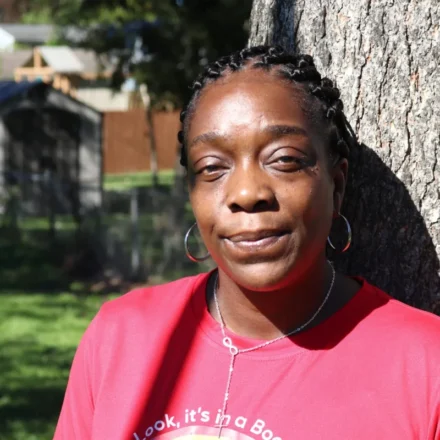
















































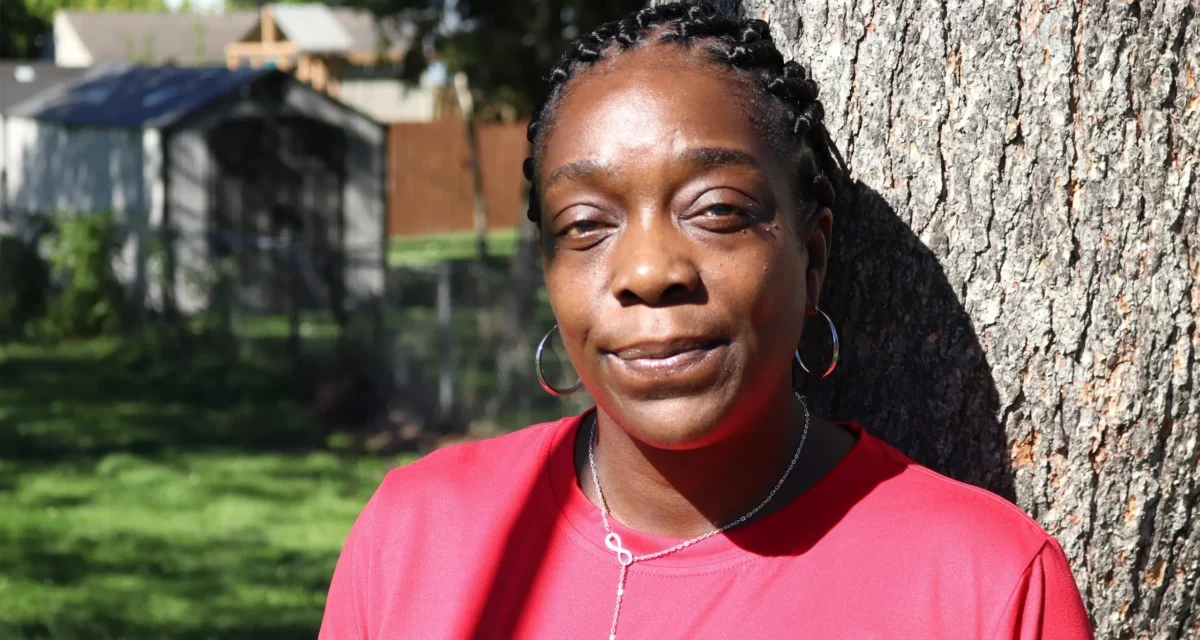



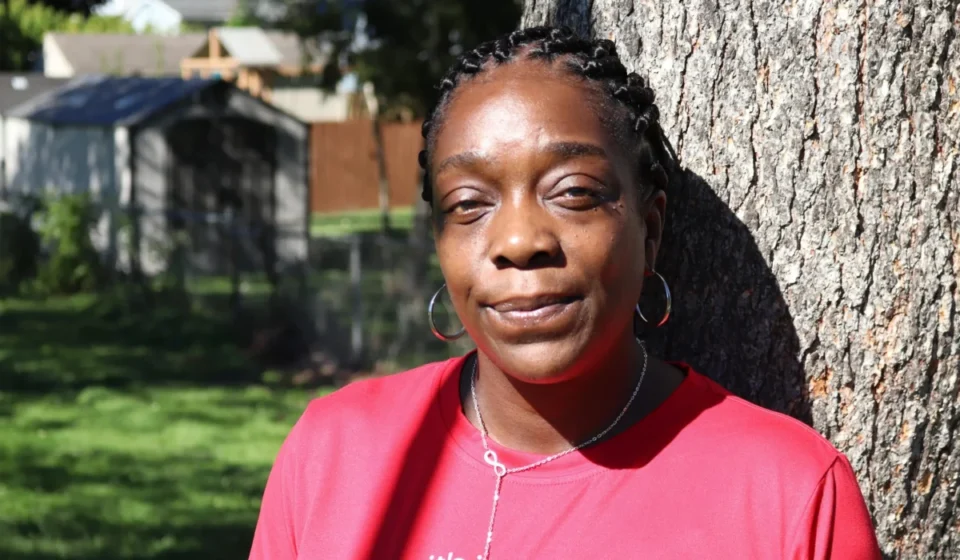

LANSING, Mich. — For Christina Starks-Clay, a childhood special education paraprofessional, the American healthcare system is not an abstract policy debate—it is a $1,000 cashier’s check held in her hand at a local bank.
Standing in the sweltering heat outside a downtown Lansing town hall in September, Starks-Clay pulled up a photo of that check on her smartphone. It was a payment toward her son’s mounting dental bills. Even with “good” insurance, she was still staring down a remaining balance of $389. Her own routine dental cleaning just weeks prior had set her back $600.
“I told myself, ‘Tina, you were in a position to make this happen,’” she recounted, reflecting on the struggle to reconcile her budget with the necessity of care. “A lot of people couldn’t do what I had to do today. I couldn’t do it. But I did it. So, I need to know: How are you going to make this better for everyone?”
Starks-Clay is one of millions of Americans caught in a tightening vice of rising deductibles, stagnant wages, and the encroaching fear that a single medical emergency could lead to financial ruin. Her frustration echoes throughout Michigan, a state that has become the epicenter of a fierce debate over the future of American healthcare as the Senate race between Democrat Abdul El-Sayed and Republican Mike Rogers intensifies.
The Anatomy of a Crisis: Main Facts
The healthcare landscape in the United States is currently defined by a paradox: while the Affordable Care Act (ACA) significantly expanded coverage, the ability of Americans to actually afford the care they are insured for has reached a five-year low, according to recent Gallup polling.
In Michigan, the situation has been exacerbated by a confluence of policy shifts. Recent data suggests that the state experienced some of the steepest enrollment drops in ACA marketplace plans following the expiration of enhanced tax subsidies. Furthermore, insurance companies in the region hiked individual marketplace rates by an average of 20% in the last cycle.
For many voters, "Medicare for All"—a proposal to replace private, employer-based insurance with a single, government-run system—has evolved from a fringe progressive ideal into a desperate rallying cry for systemic relief. Whether or not the policy is fully understood by the electorate, it has become a powerful shorthand for a fundamental demand: that healthcare be treated as a right rather than a luxury good.
A Chronology of Discontent
To understand why "Medicare for All" has gained such traction in 2026, one must look at the recent history of U.S. health policy:
- 2010: Passage of the Affordable Care Act (ACA). The law cut the uninsured rate nearly in half and prohibited the denial of coverage based on pre-existing conditions.
- 2016–2020: The rise of Bernie Sanders’ presidential campaigns brought "Medicare for All" into the mainstream of the Democratic platform, sparking a national debate about the role of private insurers.
- 2024–2025: Following the passage of the One Big Beautiful Bill Act under the Trump administration, significant cuts to Medicaid expansion were enacted. Estimates from the Urban Institute suggest that up to 355,000 Michiganders could lose their Medicaid coverage by 2028.
- September 2026: As midterm campaigns reached a fever pitch, candidates like Abdul El-Sayed prioritized healthcare reform, tapping into a base of voters exhausted by the status quo.
For voters like Cindy Lou Coolich, a retiree, the timeline of her own life mirrors the volatility of the system. A former administrator who helped others enroll in insurance, she eventually found herself on the other side of the desk after a case of sepsis left her disabled. After losing her 15-acre horse farm and her life savings, she was forced to rely on social security. Her recovery, she notes with grim irony, was only made possible by the death of her ex-husband, which allowed her to access his survivor benefits.
“It’s not a functioning system if someone has to die for you to get by,” she said.
Supporting Data: The Cost of Care
The KFF Health Tracking Poll indicates that support for expanding government-led health coverage is at its highest level in over a decade, with two-thirds of Americans now in favor of a broader system. However, the definition of "Medicare for All" remains fluid in the public consciousness.
While proponents argue for a single-payer model to eliminate private insurance, the complexity of the $4 trillion U.S. healthcare industry creates a massive barrier to implementation.
Economic Realities:
- The Cost Argument: Estimates place the annual cost of a national single-payer system at roughly $4.2 trillion.
- The Savings Argument: A recent preprint study from Yale researchers suggests that the administrative efficiencies and consolidated bargaining power of a single-payer system could save the economy $1 trillion annually while preventing thousands of premature deaths.
- Access Barriers: Current data shows that patients are increasingly skipping diagnostic tests and medication. In rural Michigan, patients report driving hours to reach in-network facilities, creating a "care desert" that disproportionately impacts low-income seniors.
Official Responses: The Political Divide
The battle for the Michigan Senate seat has turned into a referendum on these two conflicting visions of healthcare.
The Democratic Platform:
Abdul El-Sayed, a physician and former public health official, has staked his career on the promise of "Money out of politics, money in your pocket, Medicare for All." His supporters view him as a candidate who has a consistent plan. To them, his background as a doctor lends credibility to his argument that the current system is not just inefficient, but fundamentally broken.
The Republican Platform:
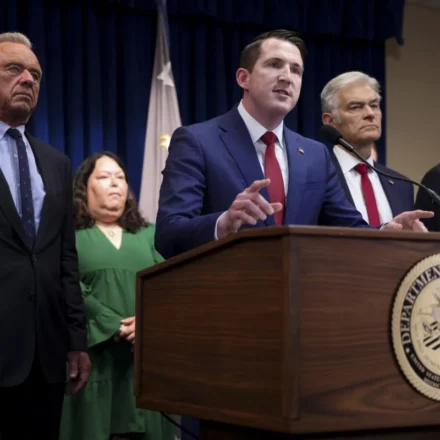
Former Congressman Mike Rogers has taken a sharp stance against the proposal, labeling it a government takeover that would strip millions of their current coverage. At a recent press conference, Rogers argued that the costs of such a program would inevitably fall on the taxpayer.
“If the government is going to give you something, they have to take it away from someone else,” Rogers stated, emphasizing that the disruption to the private insurance market would be catastrophic for those currently satisfied with their employer-provided plans.
Implications: The Road Ahead
Despite the passion at town halls and the fervor of campaign rallies, policy experts remain skeptical about the short-term viability of a total overhaul.
Jonathan Oberlander, a professor at the University of North Carolina-Chapel Hill and a specialist in healthcare politics, notes that the political climate is defined by fear. "It doesn’t matter if the fears that opponents are spreading are entirely accurate," Oberlander explained. "Politically, what matters is if they can scare people. For many, the risk of losing what they currently have—even if it’s inadequate—outweighs the promise of a total systemic change."
Furthermore, the influence of lobbying groups and the entrenched nature of the healthcare industry suggest that even if a pro-Medicare for All candidate were to secure a Senate seat, the legislative path would be fraught with obstruction.
For activists like Thomas "Jermaine" Carey, the cynicism runs deep. Attending an El-Sayed event in Detroit, Carey expressed a sentiment felt by many disillusioned voters. "It’s still America," he said, shrugging. "You have the super PACs, the lobbyists—they control the levers. I want to believe in the slogan, but I’m looking at the reality of how Washington actually works."
As the election approaches, the healthcare debate in Michigan serves as a microcosm for a nation at a crossroads. Whether the solution lies in incremental reform or a total restructuring of the American social contract, one thing remains clear: the status quo is increasingly untenable for a population that is tired of choosing between the pharmacy counter and the grocery checkout line.
For voters like Christina Starks-Clay, the political debate is not about theory; it is about the next cashier’s check. As she waits for a promise of change, the high cost of survival continues to mount, leaving an entire electorate searching for a system that finally puts the patient above the profit margin.