





























Beyond the Textbook: How a New "Climate Literacy Seal" is Transforming High School Education

This article was produced by The Hechinger Report, a nonprofit, nonpartisan news outlet focused on education, and has been expanded to explore the evolving landscape of climate-conscious schooling.
As a student at a high school located in the shadow of Denver’s bustling international airport, Anthony Muñoz spent his days looking at the sky—not just at the planes, but at the potential chemical footprint they left behind. Haunted by the question of whether jet fuel emissions were silently degrading the local ecosystem, Muñoz transformed his curiosity into a scientific mission.
Partnering with the National Center for Atmospheric Research (NCAR) and local university experts, Muñoz established an "ozone garden" on the campus of his charter school, Vista Academy. He filled the plots with bio-indicator plants specifically sensitive to ground-level ozone, working with scientists to monitor leaf damage and track how pollutants interacted with the local environment. For Muñoz, the project was more than a grade; it was a tangible effort to protect the Colorado landscape he calls home. "One garden is a very good data source," Muñoz reflects. "Colorado is so beautiful, and I would hate to see it wilt away."
Muñoz’s initiative was a capstone project for the state’s Seal of Climate Literacy—an emerging educational credential that is rapidly gaining traction across the United States. As climate change shifts from a theoretical subject to a daily reality, this seal offers a new framework for high schoolers to move beyond textbook definitions and into the realm of community-based climate action.
The Genesis of a Movement: Chronology of the Climate Seal
The concept of the Climate Literacy Seal was born out of a desire to make environmental education relevant to the lives of rural and urban students alike. Mary Seawell, CEO of Lyra Colorado—the nonprofit that pioneered the initiative—noted that educators were reporting a disconnect. Students were eager to engage with the realities of their changing climate, but the curriculum often felt like a "dense unit in a textbook" rather than a lived experience.
- 2024: Colorado lawmakers officially approve the Seal of Climate Literacy, marking a significant milestone in state-level education policy.
- 2024–2025: Lyra Colorado begins working with districts to implement the curriculum, which requires two advanced courses and a community-based capstone project.
- 2025: The movement gains national momentum. Maine adopts its own version of the seal to avoid legislative deadlock, and California signs a bill into law (SB 1048) to establish the endorsement for its graduates.
- 2026: Youth coalitions in Hawaii and Minnesota push for similar legislative action, while the number of Colorado districts adopting the seal reaches 26 out of 179.
The program is voluntary, allowing individual school districts to decide whether to offer the seal and students to choose whether to pursue it. To date, approximately 1,200 students have earned the distinction, wearing the cords at graduation as symbols of their environmental stewardship.
The Pillars of Literacy: How the Seal Functions
The Climate Literacy Seal is built on a dual-track requirement designed to bridge academic theory and practical application. To earn the seal, students must complete:
- Academic Rigor: Two courses focusing on climate literacy. One must be a core science class—such as biology, environmental studies, or earth science—covering the fundamental principles of climate systems, causes, and mitigation strategies. The second course is flexible, allowing students to integrate climate studies into the humanities, civics, or fine arts.
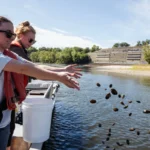
- Community Impact: A school-approved capstone project. These projects are as diverse as the communities they serve. Students have built beaver dams to manage water flow, developed forest management plans, studied snow science, and created sustainable agricultural systems.
This structure allows schools like Denver Public Schools to embed climate change lessons into existing civics requirements, ensuring that the topic is not treated as a siloed scientific issue, but as a multifaceted societal challenge.
Data, Dollars, and Discontent: The Hurdles to Adoption
Despite its popularity among students, the seal has faced significant headwinds. Financial constraints are the most prominent obstacle; state funding for the rollout has been minimal, often leaving students to crowdfund their own projects or rely on private grants. Lyra Colorado has stepped in to bridge the gap, providing small-scale grants to help schools cover teacher time, student materials, and the logistics of the program.
The initiative has also met with vocal skepticism from critics who argue that schools should prioritize traditional academic metrics. Lance Izumi, senior director of education studies at the Pacific Research Institute, has been a staunch opponent of the seal. Izumi, whose organization has been criticized for promoting climate-skeptical viewpoints, argues that the focus on "activist" projects detracts from foundational science education.
"Diverting focus away from foundational science learning could worsen California’s already abysmal performance levels," Izumi stated in an email. His argument hinges on the fact that only a third of students in the state currently test as proficient in science. For Izumi, the priority should be the "fundamentals," not community-based initiatives that he views as politicized.
Proponents, however, counter that the seal is not a distraction, but a catalyst. By providing a real-world application for scientific principles, the seal can boost engagement in core subjects, particularly for students who might otherwise feel alienated by abstract classroom instruction.
Official Responses and Political Friction
The political climate surrounding the seal is as volatile as the environmental climate it seeks to address. The federal government’s shifting stance on climate science has created a "chilling effect" on funding. As the Trump administration has moved to label climate change a "hoax" and proposed deep cuts to research institutions like the National Center for Atmospheric Research—the very body that mentored Anthony Muñoz—nonprofits and school districts have found it increasingly difficult to secure philanthropic backing.
Mary Seawell of Lyra Colorado notes that the current political environment has led to anxiety among donors who fear the scrutiny of their tax-exempt status. "Funders are worried," she admits.
Despite this, the movement is finding creative ways to survive. In Maine, state education officials bypassed the legislative process entirely to adopt the seal, recognizing it as a logical extension of their existing Seal of Biliteracy. Teddy Lyman, the state’s K-12 climate education specialist, noted that for a coastal state like Maine—where the Gulf of Maine is warming faster than almost any other body of water—the seal is a matter of survival and economic preparation.
"Students want to be involved in climate action," Lyman said. "They’re often doing the work already but don’t have the recognition."
Implications for the Future: Workforce and Agency
Beyond the classroom, the seal is being positioned as a key component of workforce development. As the transition to a green economy accelerates, there is a desperate need for skilled workers in solar grid maintenance, heat pump installation, and climate-resilient agriculture. Lyra Colorado is currently collaborating with higher education institutions, such as Colorado Mountain College, to align the high school seal with college credits and professional certifications in these trades.
For the students, the impact is personal. Anthony Muñoz, now a sophomore studying mechanical engineering at the Colorado School of Mines, believes the seal gave him the leadership skills necessary to navigate a changing world. He continues to mentor younger students at Vista Academy, helping them refine the ozone garden projects and writing code to ensure the data collection continues, regardless of federal funding status.
Similarly, Rylan Neumann, a graduate of the Boulder Valley School District now studying environmental economics at UC Berkeley, has taken her experience to the state capital. She recently lobbied California lawmakers in support of the state’s climate seal bill, arguing that students have a unique perspective on the world they are set to inherit.
"Getting more students involved in climate action and how they’ll be impacted in the future is essential," Neumann said. "Students are the future. We’re the ones growing up in this world."
As the program continues to expand, it offers a glimpse into a potential future for American education: one where the classroom is not confined by four walls, and where the next generation is not just learning about the planet, but actively working to sustain it. For students like Muñoz and Neumann, the seal is more than an endorsement on a transcript; it is a declaration of agency in an era of uncertainty.