
























































The Fraud Frontier: How Healthcare Integrity Became a Defining Battleground of the 2026 Midterms

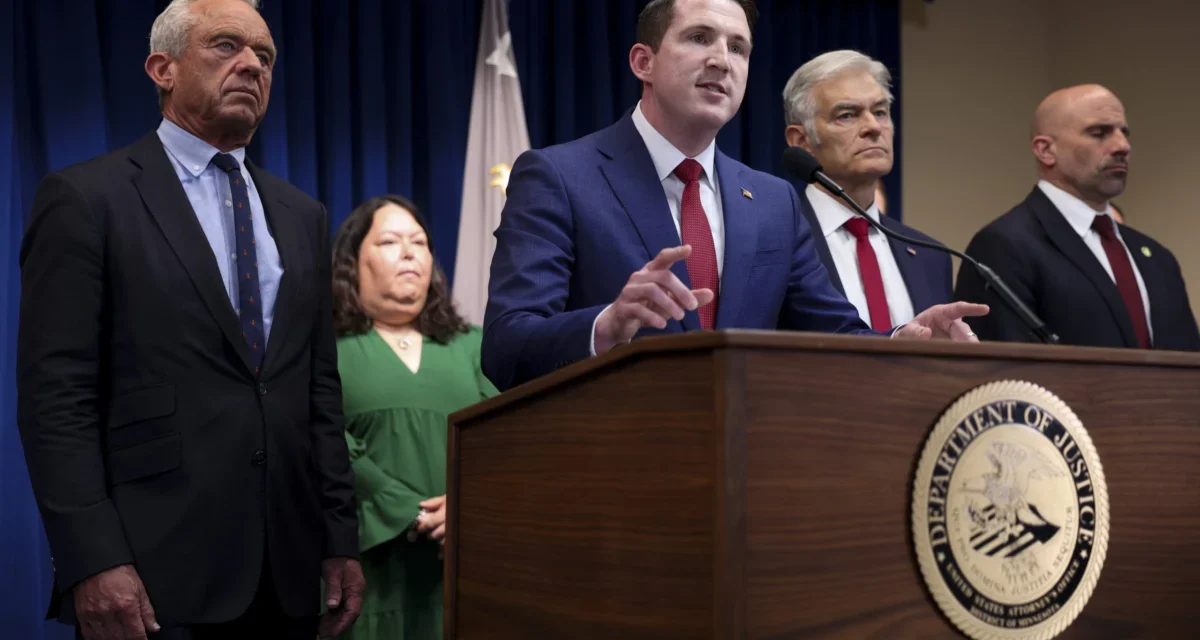
As the 2026 midterm elections approach, the political discourse surrounding the American healthcare system has undergone a sharp and strategic pivot. While voters consistently rank the soaring costs of medical care as a primary concern, a new, aggressive narrative has taken center stage in Republican campaign strategy: the crusade against "widespread fraud" in federal health programs.
This heightened focus on the integrity of Medicare, Medicaid, and the Affordable Care Act (ACA) is more than just a bureaucratic initiative. It has become a potent political weapon used by the Trump administration to justify major policy shifts, including the suspension of billions of dollars in state funding and the mass cancellation of ACA health coverage for hundreds of thousands of Americans. For the GOP, this "fraud-fighting" agenda serves a dual purpose: it allows candidates to frame austerity measures as fiscal responsibility while attempting to neutralize Democratic attacks on the party’s long-standing efforts to shrink the healthcare safety net.
The Strategic Shift: A New Campaign Agenda
For years, Republicans have faced intense criticism from Democrats over legislative efforts to cut funding for Medicaid and dismantle the Affordable Care Act. Traditionally, this has left the GOP on the defensive regarding healthcare. However, the current administration’s shift toward aggressive auditing and anti-fraud rhetoric has provided a counter-narrative.
"Going after fraud gives Republicans a healthcare message when they would otherwise just be defending cuts to Medicaid and the Affordable Care Act," explains Larry Levitt, executive vice president for health policy at KFF. According to Levitt, this pivot is designed to "blunt" the traditional Democratic advantage on healthcare policy. By painting these programs as inefficient and rife with waste, the GOP is attempting to reframe the debate from "who deserves coverage" to "who is stealing from the taxpayers."
The data suggests this strategy is resonating with the party’s base. A KFF poll conducted in mid-September 2026 found that 54% of Republican voters view fraud in government programs as an "extremely important" issue for candidates to address. Among rural Republican voters, the issue ranks as the single most important topic for discussion, providing a clear roadmap for candidates seeking to energize their base in the final stretch of the election cycle.
A Chronology of Conflict: From Audits to Disenrollment
The current administration’s campaign against alleged fraud did not emerge in a vacuum, but it has accelerated significantly throughout 2026.
- Early 2026: The Government Accountability Office (GAO) releases reports warning of significant fraud risks in Medicare and the ACA marketplace, providing the administration with the legislative leverage needed to begin a broader crackdown.
- March 2026: The Centers for Medicare & Medicaid Services (CMS), under Administrator Mehmet Oz, launches a high-profile investigation into New York’s Medicaid program, initially claiming—incorrectly—that 75% of the state’s Medicaid population had received personal care services.
- May–June 2026: The administration begins withholding billions in federal Medicaid payments to states like California and Minnesota, citing concerns over program integrity. Simultaneously, hundreds of healthcare providers are charged in federal billing schemes.
- August 2026: CMS announces the cancellation of ACA enrollments for 760,000 individuals, citing "nonexistent consumers" and suspicious broker activity.
- October 2026: President Trump calls on Congress to enact mandatory prison sentences for those convicted of defrauding federal health programs, explicitly calling for the elimination of probation as a legal option for these offenders.
The Data Debate: Misinformation or Necessary Oversight?
The administration’s justifications for these actions have faced intense scrutiny from policy analysts and Democratic lawmakers, who argue that the government is relying on flawed methodologies to justify political targeting.
The most contentious example remains the CMS cancellation of 760,000 ACA enrollments. Administrator Mehmet Oz defended the move, stating, "About 35% of current people on the Obamacare system had never used the program. They haven’t bought a prescription medication. They haven’t seen a doctor. That just is not possible."
Health policy analysts, however, challenge the logic that "non-utilization" equals fraud. They point out that younger, healthier individuals often purchase insurance as a safety net without requiring immediate medical intervention. Furthermore, the administration’s reliance on the absence of Social Security numbers as a "red flag" has been dismissed by experts, who note that newborn children are frequently added to family plans before they are assigned a number.
The administration’s own track record has also fueled accusations of inconsistency. Critics highlight that the Department of Health and Human Services (HHS) recently recertified hundreds of insurance brokers previously suspended for fraud by the Biden administration, while simultaneously laying off approximately 200 CMS employees tasked with regional marketplace oversight.
Official Responses and Political Implications
The political ramifications of this conflict are playing out in state-level races across the country. In Minnesota, Republican gubernatorial candidate Lisa Demuth has utilized the administration’s funding freeze to attack U.S. Sen. Amy Klobuchar, accusing her of failing to address state-level corruption. Conversely, in New York, Attorney General Letitia James has characterized the federal withholding of Medicaid funds as an act of political sabotage that ultimately harms vulnerable residents.
The administration, however, maintains that its actions are essential for restoring trust. "The fraud doesn’t just steal money—it steals our trust," Oz said during a recent appearance on Face the Nation.
Meanwhile, conservative policy advisers, such as Brian Blase of the Paragon Health Institute, argue that critics are failing to grasp the complexity of the administration’s efforts. "Those criticizing the action either don’t understand it or see some political advantage in mischaracterizing it," Blase stated, defending the administration’s protocols for contacting consumers before terminating coverage.
The Broader Implications: A Changing Safety Net
The implications of this "anti-fraud" era extend far beyond the immediate electoral cycle. The administration’s focus on program integrity is occurring in tandem with significant structural changes to the healthcare landscape. Legislation enacted last year is projected to slash federal Medicaid spending by hundreds of billions over the next decade. Additionally, the expiration of enhanced ACA premium subsidies at the end of 2025 has already led to higher costs for millions of Americans and a corresponding decline in enrollment.
The Congressional Budget Office (CBO) has warned that the cumulative effect of these GOP-led policies could result in 16 million additional uninsured Americans by 2034. For critics, the "fraud-fighting" narrative is simply a mask for these broader austerity goals.
"It’s really a way to distract and reframe the cuts in a different way," says Anthony Wright, executive director of Families USA. "Fighting fraud shouldn’t result in people losing coverage."
As voters head to the polls, the central question is whether the administration’s focus on rooting out waste will be viewed as a responsible stewardship of taxpayer funds or a politically motivated dismantling of the healthcare safety net. The outcome of the 2026 midterms will likely determine whether this "fraud-first" strategy becomes a permanent fixture of American healthcare policy or a transient tactic that ultimately fails to address the foundational challenges of cost and access facing the nation.