

























































In the Shadow of Surveillance: How a Minneapolis Child Care Center Built a Grassroots Shield Against ICE

MINNEAPOLIS — On a frigid February afternoon, the ritual at a local Spanish-immersion child care center is defined not by play, but by precision. As parents collect their toddlers, helping them bundle into puffy coats and mittens, a more somber operation unfolds in the director’s office. Michael, the husband of the center’s director, sits with his eyes locked on a bank of monitors streaming live footage from the building’s security perimeter. He is not watching for intruders in the traditional sense; he is scanning for government vehicles—specifically, those that might signal the arrival of U.S. Immigration and Customs Enforcement (ICE) agents.
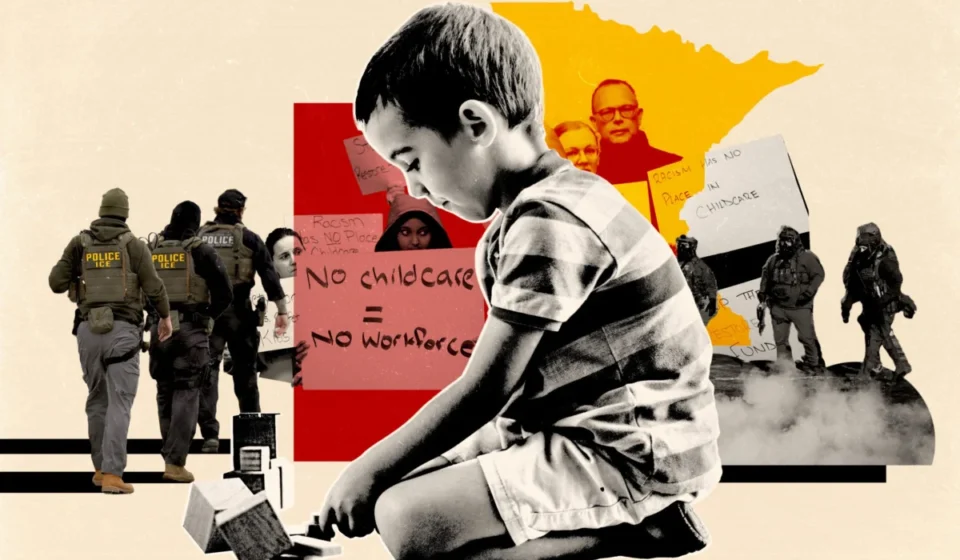
Since the launch of "Operation Metro Surge" in January, this sanctuary for early childhood education has transformed into a fortified island. The center’s staff, all authorized to work in the United States, have been paralyzed by the aggressive climate of immigration enforcement that has swept through the Twin Cities. To ensure their teachers can safely provide for their families and continue their vital work, a network of volunteers—mostly retirees affectionately dubbed the "abuelitas"—has emerged to provide an escort service that has become a lifeline for the community.
The Anatomy of an Immigration Surge
The current climate of fear in Minneapolis did not materialize in a vacuum. It began with a toxic intersection of social media disinformation and federal policy shifts. In late December, a viral video posted by a right-wing influencer leveled unsubstantiated claims of widespread fraud within Somali-run daycare programs in Minneapolis. The video, which falsely alleged that centers were pocketing public funds without providing care, was amplified by high-ranking political figures, including Vice President JD Vance and Attorney General Pam Bondi.
The fallout was immediate and catastrophic. The Trump administration responded by freezing federal child care payments for low-income families in Minnesota, a move that threatened the stability of the entire regional child care infrastructure. An estimated 23,000 children in the state rely on these federal subsidies to access care. Although a federal judge later ordered the funds unfrozen in February while legal challenges proceed, the damage to the reputation and financial security of these centers was already done.
Following the circulation of the video, the federal government cited the "fraud" claims as justification for a massive expansion of enforcement. Operation Metro Surge saw the deployment of 2,000 additional ICE and Border Patrol agents to Minnesota, bringing the total federal presence to roughly 3,000 officers—a force three times the size of the combined police departments of Minneapolis and St. Paul.
A Chronology of Fear: From Rumors to Reality
- November: Whispers begin among immigrant communities that ICE is detaining individuals regardless of their legal status, bypassing traditional due process.
- December 26: A viral video alleging systemic child care fraud is posted, triggering a national firestorm.
- December 31: The Minneapolis child care center receives an anonymous, threatening phone call: "You guys are not safe. You guys have to leave."
- January 5: The administration officially expands Operation Metro Surge, citing the viral fraud claims as the impetus.
- January 7: A volunteer observer, Renee Macklin Good, is shot and killed by an ICE agent, an event that forces the center to close its doors for six days out of safety concerns.
- February: A federal judge intervenes to unfreeze child care funding, providing a temporary legal reprieve for the industry.
- March: As the surge enters a "stealth" phase, targeting suburbs rather than urban centers, the center begins a cautious transition toward normal operations.
Supporting Data: The Fragility of the Child Care Sector
The crisis in the Twin Cities highlights a national vulnerability. According to the American Immigration Council, one in five child care workers in the United States is an immigrant. In major metropolitan areas, that number is significantly higher. When enforcement actions target these workers, the ripple effects are felt throughout the economy.
At the Minneapolis center, which serves 50 children, the climate of intimidation led to a drop in enrollment. Families, fearing the proximity of ICE or the potential for raids, withdrew 12 children, forcing the director to lay off staff during an already turbulent period.
The logistical burden of the volunteer escort program is staggering. Sixty volunteers, most living in distant suburbs, work in rotating shifts to drive 10 staff members to and from their homes. The volunteers are trained in legal protocols: keep the windows cracked, do not lie, and demand a signed judicial warrant. They operate with high levels of caution, often disabling smartphone location services to avoid digital tracking by federal authorities.

Official Responses and the "Saving Entity" Void
The absence of a clear government response to the safety of these providers has left a vacuum filled by mutual aid. Lily Crooks, the director of a child care center in St. Paul, has been at the forefront of organizing these networks. "You literally have to have a good network to survive, because it’s not as though there is a government organization coming to help," Crooks remarked. Her center raised $5,000 to purchase Lyft gift cards for parents and employees, allowing them to avoid public transportation hubs, where ICE agents are known to conduct surveillance.
While federal agencies maintain that their operations are focused on national security and enforcement of existing laws, the human cost is being tallied by local communities. The death of volunteer Renee Macklin Good became a flashpoint for the movement, transforming the volunteer effort from a logistical necessity into a moral imperative.
Implications: The Long Road to "Resistencia"
The long-term sustainability of such volunteer networks remains a subject of intense debate. Sarah, a 71-year-old volunteer who drives a staff member home three times a week, views this as a modern-day continuation of the civil rights struggles of her youth. "I think I would not be treated like she might be treated," Sarah says of her passenger. "I still need to find the strength and courage to do what I know is right."
However, for the staff members, the reliance on such help is a source of profound frustration. P., a substitute teacher at the center, expressed the indignity of needing an escort to perform essential work. "It’s not OK that someone feels unsafe in a ‘safe’ country," she said, using air quotes to emphasize the irony of her situation.
As Operation Metro Surge purportedly winds down, reports indicate that ICE agents have shifted tactics, becoming more "stealthy" and moving into suburban neighborhoods. This evolution suggests that the danger has not vanished; it has merely changed shape.
The director of the Minneapolis center, Diana, emphasizes that the term "resistance"—or resistencia—best captures the mood of her staff. It is not an act of aggression, but one of endurance. "It means that you don’t give up, you keep fighting," Diana says. "We are going to get through it."
As the center slowly resumes normal operations, the "abuelitas" remain on standby, and the security cameras continue to record. The crisis has left an indelible mark on the community, proving that when the mechanisms of state protection fail, the strength of a neighborhood’s social fabric becomes the only true shield against uncertainty. The question that remains is how long this volunteer-led model can hold before the physical and emotional toll on both the teachers and their protectors becomes unsustainable. For now, they continue to drive, continue to watch, and continue to endure.