


















The Silent Erosion of the American Heartland: Can Conservation Easements Save the Family Farm?

By [Your Name/Journalistic Staff]
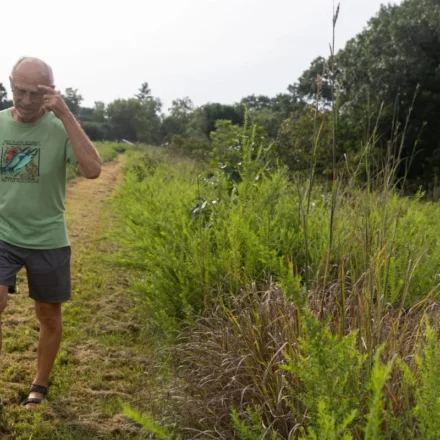
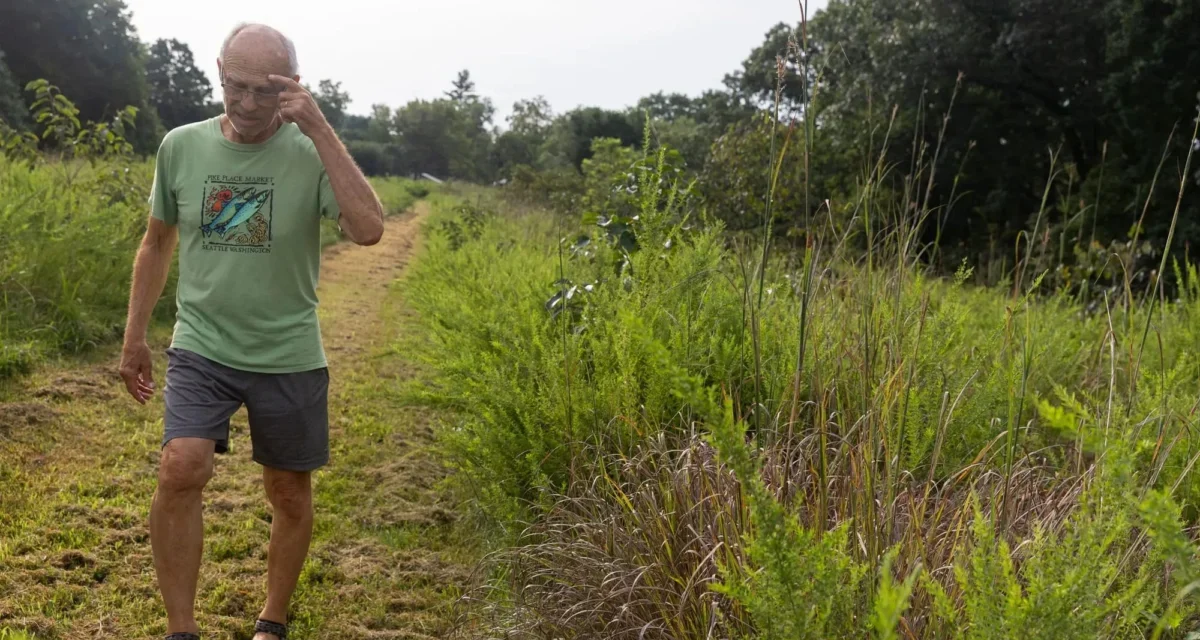
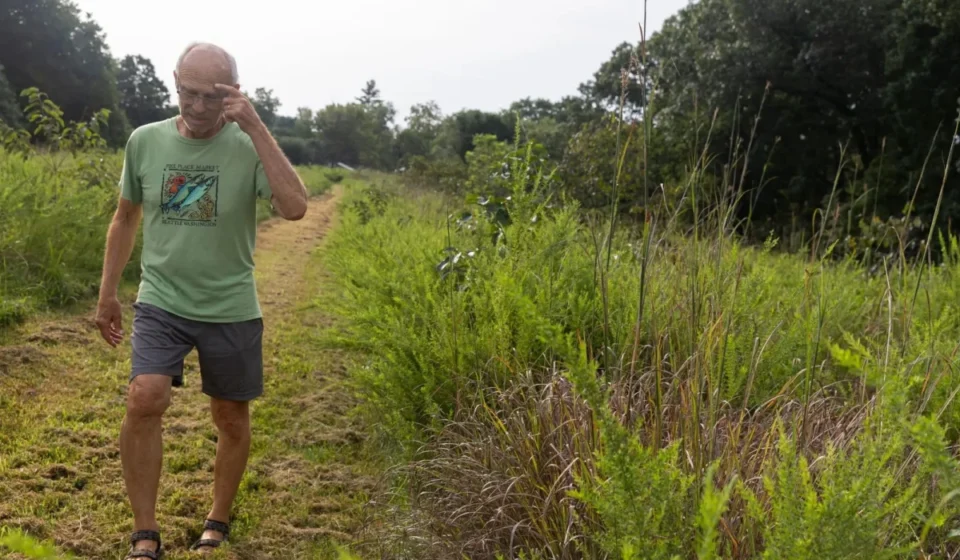
On a sweltering August morning in Ashland, Missouri, Dan Kuebler walks the perimeter of what was once his life’s work. For 33 years, these 30 acres were a tapestry of vegetable rows, fruit trees, and the small-batch production of fermented goods like kimchi and sauerkraut. For decades, his harvest was a staple at the Columbia Farmers Market, a testament to the symbiotic relationship between local growers and their communities.
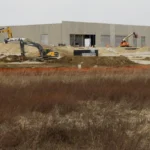
But the rural landscape Kuebler knew when he arrived in 1977 is vanishing. As Columbia and Jefferson City have expanded, the “sleepy town” of Ashland has morphed into a commuter hub. Across the county, historic farmland is being carved into five-acre residential parcels, a process Kuebler calls “sacrilege.” Faced with the reality of retirement, Kuebler made a choice that bucked the prevailing market trend: he ensured his land would never host a subdivision. He chose a conservation easement—a legal tether binding the land to agriculture in perpetuity.
Across the United States, this quiet battle between development and preservation is reaching a fever pitch. With nearly 50 million acres of farmland projected to change hands by the end of this decade, the future of the American food supply is being written in real-time, one land deed at a time.
The Chronology of a Disappearing Landscape
The transformation of the American rural landscape is not a sudden catastrophe but a slow, persistent creep.
In the late 1970s, when Dan Kuebler began his journey into farming at age 40, the economics of agriculture were vastly different. He balanced his physical labor on the farm with a career as an in-home physical therapist, a dual-life common among small-scale producers. Over three decades, he witnessed the incremental encroachment of urban sprawl.
As the years passed, his neighbors began selling to developers. The “For Sale” signs that signaled the end of family farms became a common sight on the two-mile dead-end road leading to his property. By the time Kuebler reached retirement age, he faced a critical crossroads: sell to the highest bidder—which would almost certainly lead to the paving over of his fields—or find a way to lock the land’s agricultural purpose into the legal record.
This struggle is reflective of a national trend. Since the early 2000s, the conversion of farmland into low-density residential housing has accelerated. Between 2001 and 2016 alone, nearly 7 million acres of agricultural land were repurposed for housing, according to data from the American Farmland Trust.
Supporting Data: The Scale of the Crisis
The statistics surrounding land loss are sobering. The American Farmland Trust reports that the United States loses or compromises approximately 2,000 acres of farmland every single day. If current trends persist, an estimated 18.4 million additional acres—a landmass nearly the size of South Carolina—will be converted by 2040.
The financial reality of this loss is driven by the “highest and best use” doctrine of real estate appraisal. When land is appraised for sale, the value is calculated based on its most profitable potential—which, in the eyes of the market, is almost never farming.
“Whenever you go to sell your property, it’s going to be appraised, and that’s going to be judged at the highest dollar,” says Josh Wright of the American Farmland Trust. “Unfortunately, farming is considered the worst use.”
The financial disparity is stark: placing a restrictive conservation easement on a property can reduce its appraised value by up to 65%. For a farmer like Kuebler, this isn’t just a paperwork hurdle; it is a direct hit to his retirement savings. Kuebler estimated that his decision to protect his 30 acres cost him roughly $90,000 in lost market value and $20,000 in out-of-pocket legal, survey, and appraisal fees.
The Mechanics of Protection: Conservation Easements
To combat the loss of agricultural heritage, land trusts and federal agencies have turned to the Conservation Easement. This legal tool is essentially a contract between a landowner and a third-party organization (often a land trust or government agency) that permanently restricts development rights.
Nick Shapiro, executive director of the Greenbelt Land Trust of Mid-Missouri, emphasizes that these agreements are designed to survive the current owner. “You cannot subdivide it, you cannot sell it off for residential or commercial development,” Shapiro explains. “That is the guiding principle.”
Once an easement is attached to a deed, the land trust is tasked with monitoring the property in perpetuity. They are legally required to defend the land against future owners who might attempt to violate those terms. It is a promise to future generations that the soil will remain productive, regardless of who holds the title.
Official Responses and Federal Intervention
Recognizing the existential threat to the nation’s food security, Congress has moved to bridge the financial gap for farmers who wish to preserve their land. The Agricultural Conservation Easement Program (ACEP-ALE) was expanded 12 years ago to compensate landowners for the decline in property value caused by easements.
Current funding for the program stands at approximately $650 million annually. This capital flows through non-profits, tribes, and state agencies to effectively purchase development rights from the farmer.
However, there is a significant geographical disparity in the program’s success. Since its inception in 2014, over 1 million acres have been preserved, but the vast majority of these acres are concentrated in Montana, Wyoming, and Colorado. In Missouri, the program has yet to see a single acre of farmland protected under this specific federal initiative. Illinois and Iowa have seen only modest adoption.
Eric Gramlich of the Ozark Land Trust points to a “perfect storm” of obstacles: a lack of local land trust infrastructure, the complexity of the federal application process, and the simple fact that federal payments often cannot compete with the aggressive offers from developers in high-growth corridors.
“Even those payments would struggle to keep up with the demand and the price of land for commercial development,” Gramlich notes. “It is a big challenge for us to rise up and be on some sort of a playing field with the other competing interests for that land.”
The Human Cost: A Legacy vs. A Nest Egg
The tension between the moral desire to save a farm and the economic necessity of funding a retirement is the central tragedy for many aging farmers.
Rick Mareske, a producer in Kansas City, Kansas, faces this dilemma acutely. After 20 years of forest farming and berry production, he and his wife are looking toward the end of their career. While they value the sanctity of their land, the price tag of an easement—often exceeding $25,000 in upfront costs—is a barrier he cannot easily clear.
“We’re trying to make it as beautiful as possible and as enticing as possible for someone to buy it and keep it going,” Mareske says. He hopes for a buyer who shares his vision, but he remains wary of the financial sacrifices required to formalize that protection legally.
Implications: A Future in Flux
The case of Dan Kuebler provides a glimpse into the “best-case scenario” for farm preservation. He succeeded in selling his land to a younger farmer committed to sustainable, regenerative practices. Because he placed an easement on the property, he secured a future for the land that exists outside the volatile whims of real estate speculation.
Perhaps most poignantly, the agreement includes a specific clause: Kuebler retains the right to live in the cabin on the property for the remainder of his life. For a man who spent 33 years nurturing that soil, the land is not merely an asset—it is his home and his community.
The implications for the Midwest are profound. If the current trajectory of urban sprawl continues, the region’s agricultural identity—its culture, its heritage, and its food independence—faces a slow dissolution. While the federal government has streamlined some of the bureaucratic hurdles for easements, the “time-consuming” nature of the process often moves slower than the bulldozers.
As cities like Columbia and Kansas City continue to push outward, the question is not whether the land will be used, but how. Will it be used to feed the next generation, or will it be buried under the asphalt of suburban development?
For advocates like Nick Shapiro, the work is about more than just acreage. It is about protecting the fabric of the community. “So much of mid-Missouri’s not just economy, but culture and heritage is based in farming,” he says. “There is an important role for us to play in helping to preserve that heritage.”
Ultimately, the preservation of the American farm rests on a precarious balance between the altruism of the departing generation and the financial, systemic support provided by the public. As Dan Kuebler still visits the farmers market every Saturday—not as a vendor, but as a patron—he serves as a living reminder that while the farm may be “protected,” the community that grew from it remains the most vital harvest of all.