

















































Guardians of the River: The Quarter-Century Mission to Restore the Mississippi’s Native Mussels

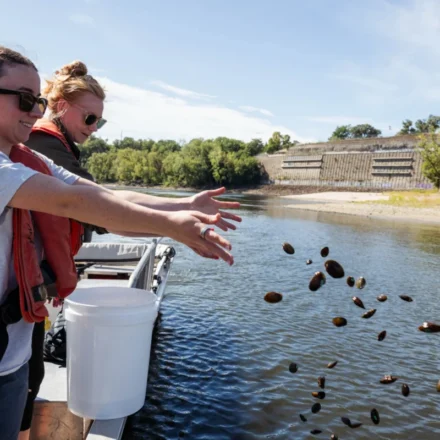
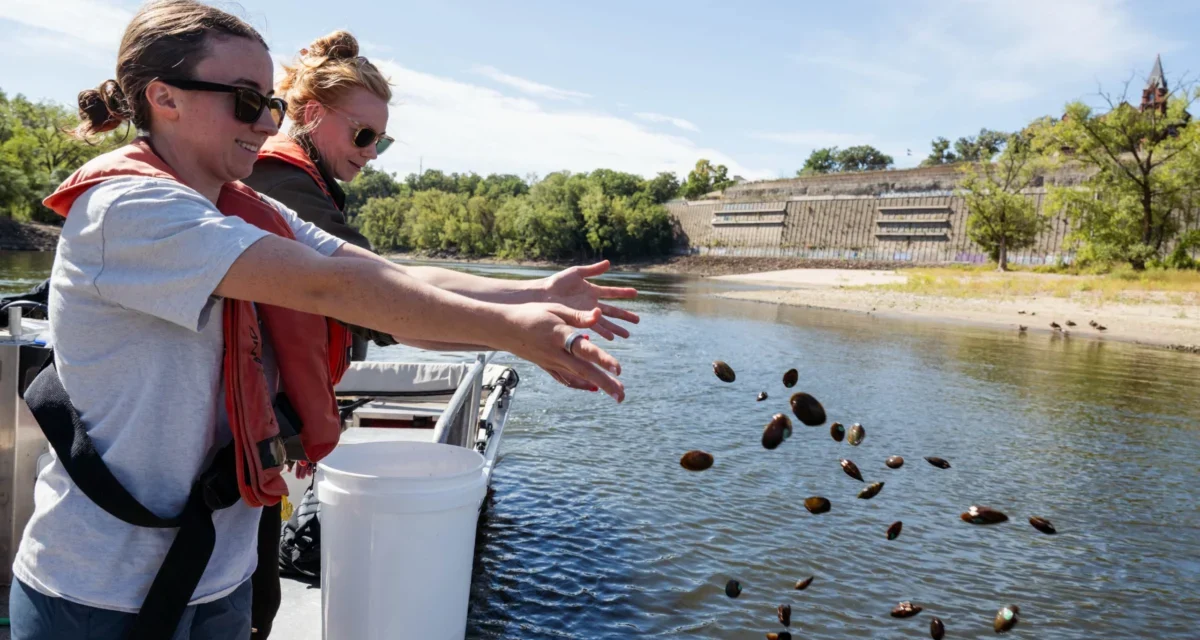
On a balmy September afternoon, the scene on the Mississippi River near St. Paul, Minnesota, appears remarkably typical. A boat drifts lazily against the current, its crew chatting idly about the weather and the dogs bounding along the distant riverbanks. To an outside observer, it looks like a routine fishing expedition—the kind that defines the leisure culture of the Upper Midwest. But the cargo on this vessel is not destined for a frying pan.
Tucked away in a heavy-duty cooler are roughly 400 freshwater mussels—species known as "muckets" and "Higgins eye." Each is barely an inch in diameter, their brown, striped shells glinting with a pearlescent sheen in the late summer sun. These creatures are the focus of a meticulously orchestrated rescue mission led by the Minnesota Department of Natural Resources (DNR). As the sun begins to dip, the crew carefully returns these mollusks to the riverbed, marking another milestone in a 25-year endeavor to restore a vital, yet largely invisible, foundation of the Mississippi ecosystem.
A Legacy of Loss: From Pearl Buttons to Industrial Collapse
To understand why biologists are spending years hand-rearing mussels in laboratories only to "throw them away" into the river, one must look back at the dark history of the Mississippi’s aquatic life. In the late 19th century, the river was home to such a dense population of mussels that historical accounts describe the riverbeds as resembling cobblestone streets.
That abundance became a curse. In the late 1800s, German immigrant John Boepple arrived in Muscatine, Iowa, and pioneered the mass production of pearl buttons. The industry exploded; at its peak, Muscatine’s factories were churning out 1.5 billion buttons annually, accounting for more than one-third of the world’s supply. The resource was viewed as infinite, and the resulting overharvesting decimated populations that had thrived for millennia.
The decline was exacerbated by the 20th century’s industrial march. As cities like the Twin Cities expanded, meatpacking plants and stockyards poured waste directly into the Mississippi. A 1926 study of the river between St. Anthony Falls and Hastings—a critical stretch—found only two living fish. The mussels, which require specific host fish species to complete their complex reproductive cycle, were effectively wiped out of the urban corridor.
The Life Cycle: Ecosystem Engineers and Their Invisible Struggles
Freshwater mussels are more than just sediment-dwellers; they are "ecosystem engineers." By clustering in dense beds, they stabilize river bottoms, preventing erosion during flood events. More importantly, they are nature’s water filtration system. A single mussel can filter gallons of water daily, removing bacteria, algae, and heavy metals.

However, their biology is fragile. The reproductive process is a marvel of evolutionary complexity: female mussels release microscopic larvae into the water, which must latch onto the gills of a specific species of fish. They live as "hitchhikers" on the fish for several weeks, feeding and growing in safety, before detaching to settle on the river floor.
This process has been severed by modern infrastructure. The Mississippi River is now bisected by 29 locks and dams. These structures act as concrete walls for both fish and their stowaway larvae, preventing them from migrating and recolonizing fragmented stretches of the river.
Furthermore, the arrival of the invasive zebra mussel has introduced a deadly competition for resources. Zebra mussels attach to native shells in such high numbers that they effectively smother them, preventing the native species from feeding or opening their shells. "They’re a pretty complex animal, even though they don’t have a face," says Lindsay Ohlman, a propagation biologist at the DNR. "They provide a lot of function to the ecosystem, but they are fighting an uphill battle."
Chronology of Recovery: A 25-Year Commitment
The DNR’s reintroduction effort, which began in 2001, has been a model of persistence in the face of ecological fragmentation.
- 2001: The DNR initiates the first systematic reintroduction of native mussels in the Twin Cities stretch of the Mississippi, a section that had been devoid of the species for decades.
- 2001–2015: The program scales up, focusing on endangered and threatened species, including the snuffbox and winged mapleleaf. Thousands of individuals are reared in the DNR’s Lake City laboratory.
- 2016–2025: Scientists pivot to monitoring. By epoxy-tagging shells, they track growth rates and survival. The data begins to show success, with survival rates in southern watersheds (Cedar and Cannon Rivers) reaching between 40% and 80%.
- 2026: The current project reaches a tipping point. With evidence of natural reproduction—finding untagged, young mussels—biologists determine that the populations are finally beginning to self-sustain.
The Science of Reintroduction: Data and Results
The reintroduction process is labor-intensive. Biologists spend five years nurturing mussels in controlled environments before they are robust enough for the wild. The mussels, which can live up to 50 years, show their age through rings on their shells, much like the growth rings of a tree.
"You spend five years raising these little guys just to throw them out," says Ohlman. "It’s a little anticlimactic, but it’s the goal."

The success of the program is measured through rigorous field surveys. While the DNR has not conducted a full-scale survey of the entire Mississippi to determine absolute survival rates, the data from the Cedar and Cannon River watersheds provide a robust proxy. The fact that researchers are now observing "recruitment"—the presence of younger mussels that were not introduced by humans—is the gold standard of ecological success. It suggests that the environmental conditions are now stable enough to support a new generation without human intervention.
Official Responses and Strategic Shifts
The recovery of these populations is a collaborative effort involving the Minnesota Zoo, the University of Minnesota, and state agencies. The Minnesota Zoo is currently pushing the envelope by researching genetic interventions that could limit the reproductive success of invasive zebra mussels, potentially offering a long-term strategy to protect native species from further competition.
Trevor Russell, water program director for the nonprofit Friends of the Mississippi River, views this recovery as a direct result of the Clean Water Act and subsequent local regulations. "The 1920s were the height of industrial pollution," Russell notes. "The return of the mussels is a testament to how far we’ve come in cleaning up the river. They are, in many ways, the living indicators of our success."
Despite the progress, the state remains cautious. Of the 51 species native to Minnesota, more than half remain listed as endangered, threatened, or of special concern. Five species are already presumed extinct in the state.
Implications: Letting Nature Take its Course
For the team on the boat, the September release was bittersweet. It marked the final scheduled release for this specific stretch of the Mississippi. Having spent decades ensuring the mussels were not just surviving, but thriving, the biologists are ready to step back.
"We kind of feel like we’ve got enough out there; they’re taking a foothold," says Ohlman. "We’re gonna let nature take its course for a while."

The implications of this "hand-off" are significant. It signals a shift from active management to passive monitoring. If these populations continue to expand, the Mississippi River could see a restoration of the complex biological webs that existed before the era of the pearl button.
However, the threat of climate change, agricultural runoff, and the persistent spread of zebra mussels ensures that the work is far from over. The reintroduction of mussels is a reminder that while humanity has the power to destroy complex ecosystems in a matter of decades, the restoration of those systems requires a commitment measured in generations.
As the boat turns back toward the dock, leaving the mussels to settle into the riverbed, the silence of the river is no longer an indicator of emptiness, but of a quiet, slow-motion resurgence. The little creatures are back on the job, filtering the water, anchoring the sediment, and waiting for the river to become the vibrant, living artery it once was.