





















































This week, the cultural heartbeat of Minneapolis synchronizes with the ghosts of 20th-century modernism. As the Minnesota Orchestra launches its ambitious "Sound Unbound" series at Orchestra Hall, and the Guthrie Theater revives Samuel Beckett’s existential cornerstone, Waiting for Godot, the city finds itself grappling with the enduring power of mid-century innovation. Whether through the high-tech, pixelated metamorphosis of Stravinsky’s The Firebird or the stripped-back, harrowing absurdity of Beckett’s tramps, these performances suggest that the radical experiments of the past are more relevant—and more disquieting—than ever.
The Digital Transformation of Orchestra Hall
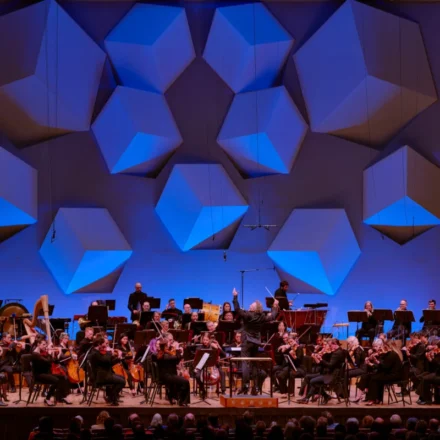
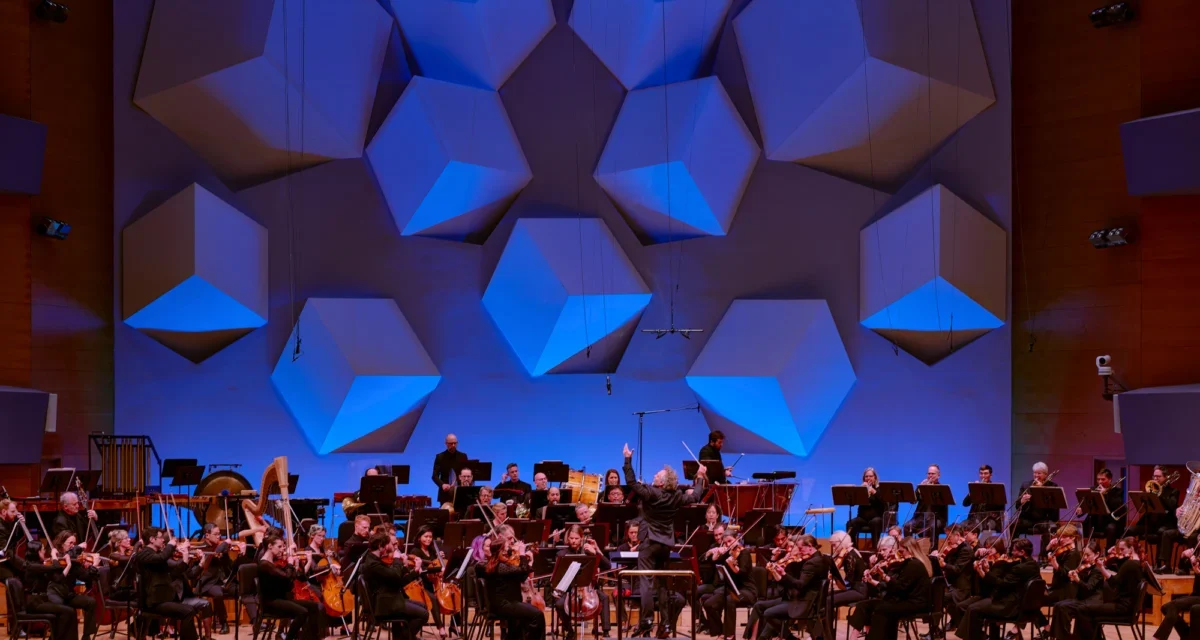
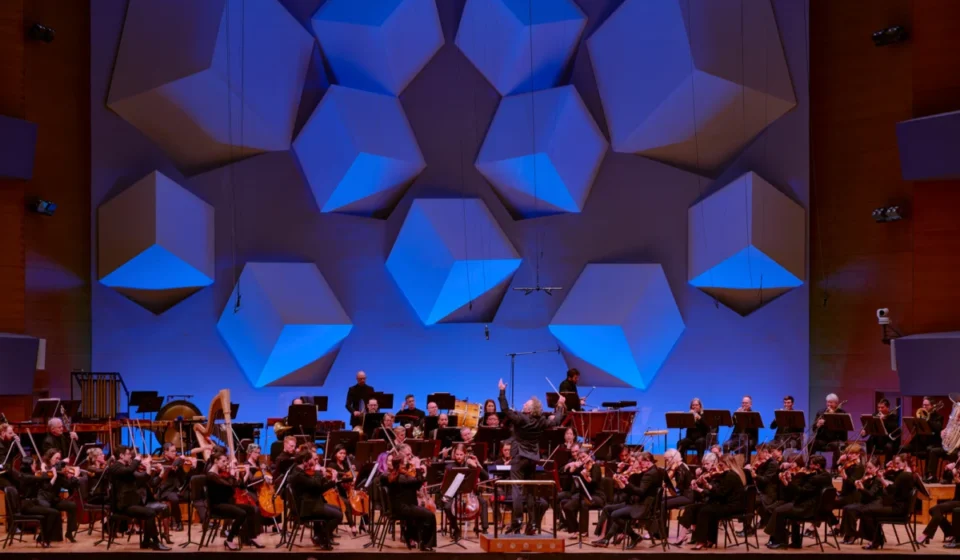
The iconic, acoustically precise "cubes" that line the back wall and ceiling of Orchestra Hall are undergoing a radical metamorphosis. For the Minnesota Orchestra’s season opener, BAFTA-winning designer Tal Rosner has transformed this architectural signature into a sprawling, high-tech canvas. Using advanced video-mapping technology, Rosner is choreographing a visual landscape that breathes new life into Igor Stravinsky’s 1910 masterpiece, The Firebird.
The project serves as the inaugural centerpiece for "Sound Unbound," a multi-year initiative by the Minnesota Orchestra designed to foster deep, iterative collaborations between world-class musicians and contemporary visual artists. The goal is to move beyond the traditional concert format, treating the concert hall not just as a vessel for sound, but as an immersive, multi-sensory environment.
A Historical Bridge: From Ballets Russes to Digital Mapping
To understand the gravity of this collaboration, one must look back to the origins of The Firebird. Commissioned by Sergei Diaghilev for his legendary Ballets Russes, the work was a revolutionary synthesis of Russian folklore and modernist orchestration. It marked the arrival of a new musical language, setting the stage for the chaotic, earth-shattering debut of Stravinsky’s The Rite of Spring just three years later.
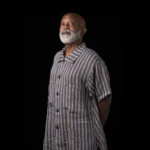
Rosner, a London-based artist with a deep background in communication design, has spent months meticulously mapping the specific geometry of Orchestra Hall’s cubes. His approach is not to provide a literal translation of the Russian folklore—the tale of Prince Ivan, the sorcerer Koschei, and the magical Firebird—but rather to offer a metaphorical interpretation. "I don’t show the princesses," Rosner notes, "but the princesses are represented by golden ribbons." By following the rhythmic beats of the score, Rosner creates a visual dialogue that remains coherent with the original narrative while forging a distinct, digital structure.
Technical Precision and Artistic Maturity
The collaboration has required a grueling level of coordination between Rosner and the Orchestra’s in-house lighting and technical crews. This is not merely a "projection" show; it is a synchronized performance. Every flicker, color shift, and geometric expansion must align with the baton of Music Director Thomas Søndergård.
Rosner attributes the success of this integration to a shift in his own artistic philosophy. "As the years progressed, I’m much more aware of everyone else on the team," he explains. "It’s not just like, ‘Look at me! Look at me!’ Now it’s a much more holistic approach." For the designer, the constraints of the hall’s architecture became an unexpected gift. Because the mapping is so precisely calibrated to the specific, irregular layout of the cubes, the resulting performance is, as he puts it, "impossible to replicate anywhere else."
The performance, which also features George Walker’s Icarus in Orbit and Prokofiev’s Piano Concerto No. 2 with soloist Vadym Kholodenko, represents a bold opening statement for the Orchestra’s new season. It is a testament to the idea that modern technology can enhance, rather than distract from, the acoustic integrity of a symphonic performance.
Existential Echoes at the Guthrie Theater
While the Minnesota Orchestra embraces the digital future of music, the Guthrie Theater is digging into the bedrock of existentialism with a new production of Samuel Beckett’s 1953 play, Waiting for Godot. Directed by the Guthrie’s artistic director, Joseph Haj, this production arrives in a world that feels as fractured and uncertain as the landscape Beckett envisioned in the wake of the French Resistance.
Beckett was notoriously protective of his stage directions, mandating every pause and silence. Yet, Haj has managed to breathe new life into the minimalist text. By embracing the dire minimalism of the setting—a barren road, a single tree—the production asks a timely question: How do we maintain hope when the world seems to be collapsing into "end times fascism"?
A Study in Ensemble Chemistry
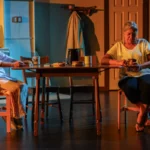
The success of Godot hinges entirely on the chemistry between the two leads, Vladimir and Estragon. David Strathairn and Jimmy Kieffer anchor the production with a magnetism that turns the play’s circular, repetitive dialogue into a gripping emotional journey.
Strathairn, an actor of immense gravitas, brings an ache of existential longing to the second act that shifts the tone from the absurd to the profound. Kieffer, meanwhile, brings a signature warmth and comic timing that makes their mutual dependence feel painfully human. Supporting them, William Sturdivant navigates the duality of Pozzo’s cruelty and fragility, while Jim Lichtscheidl delivers a haunting, breathless version of Lucky’s infamous monologue. Combined with Darron L. West’s immersive, unsettling sound design, the production achieves a level of immediacy that reminds the audience why this play remains a cornerstone of the 20th-century canon.
Chronology of Cultural Impact
- 1910: Stravinsky’s The Firebird premieres in Paris, fundamentally altering the trajectory of modernist music.
- 1953: Samuel Beckett’s Waiting for Godot premieres in Paris, redefining the possibilities of dramatic form.
- Present Day: The Minnesota Orchestra and the Guthrie Theater demonstrate the "staying power" of these works through innovative, modern reinterpretations.
- September 23–27: A pivotal week in Minneapolis where these two artistic visions collide, offering a rare opportunity for local audiences to witness the evolution of 20th-century masterpieces.
Implications for the Arts Landscape
The simultaneous staging of these two works highlights a broader trend in American arts organizations: the move toward "active" rather than "passive" spectatorship. Whether it is the visual mapping of Orchestra Hall or the hyper-minimalist staging at the Guthrie, both institutions are challenging audiences to engage with history in a way that feels urgent.
For the Minnesota Orchestra, the "Sound Unbound" series is a calculated risk. By bringing in visual artists to manipulate the space, they are attempting to broaden the demographic of the concert-going public, appealing to a generation accustomed to the visual richness of digital media. Conversely, the Guthrie’s Godot proves that there is still a massive appetite for "slow" theater—art that demands patience, silence, and deep introspection.
Both endeavors serve as a reminder that the "modernism" of the 20th century was not a finite period, but a set of questions that we are still trying to answer. Whether it is the struggle of the Firebird to escape the sorcerer or the struggle of Vladimir and Estragon to simply wait for a savior who may never arrive, the themes remain locked in a perpetual cycle of performance and reflection.
Final Details for Attendees
For those looking to experience these works, the weekend offers a dense, rewarding schedule:
- Minnesota Orchestra: The Firebird (with music by Walker and Prokofiev) runs Friday, Sept. 25, at 8 p.m. and Saturday, Sept. 26, at 7 p.m. at Orchestra Hall. Tickets range from $64–$159.
- Guthrie Theater: Waiting for Godot runs through Oct. 11. Specific showtimes include Wednesday–Sunday, with matinee and evening options available. Tickets range from $25–$91.
As Minneapolis prepares for these performances, the city stands as a microcosm of the wider cultural debate: how to honor the rigid, precise structures of the past while allowing them to breathe, evolve, and ultimately mirror the anxieties of our present age. Through the digital ribbons of Tal Rosner and the existential pauses of Joseph Haj, the classics are being reborn—not as artifacts, but as living, breathing experiences.