























































Beyond the Textbook: How a New "Climate Literacy Seal" is Transforming High School Education

In the shadow of Denver’s international airport, Anthony Muñoz—a high school student concerned about the environmental toll of overhead jet fuel—did not just write an essay about climate change. He built a living laboratory. By partnering with federal scientists and his school administration, Muñoz designed an "ozone garden" filled with native plants capable of detecting ground-level pollutants. His project was more than an extracurricular hobby; it was a capstone requirement for a burgeoning educational credential that is sweeping across the United States: the Seal of Climate Literacy.
As climate change shifts from a distant, abstract threat to a daily reality affecting agriculture, public health, and local infrastructure, a growing number of states are moving to formalize climate education. By offering a "Seal of Climate Literacy" on high school diplomas, states are providing students with a structured pathway to gain scientific proficiency while engaging in meaningful, community-based environmental action.
The Genesis of a Grassroots Movement
The movement began in Colorado, where the nonprofit Lyra Colorado identified a growing disconnect between students’ anxieties about the warming planet and the traditional, textbook-heavy curriculum provided in classrooms. Educators and rural community leaders expressed a desire for a program that moved beyond the "doom and gloom" narrative, allowing students to explore climate change as a tangible factor in their daily lives.
In 2024, Colorado lawmakers codified the Seal of Climate Literacy, creating a statewide standard for the endorsement. To earn the seal, students must complete at least two advanced courses covering Earth’s climate systems—one in science and one in a discipline of their choosing, such as civics or the humanities—and complete an approved community project. Since its inception, the initiative has been adopted by 26 of the state’s 179 school districts, with approximately 1,200 students having earned the distinction.
A Chronology of Expansion
The success of the Colorado model has triggered a "domino effect" across the country, driven largely by youth advocacy and a desire for educational innovation:
- 2024: Colorado officially approves the Seal of Climate Literacy, setting a precedent for state-level endorsement.
- Early 2025: Maine, recognizing the need to prepare students for a rapidly changing coastal environment, adopts its own climate seal, bypassing legislative debate by implementing it through state education departments.
- Late 2025: California signs into law a bill establishing the climate seal, a major milestone in the nation’s most populous state.
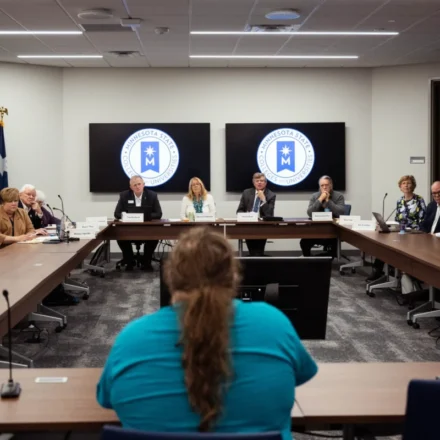
- Ongoing: Youth coalitions in Hawaii and Minnesota continue to lobby for the adoption of similar credentials, with the Minnesota Youth Council formally recommending the program to state legislators.
The rapid spread of the initiative underscores a fundamental shift in how educators and students view the role of school: as a training ground for the "green economy" and a hub for local environmental resilience.
Bridging the Gap: Skills for a Green Future
Proponents argue that the seal serves a dual purpose: it provides essential climate literacy and acts as a gateway to the expanding green workforce. As the global economy pivots toward renewable energy, students with documented experience in climate-resilient farming, water management, and urban heat mitigation are increasingly attractive to colleges and employers.
In Maine, where the Gulf of Maine is warming at an accelerated rate, educators like Melissa Luetje at Freeport High School are using the seal to connect students to local industries. Her students are not merely studying climate change; they are developing sustainable fishery models and researching invasive species that threaten the state’s vital lobster and aquaculture industries.
"Students want to be involved in climate action," says Teddy Lyman, K-12 climate education specialist in Maine. "They are often doing the work already but don’t have the recognition. They didn’t see a pathway to continue that work and embark on it as a potential career."
Navigating the Political and Financial Hurdles
Despite its popularity, the initiative has not been without significant friction. The program faces two primary obstacles: chronic underfunding and intense ideological pushback.
In Colorado, state lawmakers provided less than $20,000 for the seal’s initial rollout. This has forced students to rely on their own ingenuity to fund projects, with many, like Muñoz, having to secure outside grants. The lack of state funding has created an equity issue, where better-resourced schools may find it easier to implement the program than their rural or underfunded counterparts.
Furthermore, the initiative has become a flashpoint in the broader American "culture war." Critics, such as Lance Izumi of the Pacific Research Institute, argue that the seal is a distraction from foundational academics. "Diverting focus away from foundational science learning could worsen performance levels," Izumi stated, noting that a significant portion of California students currently fail to meet state proficiency standards in core science metrics.
Additionally, the political climate in Washington has introduced new levels of uncertainty. The current federal administration’s skepticism toward climate science and threats to dismantle research institutions like the National Center for Atmospheric Research—which provided technical guidance for the Colorado projects—have created a "chilling effect" on philanthropic funding. Many nonprofits that support climate education now fear that their tax-exempt status could be targeted by federal regulators, making it difficult to secure the long-term capital required to scale these programs.
Implications for Future Generations
The long-term impact of the Climate Literacy Seal may lie in its ability to address "climate anxiety." By empowering students to solve local problems—such as designing wheelchair-accessible community gardens or monitoring forest health—the program transforms helpless observers into active stewards.
For students like Rylan Neumann, a former Colorado student now at UC Berkeley, the seal was an entry point into political advocacy. After completing her requirements, Neumann lobbied California legislators to pass their version of the bill, proving that the skills learned in the classroom can translate into real-world policy outcomes.
"Getting more students involved in climate action and how they’ll be impacted in the future is essential," Neumann said. "Students are the future. We’re the ones growing up in this world."
As the initiative continues to evolve, proponents are working to bridge the gap between high school projects and vocational certifications. Lyra Colorado is currently collaborating with higher education institutions to align the seal with credentials in the skilled trades, such as solar grid maintenance and heat pump installation. The goal is to create a seamless pipeline from high school classrooms to high-paying, sustainable careers.
Conclusion: A New Standard for Education
Whether the Seal of Climate Literacy becomes a standard feature of the American high school experience remains to be seen. It faces a gauntlet of budget crises, political skepticism, and the daunting challenge of updating curriculum in a polarized landscape. Yet, for thousands of students, the seal represents more than just a sticker on a transcript. It represents a promise that the next generation will be equipped with the tools, the data, and the agency to confront a changing planet.
As Anthony Muñoz continues his studies in mechanical engineering, he reflects on the legacy of the garden he built at his high school. He is currently writing code to ensure future students can maintain the data collection systems he established, ensuring that even if national funding for research fluctuates, the work of the students continues.
"Are you going to think beyond yourself and help not only those in need but the environment?" Muñoz asks. "Or will you sit back and wait for someone else to change the world for you?" For those earning the seal, the answer is increasingly clear: they are no longer waiting.