




















































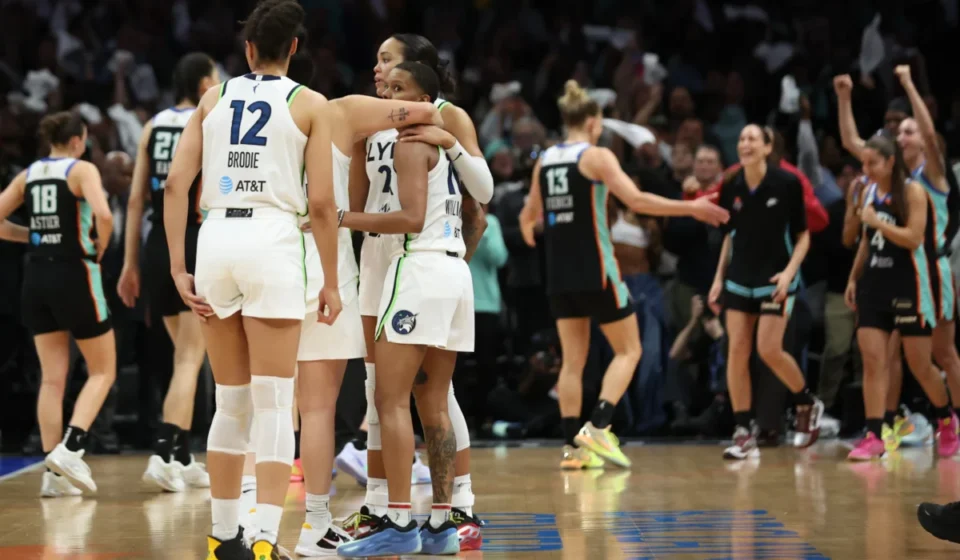
The Crossroad of a Franchise: Napheesa Collier and the Minnesota Lynx Face an Uncertain Offseason

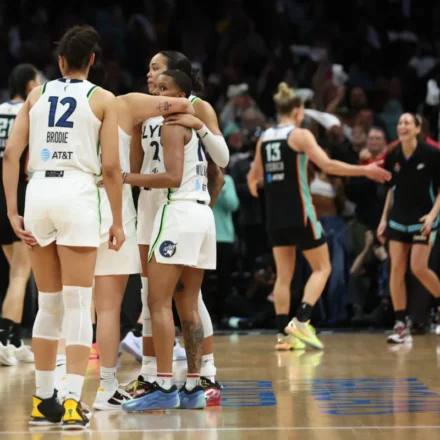
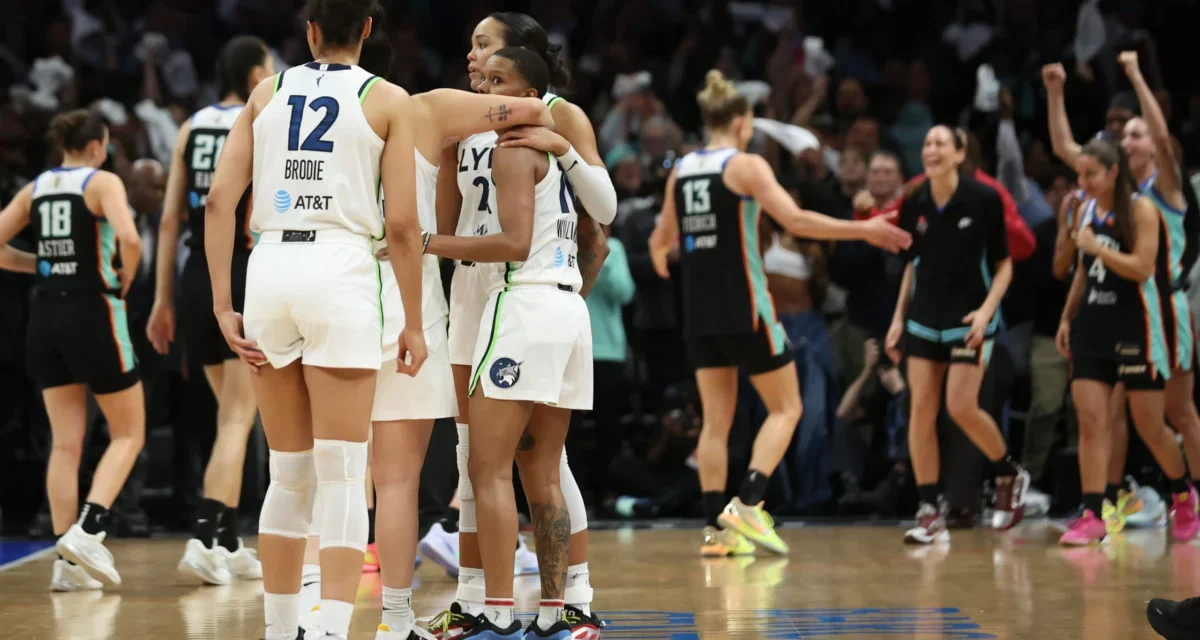
The Minnesota Lynx, the WNBA’s top-seeded juggernaut throughout the 2026 regular season, find themselves at an unexpected, silent crossroads. Just forty-eight hours after a stunning first-round playoff exit at the hands of the New York Liberty, the atmosphere at the Mayo Clinic Square practice facility was not one of reflection on a successful campaign, but rather one of heavy, impending transition.
At the center of this uncertainty stands Napheesa Collier. One year ago, the Lynx star and WNBA Players Association vice president sat in this same room, clutching a multipage manifesto that publicly challenged league leadership regarding officiating and labor conditions. That moment set the tone for a turbulent year of collective bargaining. This year, however, Collier walked into the room without notes—and perhaps, without a definitive plan for her future.
A Season Defined by Risk and Reward
The 2026 season was always destined to be a gamble for both the Lynx and Collier. Following the implementation of a new Collective Bargaining Agreement that flooded the market with free agents, Collier returned to Minnesota on a one-year deal. The structure of that contract was a testament to the volatility of the professional game; Collier was coming off two catastrophic ankle surgeries, and the Lynx roster had undergone a radical transformation, losing five key rotation players from their 2024 finals-bound squad.
Despite these hurdles, the team soared, finishing with a league-best 33-11 record. Yet, as the calendar turned toward the postseason, the cracks in the foundation became undeniable. The team that dominated the regular season through chemistry and high-IQ play was systematically dismantled by the New York Liberty in a two-game sweep. For the first time in WNBA history, a No. 8 seed eliminated a No. 1 seed, exposing the Lynx’s reliance on an undersized, albeit skilled, roster.
The Uncertainty of the "Phee" Decision
When asked about her future, Collier offered no concrete answers, citing the need to decompress. "Honestly, I haven’t even thought about that," she told reporters. "We lost less than 48 hours ago, and we didn’t expect to be here at all. I love it here, I love the organization, I love my team… but I just haven’t had time to give that any thought."
While fans on social media were quick to interpret her hesitation as a prelude to a departure, Lynx head coach and president of basketball operations Cheryl Reeve offered a more nuanced, empathetic perspective.
"Phee knows exactly what exists here," Reeve stated. "She knows the care, the love, all the things that have been poured into her. This is a Phee decision, and it’s probably more than basketball. Sometimes you stay, and sometimes you go, because maybe there’s something—I don’t say better, but maybe better for her. If she lands on being here, great. If there’s something better for her, that’s life."

Reeve’s posture—giving her star player the space to contemplate her future without pressure—suggests a mutual respect forged over eight years of partnership. However, the business reality remains: if Collier leaves, the Lynx must pivot to a post-Collier era, a daunting task for a franchise still chasing its fifth championship.
The Unraveling: How a No. 1 Seed Stumbled
The collapse of the Lynx’s championship aspirations was not an overnight occurrence; it was a slow erosion of defensive efficiency. Early in the season, Minnesota looked untouchable. They consistently held opponents under 40 percent shooting, a defensive benchmark that became a hallmark of Reeve’s coaching philosophy.
However, the trend inverted in the season’s second half. After holding 10 of their first 19 opponents under that 40 percent threshold, they reached the same mark only twice in their final 25 games. The turning point, according to internal accounts, was a 99-86 loss to the Liberty on July 3. While players like guard Courtney Williams could not pinpoint the exact moment the team’s momentum shifted, the collective "off" feeling became palpable.
The Lynx’s home-court dominance also faltered. They dropped seven games at home, and in five of those instances, they held a lead or were tied in the fourth quarter. These late-game failures were a harbinger of the postseason, where they were eventually overwhelmed by the sheer size and physical depth of the New York Liberty. Led by the powerhouse duo of Breanna Stewart and Jonquel Jones, New York exploited the Lynx’s lack of height, effectively neutralizing the pick-and-roll tandem of Natasha Howard and breakout Rookie of the Year, Olivia Miles.
Tactical Evolution: The Need for Size and Versatility
The series against the Liberty served as a cold, hard lesson in the necessity of roster balance. Breanna Stewart, in particular, was the ultimate litmus test for Minnesota’s defense. She dominated the series, outscoring Collier 55-26 across the two games.
While Collier battled through lingering effects from her previous injuries—admitting she gave what she could despite not being 100 percent—the mismatch was fundamentally tactical. The Lynx’s commitment to an undersized, perimeter-oriented lineup, which had fueled their regular-season success, proved to be their structural Achilles’ heel against elite, front-court-heavy opponents.
In a telling post-game interaction, Collier hinted at a potential shift in her own game. She expressed a desire to work on her perimeter shooting and three-point accuracy, suggesting a possible transition to a permanent small forward role to better accommodate a more balanced, taller rotation. When asked if she would be open to moving positions if it meant team success, her answer was definitive: "I would go wherever a coach wants to put me. So, yes."

The Path Forward: Building the 2027 Roster
The task now facing Cheryl Reeve is monumental. She must reconstruct a roster that remains competitive while navigating a restrictive salary cap and existing commitments to veterans like Courtney Williams and Kayla McBride.
Reeve is acutely aware of the market’s limitations. "The things that we need, they don’t grow on trees," she said. "They’re not plentiful, and nobody else wants them to leave, either. We’re not the only team that would like to have size that shoots 3s, and can pass, defend and rebound. That’s what I’m looking for."
The team’s hope lies in internal development and the potential return of injured players. The organization still retains the rights to 6-5 forward Dorka Juhász, who struggled with a foot injury following an MVP-caliber season in the EuroLeague, and 6-5 center Emma Čechová, whose promising start was cut short by a season-ending knee injury in May.
However, reliance on players returning from injury is a precarious strategy. To reclaim their status as title contenders, the Lynx will likely need to find a "diamond in the rough"—an underappreciated veteran willing to accept a diminished salary and a secondary role for the chance to contend for a title, much like the acquisition of Alanna Smith in previous seasons.
Final Reflections
The silence following the Lynx’s early exit is the sound of a team at a crossroads. For the players, the message is clear: the league has evolved, and the "small ball" experiment, while admirable and efficient during the regular season, requires a more robust, versatile interior presence to survive the physicality of the playoffs.
As for Napheesa Collier, the coming weeks will define the next chapter of her storied career. She is at a point where her legacy and her immediate future are on the table. Whether she chooses to return to the organization that groomed her or seeks a new challenge elsewhere, the decision will be made with full transparency, as she currently holds all the leverage.
The Lynx are not looking for a rebuild; they are looking for a recalibration. As Courtney Williams noted with a mix of frustration and pragmatism, "I ain’t the G.M., bossman. Let them do their job, and I do mine. But it’s something. We need something." That "something" is what the entire organization will spend the next several months obsessively hunting for.