























































As the WNBA postseason approaches, the atmosphere surrounding the Minnesota Lynx is a complex tapestry of high-stakes expectation, lingering anxiety, and statistical anomalies. For a franchise synonymous with excellence, the road to a potential fifth championship title has been anything but conventional. With a 33-11 regular-season record and the No. 1 overall seed secured, the Lynx enter the playoffs as the team to beat—yet, beneath the surface of their top-tier standing, questions regarding consistency, defensive identity, and home-court performance loom large.
The State of the Franchise: A Season of Highs and Lows
The narrative of the 2026 Minnesota Lynx season is one of two distinct chapters. For a dominant seven-week stretch, the team appeared untouchable, playing a brand of basketball that was both aesthetically pleasing and ruthlessly efficient. During this golden period, the Lynx secured victories in 16 of 17 games, showcasing a high-octane offense that made the prospect of a fifth WNBA title feel like a mathematical inevitability rather than a distant dream.
However, the late-season stretch provided a stark contrast. The team stumbled, losing four of their final five games, a funk that ignited concern among the fanbase. The uncertainty reached a fever pitch last week when a local fan approached a team observer at a neighborhood sports bar with a pointed question: "How worried should I be?"
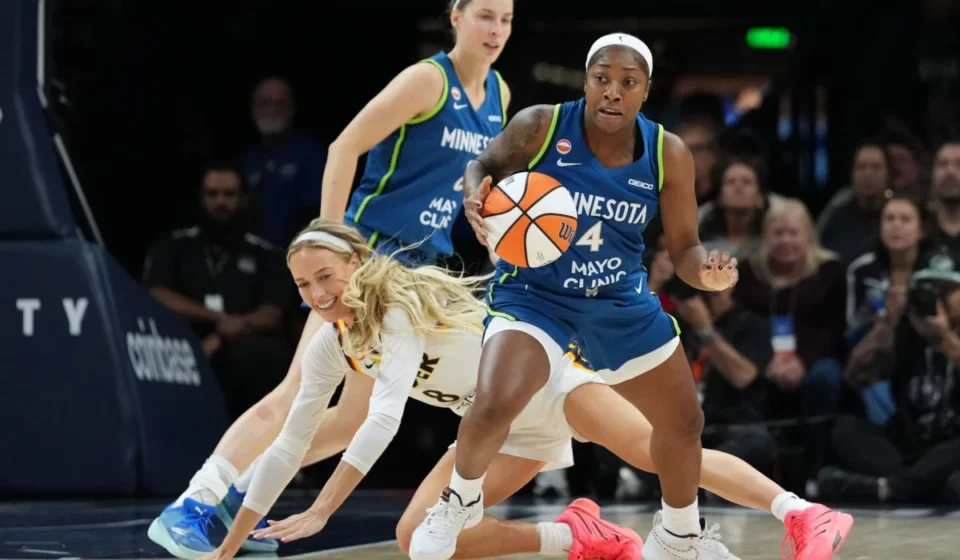
That question captured the collective angst of a supporter base that has watched their team struggle to close out the regular season with the same fluidity they exhibited mid-summer. The anxiety was compounded by external factors: a blowout loss at Indiana, the absence of Rookie of the Year favorite Olivia Miles due to a strained left calf, and a hard-fought loss to the New York Liberty on September 18.
Chronology of a Clinch: From Embarrassment to Redemption
The path to the No. 1 seed was far from a coronation; it was a process of backing into the top spot through the misfortune of others. On Tuesday night, the Lynx had the opportunity to clinch the top seed with a win in Indianapolis. Instead, they delivered what team captain Napheesa Collier described as an "embarrassing" performance.
The 96-77 loss was so uncharacteristic that head coach Cheryl Reeve took the drastic measure of benching her core starters—Collier, Kayla McBride, Natasha Howard, and Courtney Williams—midway through the second quarter, leaving them on the pine for the duration of the contest. It was a message sent loud and clear: the standard had been compromised.
"We should be disappointed and embarrassed about the product that we put on the floor tonight," Collier told reporters post-game. "Not proud of what we did. These things cannot happen. We had just met about the things we want to get done in the postseason, and we didn’t do any of these things."

The response, however, was swift and emphatic. On Thursday night, during Fan Appreciation Night at the Target Center, the Lynx dismantled the very same Indiana Fever team that had embarrassed them 48 hours prior. The turnaround was staggering: Minnesota opened with a 25-4 run in the first eight minutes, eventually leading by as many as 36 points in a clinical 86-66 victory. It was a performance that quelled the immediate panic and served as a reminder of the team’s ceiling.
Data-Driven Analysis: The Defensive Benchmark
The primary metric for success in the Cheryl Reeve era has always been defense. Specifically, Reeve holds a long-standing benchmark: if the Lynx hold their opponent under 40% shooting from the field, they win. The historical data supports this theory with overwhelming force—since 2010, the Lynx boast a 185-9 record when keeping opponents below that efficiency threshold.
Yet, this season, that defensive identity has fluctuated. Following a scorching defensive start to the year, the team’s efficiency plummeted. Between June 28 and the final week of the season, the Lynx managed to hold opponents under 40% only once—a stark departure from the 10 times they achieved the feat in their first 19 games. Consequently, the team’s defensive rating dropped from first to fourth in the league.
Reeve attributes these defensive lapses to a combination of factors: the unprecedented offensive explosion occurring league-wide and a thin bench that has left the starting unit overextended as the season wore on. With the starters playing high minutes, the "clamp down" defensive intensity required for 40 minutes has been difficult to sustain.
The Home-Court Conundrum
Perhaps the most perplexing aspect of the 2026 season is the Lynx’s performance at the Target Center. Historically, Minnesota has turned their home court into a fortress during championship years. In their title-winning seasons of 2011, 2013, 2015, and 2017, the Lynx maintained a home winning percentage that bordered on invincibility.
This year, the script flipped. While the team set a WNBA record for road victories (18-4), their home record of 15-7 is, by their own admission, underwhelming. The team held fourth-quarter leads in four of their seven home losses, failing to execute in the clutch when the pressure was highest.
"It sucks to have the record we do at home," Reeve admitted. "We’re not satisfied with that remotely."

Ironically, this domestic struggle comes during a season where the Target Center has been at its most vibrant. The team set a club record with 19 home crowds of 10,000 or more, and for the first time, opened the upper level for every home game. The surge in attendance mirrors the league-wide popularity boom, a phenomenon fueled by high-profile stars like Caitlin Clark and Angel Reese. Reeve has compared the current climate of the WNBA to the 1979 NBA era, when the Magic Johnson-Larry Bird rivalry propelled the game into the mainstream consciousness.
Implications for the Postseason
As the playoffs begin on Sunday, the Lynx find themselves facing the New York Liberty—a rematch of the 2024 finals and a team that has already bested them twice this season. The Liberty, despite their No. 8 seed, are a dangerous opponent, illustrating the depth of the 2026 playoff field. For the first time in league history, analysts suggest that any of the eight remaining teams could feasibly reach the finals.
The challenges for Minnesota are clear. They must find a way to contain elite offensive threats like Breanna Stewart and Sabrina Ionescu, both of whom proved problematic in earlier matchups. Furthermore, they must bridge the gap between their "embarrassing" lows and their "cohesive" highs.
"I don’t think anybody should be surprised by any outcomes," Reeve said regarding the parity in this year’s bracket. "I wouldn’t be surprised by anything, because I think all the teams are that good."
The success of the 2026 Lynx will ultimately depend on whether they can recapture the defensive discipline of their early-season form. The talent is unquestionable—McBride’s perimeter shooting, Howard’s interior presence, and Collier’s leadership are the building blocks of a champion. But as they prepare for the best-of-three series against New York, the Lynx must prove that their late-season inconsistencies were merely a temporary deviation, not a harbinger of a premature exit.
For the players, the message is one of focus. As McBride noted after the final regular-season win, "It felt good to play cohesively for the first time in a while." Whether that cohesion can be sustained through the gauntlet of the playoffs remains the ultimate test for a team that has the pedigree, if not the momentum, to claim the title.