





















































On a crisp, sun-drenched morning in Hibbing, Minnesota, the rhythmic sound of toddler laughter echoes across a playground that, in a few short months, may fall silent forever. Dave Benz watches as his daughter, Sabrina Weberg, helps his twin granddaughters, Maya and Lucy, navigate the slides and swings. In just a few days, the girls will turn three—a milestone that should mark the beginning of their journey through the local school system. But as they play, the looming shadow of a large, yellow "For Sale" sign in front of Greenhaven Elementary serves as a grim reminder of a changing landscape.
For the residents of Hibbing, the closure of Greenhaven is not merely a budgetary line item; it is a profound rupture in the community’s fabric. In March, the Hibbing School Board, staring down the barrel of a $2 million deficit, made the agonizing decision to shutter the school. For families like the Benzes, the news was a bitter pill to swallow. "Yeah, it was a sad one," Benz admitted, reflecting the sentiment of a town grappling with the erosion of its institutional heart.
A System Under Siege: The Economics of Decline
The plight of Greenhaven Elementary is far from an isolated incident. Across Minnesota, school districts are caught in a relentless "pressure cooker" of declining enrollment and skyrocketing operational costs. Because state funding is inextricably tied to student headcounts, the demographic shifts in rural Minnesota have created a fiscal death spiral. As populations age and families migrate toward urban centers, rural districts are finding it increasingly impossible to maintain the basic infrastructure of public education—superintendents, principals, business managers, and maintenance staff—with a dwindling tax base.
This is not a new phenomenon, but it is a resurging one. In the 1990s, Minnesota faced a similar wave of instability, resulting in the loss of one-fifth of its school districts. During that decade, over 150 districts opted for consolidation, incentivized by a state legislature eager to streamline operations. While those mergers were often touted as pragmatic, they almost invariably resulted in the closure of cherished neighborhood schools, leaving many rural residents feeling as though their communities had been hollowed out.
Chronology of Consolidation: From Crisis to Integration
The history of rural education in Minnesota is a narrative of adaptation, survival, and loss.

- The 1990s Consolidation Wave: Facing financial instability, rural districts across the state merged at an unprecedented rate, prioritizing fiscal efficiency over geographic convenience.
- The Decade of Stagnation (2014–2024): The rate of consolidation slowed significantly, with only seven districts choosing to merge in the last ten years. This created a false sense of security, as many districts relied on short-term fixes and shared services to delay the inevitable.
- The Modern Pressure Cooker (2025–Present): With inflation outpacing revenue and state funding failing to keep pace with new regulatory mandates, the "thousand paper cuts" of deferred maintenance and budget gaps have forced the issue back to the forefront.
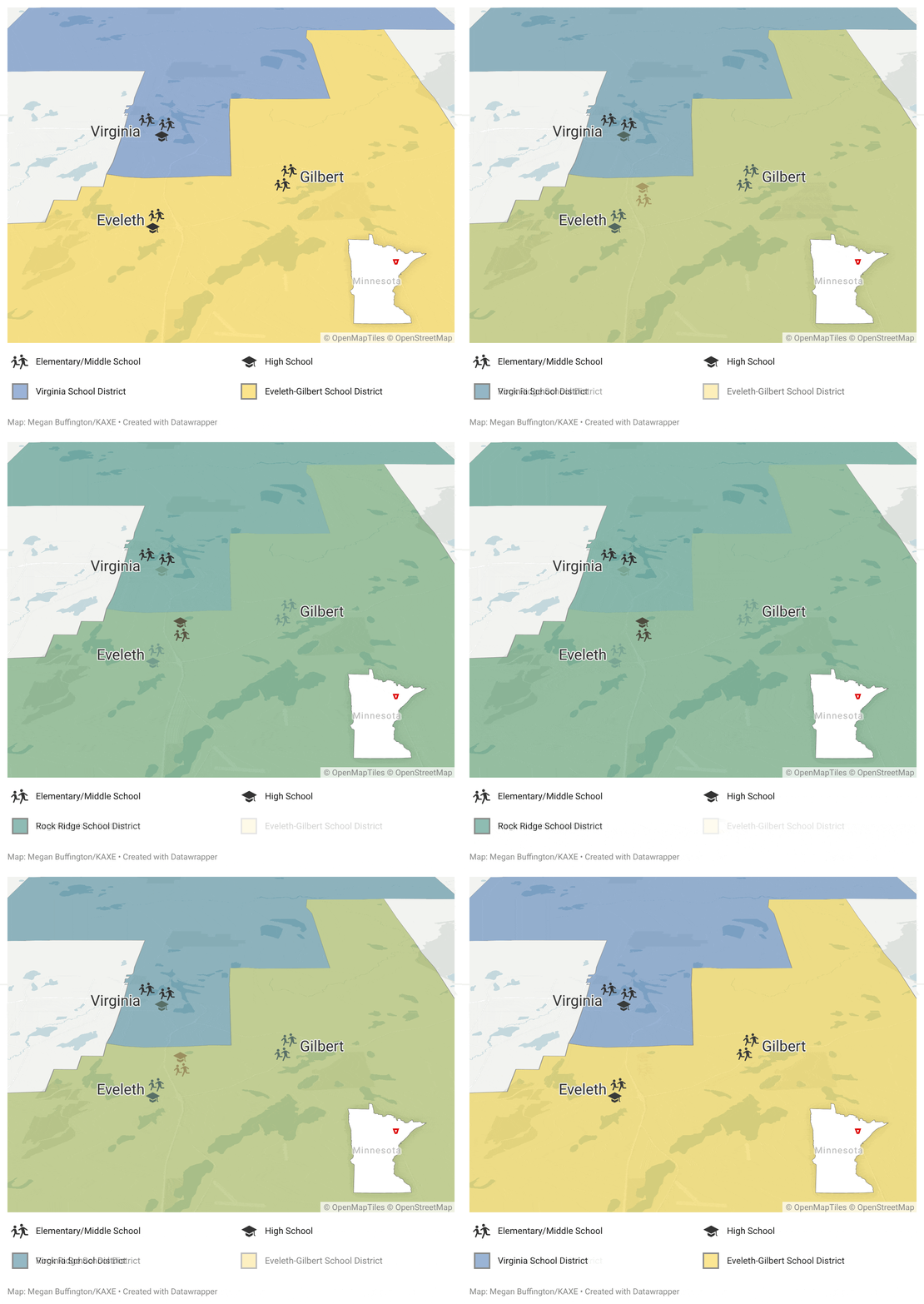
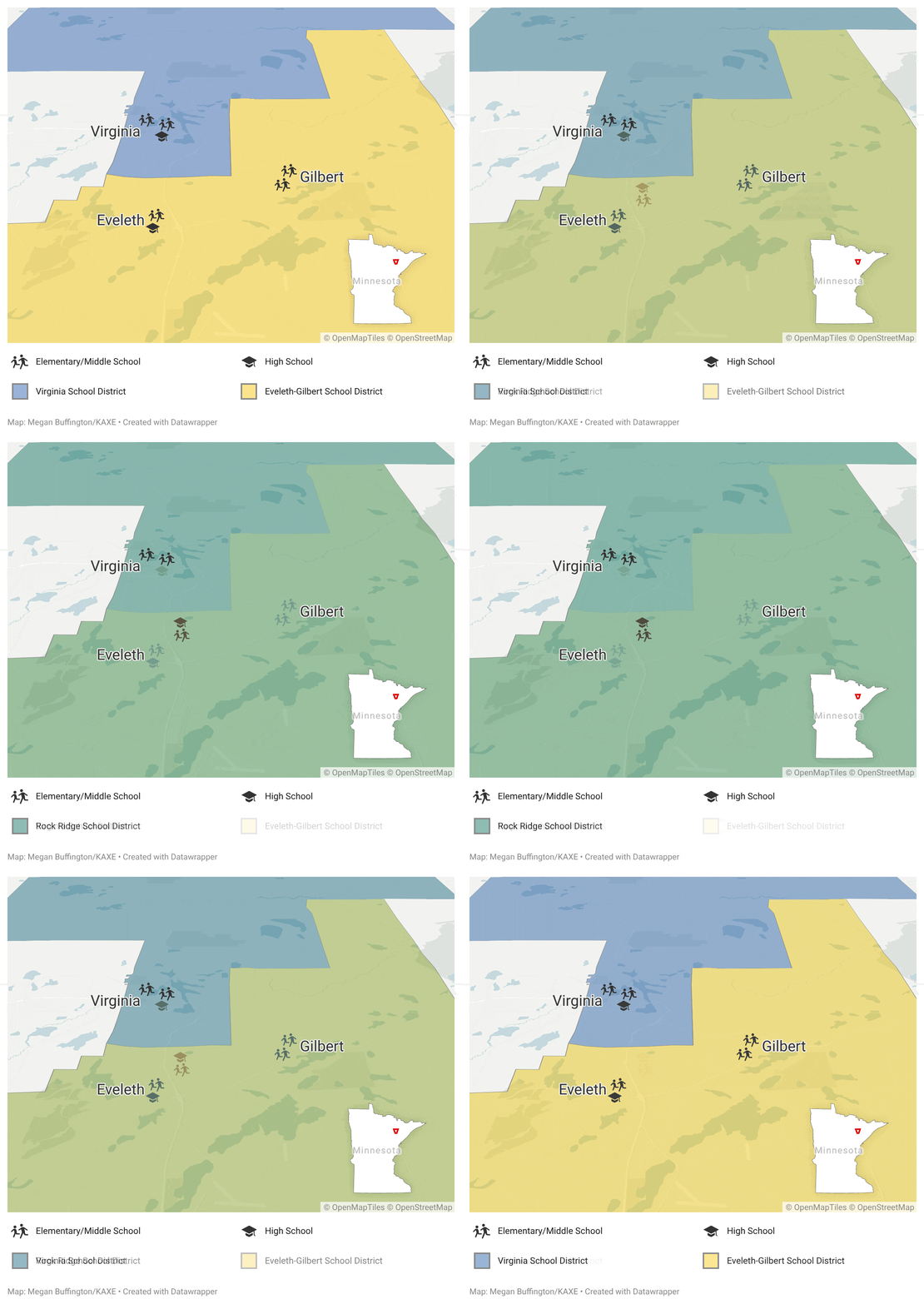
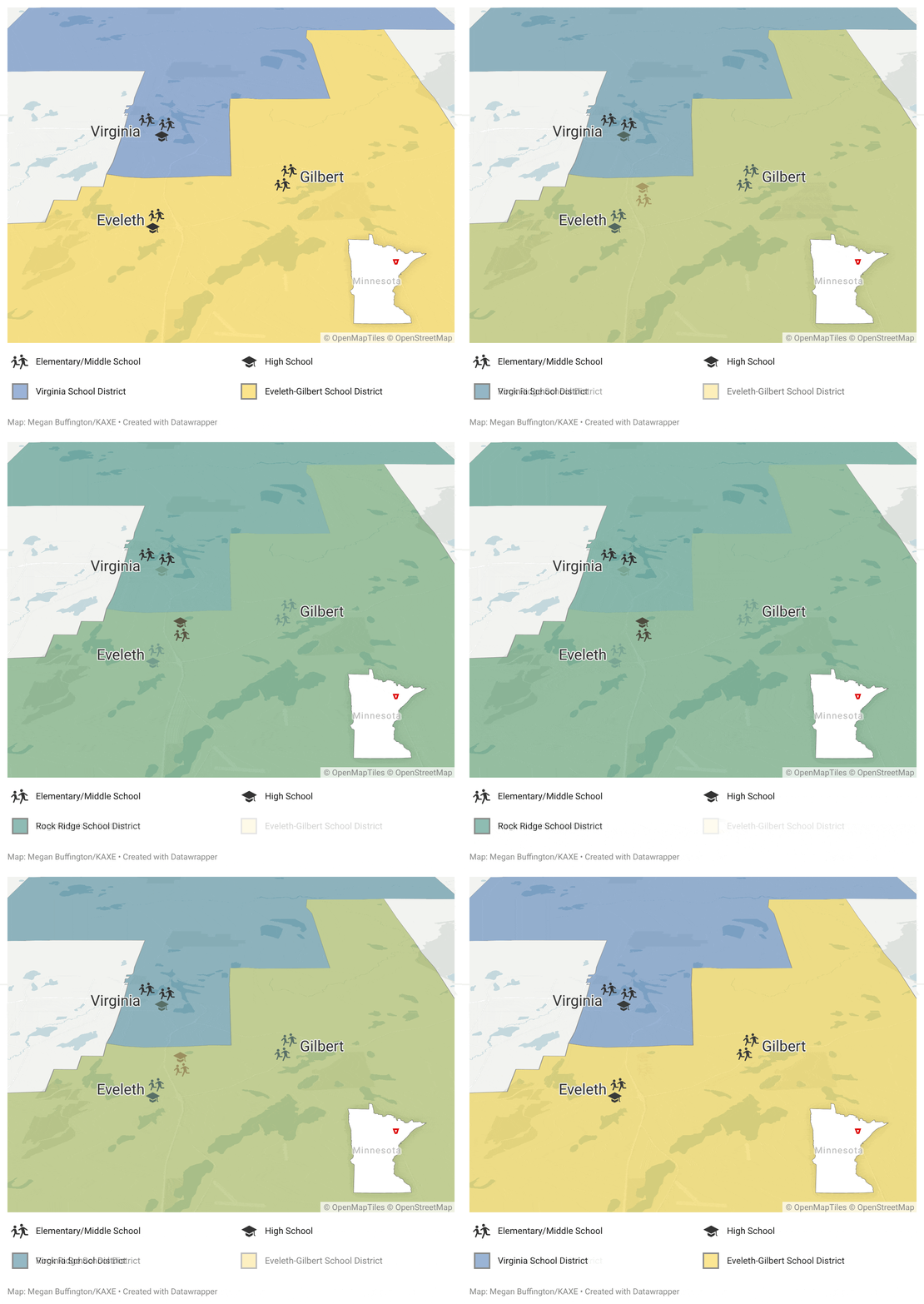
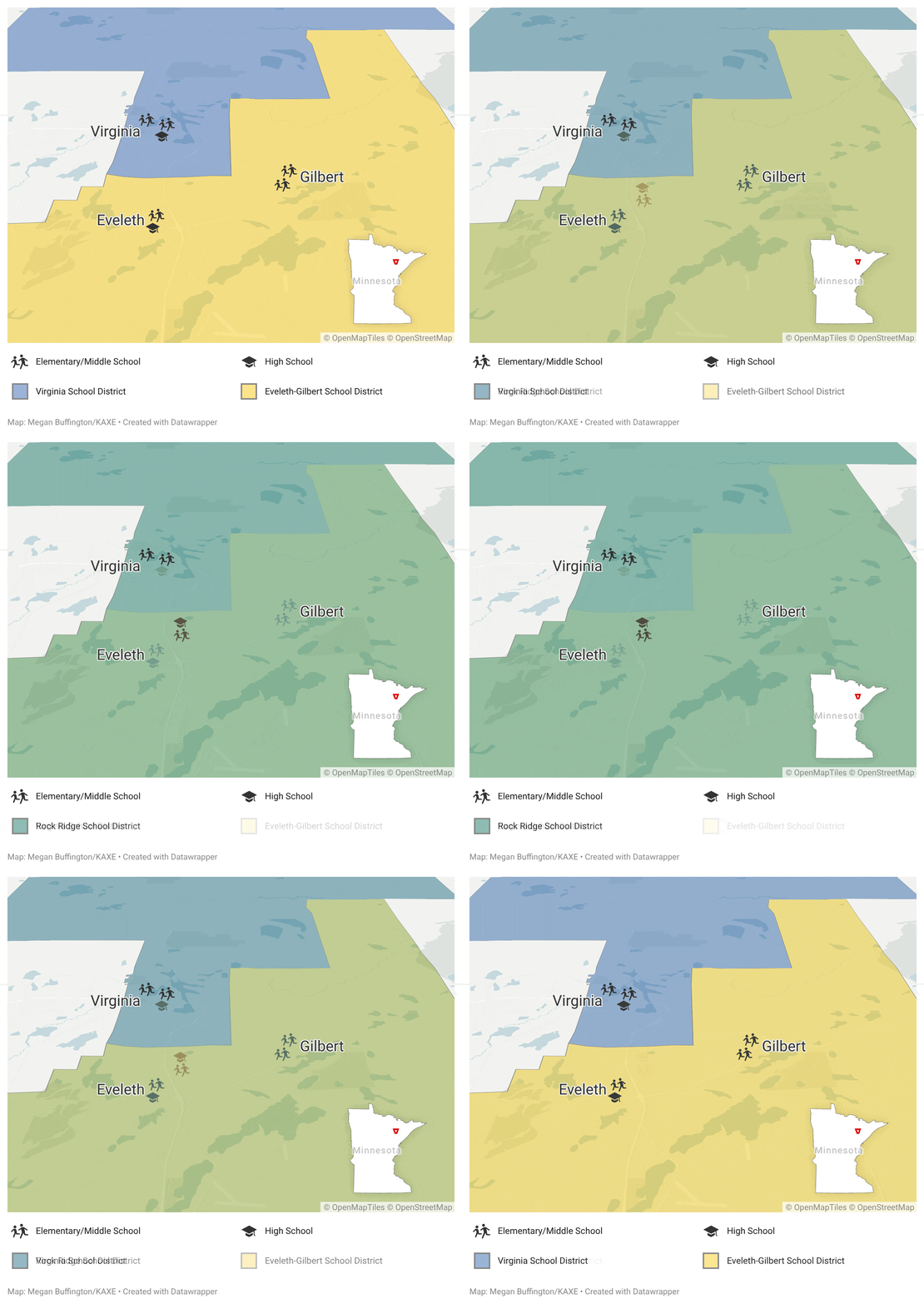
- The Rock Ridge Precedent: The merger of Virginia and Eveleth-Gilbert to form the Rock Ridge School District serves as the current blueprint—and warning—for the rest of the state.
Supporting Data: The High Cost of Small Numbers
The fundamental challenge for rural districts is the fixed cost of existence. Aaron Fischer, Executive Director of the Minnesota Rural Education Association, notes that every district, regardless of size, carries a baseline of administrative and operational requirements.
"You need custodians, office support staff, a business manager, and administrators," Fischer explains. "At a certain point, when the enrollment drops below a critical threshold, there simply aren’t enough students to pay for the basics."
In the final year of the Eveleth-Gilbert district, the incoming kindergarten class numbered just 29 children. Simultaneously, the district was battling aging infrastructure—a century-old boiler on the verge of failure and roofs requiring millions in repairs. The financial trajectory was clear: the district was headed toward insolvency. This reality is what led to the birth of the Rock Ridge High School, a modern, state-of-the-art facility designed to replace multiple aging buildings.
While the new campus boasts amenities like a grand piano in the cafeteria and a 3-ton crane in the metal shop, it also represents a significant departure from the traditional model of the neighborhood school.
Official Perspectives: The Tug-of-War Between Progress and Identity
The debate surrounding consolidation often pits the pragmatism of administrators against the emotional attachment of parents. Noel Schmidt, the Superintendent who spearheaded the Rock Ridge consolidation, argues that the move was necessary to provide students with a competitive education.

"If you’re a rural school, this is what you have to do," Schmidt says, gesturing to the expansive career academy space. "We have a curriculum catalog far superior to what the individual districts could have offered on their own. We had to move fast; if we had waited for an external factor to force our hand, we would have been done for."
John Uhan, School Board Chair for Rock Ridge, shares this sentiment. Having grown up in the area and graduated from Eveleth-Gilbert, Uhan acknowledges the pain of losing the old schools but views the transition as a vital evolution. "We’ve got a proud history, and people like hanging onto that," he says. "But I like embracing the new. We gained a lot more than we lost in terms of opportunities for our kids."
However, not everyone agrees. The loss of a school is often perceived as the loss of a community’s soul. In Eveleth, the city has attempted to repurpose the remaining wing of the old high school into a community center, complete with line dancing and bouncy houses. While Mayor Adam Roen appreciates the effort to keep the community vibrant, he admits that the absence of a school building in the heart of town has changed the town’s identity.
"When you take the school district out, you take a piece of that identity away," Roen says. "You can create your own, but it’s a different future than the one we were promised."
Implications: The Future of Rural Identity
As the state of Minnesota looks toward the next decade, the outlook for rural schools remains fraught with uncertainty. Paul Peltier, who leads the Range Association of Municipalities and Schools (RAMS), highlights the "apathy at the state level" as a primary concern. He argues that legislators are fatigued by the constant requests for funding and are increasingly disconnected from the reality of rural life.

"Communities and families anchor themselves in their school," Peltier says. "Schools owe it to them to be stewards of that identity. But when you have to choose between a crumbling building and the future of a child’s education, the choices are never easy."
The implications for these towns are profound. Without a school, the economic and social gravitational pull that keeps families in rural areas diminishes. As the small towns that once thrived on mining and agriculture grapple with the reality of consolidation, they are forced to confront a difficult question: Can a community maintain its unique identity if it no longer serves as the site of its children’s education?
Steve Giorgi, a veteran of the school board battles of the 80s and 90s, offers a sobering conclusion. "People know they are going to lose out. Somebody is going to lose an identity," he says. "The challenge for the next generation of leaders is to figure out how to get from that emotional, history-laden past to the reality of what the kids need today. It’s a very tough job to do."
As the sun sets on the Greenhaven playground, the "For Sale" sign remains a stark symbol of the choices ahead. For the people of Hibbing and the surrounding Iron Range, the future is not about preserving the past, but about determining how much of it they can afford to carry into the future. The buildings may close, the names may change, and the identity of the town may shift, but the goal remains the same: ensuring that the next generation has a place to learn, even if that place looks nothing like the school their parents once knew.