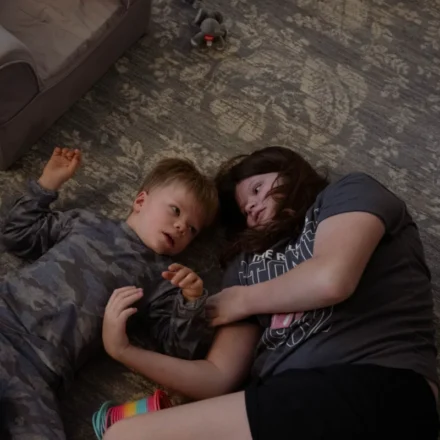


























































On a crisp, late-summer morning in Hibbing, Minnesota, the rhythmic sound of toddler laughter echoes across a playground that, in a few months, may fall silent forever. Dave Benz watches as his daughter, Sabrina Weberg, helps his twin granddaughters, Maya and Lucy, navigate the slides and swings. For the two-year-olds, it is a day of play; for their grandfather, it is a bittersweet moment of reflection.
The playground sits in the shadow of Greenhaven Elementary School. In front of the building, a large, stark yellow "For Sale" sign serves as a grim marker of the community’s shifting tides. In March, faced with a crippling $2 million deficit, the Hibbing School Board voted to shutter the school.
"Yeah, it was a sad one," Benz says, his voice quiet. "I’m from here, so I’m a little biased. When you lose the school, you feel like you’re losing a piece of yourself."
Across Minnesota and the broader American Midwest, rural school districts are confronting a "pressure cooker" of fiscal reality. With funding tied to enrollment, and enrollment in a steady decline, districts are finding that the traditional model of the small-town neighborhood school is increasingly unsustainable. What was once the heartbeat of the community—the Friday night football game, the holiday pageant, the classroom where generations learned to read—is now the subject of difficult, often divisive, administrative calculations.
The Anatomy of the Crisis: A Chronology of Decline
The current wave of consolidation is not an isolated phenomenon, nor is it new. To understand why Hibbing, Chisholm, and other Iron Range communities are currently navigating these choppy waters, one must look back to the 1990s.
During that decade, Minnesota experienced a radical transformation of its educational landscape. Driven by the same forces currently plaguing the state—stagnant funding, rising overhead, and plummeting birth rates—the state lost one-fifth of its school districts. More than 150 districts, predominantly in rural farming regions, opted for consolidation. In almost every instance, the merger resulted in the closure of at least one local building, leaving towns to grapple with the hollowed-out remains of their former centers.
For decades, the rate of these consolidations slowed. However, the last ten years have seen the pressures flare up once more. The "easy" solutions—sharing administrative staff or sports co-ops—have been exhausted. Today, districts are forced to look at the nuclear option: full-scale merger.

Supporting Data: The Arithmetic of Survival
The mathematics of rural education is unforgiving. According to state education analysts, the "per-pupil" funding formula creates a vicious cycle: as the population ages and young families migrate to urban centers, school districts lose the state aid necessary to maintain facilities.
"We always think of teachers and programs, which are the most important things," says Aaron Fischer, executive director of the Minnesota Rural Education Association. "But you also have to have enough students to sustain the overhead—the superintendent, the principals, the business managers, the custodians, and the office support staff. Every small district has these fixed costs, and when the student count drops below a certain threshold, the system collapses."
The impact is felt as a "death by a thousand paper cuts." Before merging into the now-modern Rock Ridge district, the Eveleth-Gilbert district was seeing kindergarten classes as small as 29 students. Simultaneously, century-old boilers were failing, roofs were leaking, and the curriculum was narrowing because the district could not afford to hire specialized staff for advanced courses.
The Rock Ridge Model: Embracing the New
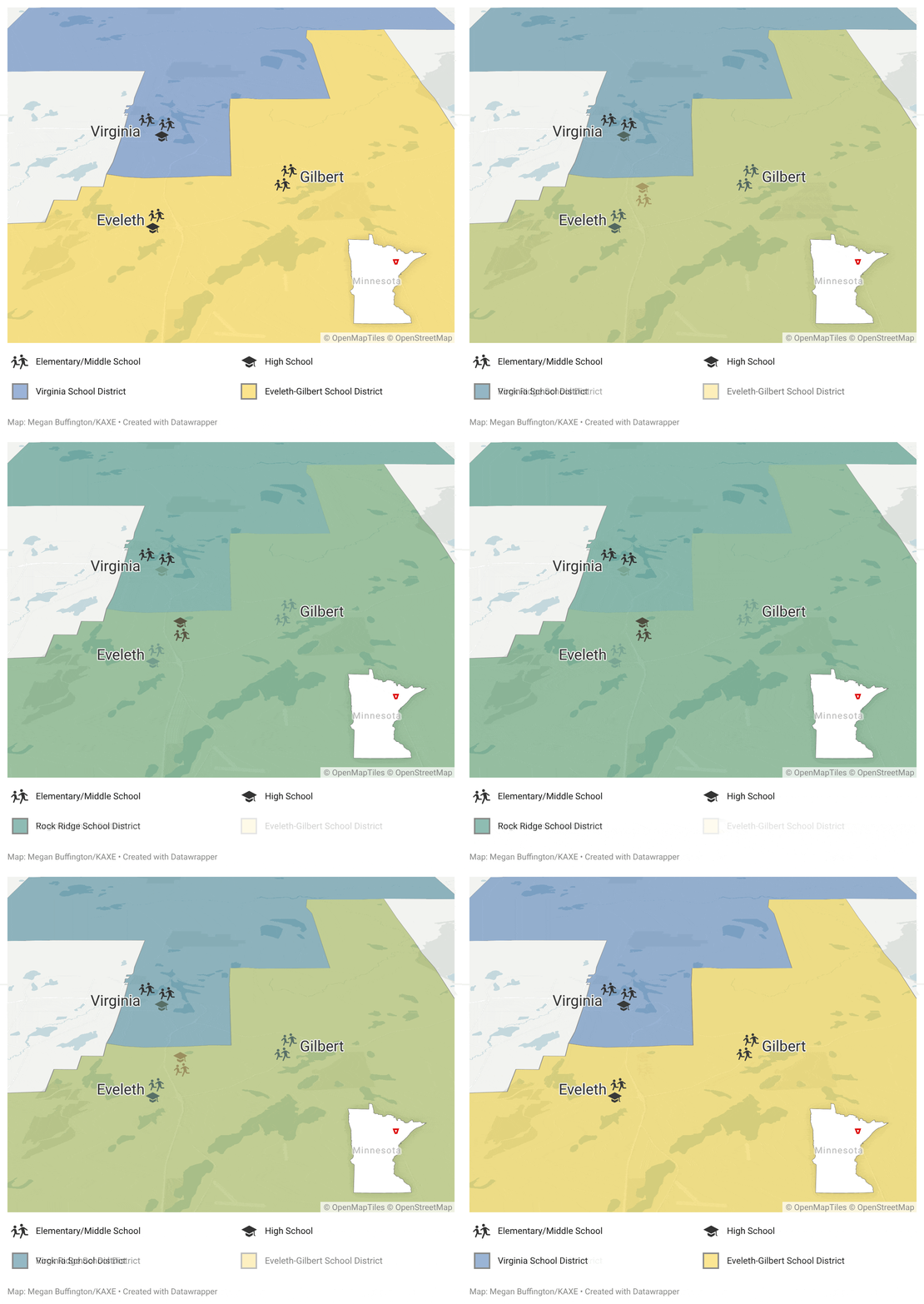
Not all stories of consolidation are purely tales of loss. The Rock Ridge High School campus in Virginia, Minnesota, stands as a polarizing, yet ambitious, answer to the crisis. Built after the consolidation of the Virginia and Eveleth-Gilbert districts, the school is a masterclass in modern educational design.
Superintendent Noel Schmidt, who spearheaded the merger, offers a tour of a facility that feels more like a tech-startup campus than a traditional high school. "We have a grand piano in the cafeteria," Schmidt notes, gesturing to the gleaming space. "Nobody else does that."
The campus features high-tech woods and metals shops equipped with 3-ton cranes, serving as the backbone of a career-academy model that aims to keep students competitive in the modern workforce. For the school board, the move was a "no-brainer."
"The curriculum catalog is significantly broader than what either district could offer on its own," says School Board Chair John Uhan. "Athletically, we’ve been more successful. The facilities are safer, cleaner, and more efficient. We were looking at a dire financial future, and this saved us."

However, the success of the building does not mitigate the grief of the community. In Gilbert, an empty lot now sits where a century-old elementary school once stood. For some residents, the loss of that physical history is an unhealed wound.
Official Responses and the Clash of Values
The friction between efficiency and identity is the defining conflict of modern rural school governance.
"The Range’s culture is distinct," says Paul Peltier, who leads the Range Association of Municipalities and Schools (RAMS). "Our history of mining and immigration means that identity is a word that carries significant weight. When you take the school district out of a town, you aren’t just moving desks; you are changing the town’s DNA."
Peltier, who is running for the Rock Ridge School Board, notes that administrators often prioritize the "big picture" while residents focus on the "lived experience." He recalls his own childhood, moving between four different schools as his home district consolidated. "We were the ‘Balsam boys,’" he says. "We felt bounced around. Schools owe it to the community to be stewards of that identity, even when they have to close the doors."
Superintendent Schmidt, an outsider to the region, admits that his lack of deep-rooted ties was actually an asset in pushing the consolidation through. "It took a different viewpoint," he says. "I had to listen to the community, but I also had to look at the reality of the numbers. If we waited for an external factor to force our hand, we would have been done for."
The Implications: A Future in Transition
As the sun sets on the era of the small-town independent school, the implications for Minnesota’s rural communities are profound.
1. The Economic Ripple Effect
Schools are often the primary economic engine of rural towns. When a school closes, the loss of staff jobs, the decrease in local spending by visiting sports teams, and the loss of a hub for community events can accelerate a town’s decline.

2. The Loss of Institutional Memory
As seen in the Eveleth Community Center—which occupies the only remaining portion of the old high school—towns are struggling to repurpose space to keep their history alive. While line dancing and roller-skating in a repurposed gym help, they are, as Mayor Adam Roen admits, a poor substitute for the presence of an active, bustling school district.
3. The Need for State-Level Reform
There is a growing sense of frustration with the state Legislature. Many local leaders feel that the state has become apathetic to the unique struggles of the Iron Range. With education funding failing to keep pace with inflation and enrollment-driven budgets becoming increasingly volatile, rural districts are demanding a new, sustainable funding model that accounts for geography and declining populations.
4. The "No-Win" Decision
The ultimate tragedy, according to Steve Giorgi, a former leader of RAMS, is that someone is destined to lose an identity in every scenario. "How do you get from this emotional past to the reality that what the kids need is different?" he asks. "That is a very tough job."
As the Hibbing School Board moves forward with the sale of Greenhaven, and as other districts look toward consolidation, the question remains: Can a community maintain its identity without its school?
In Eveleth, the answer seems to be a tentative "yes." Mayor Roen, wearing a hat emblazoned with the town’s historic mascot, balances his pride in the past with his pragmatism for the future. "We can’t forget our history," he says. "We need to build on it. But we have to move forward to a new future."
For the families on the playground in Hibbing, the transition is just beginning. As they prepare to move their children to a new, larger, and likely less personal environment, the lesson is clear: in the face of economic necessity, the definition of "community" must evolve. The challenge for these towns will be to ensure that in their drive to save their future, they do not entirely erase the pillars that once held up their past.