
















































The Silent Glow: Why Data Centers Are Becoming the New Frontier in the Fight for Dark Skies

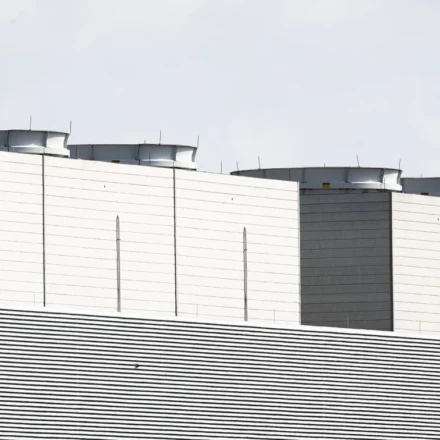
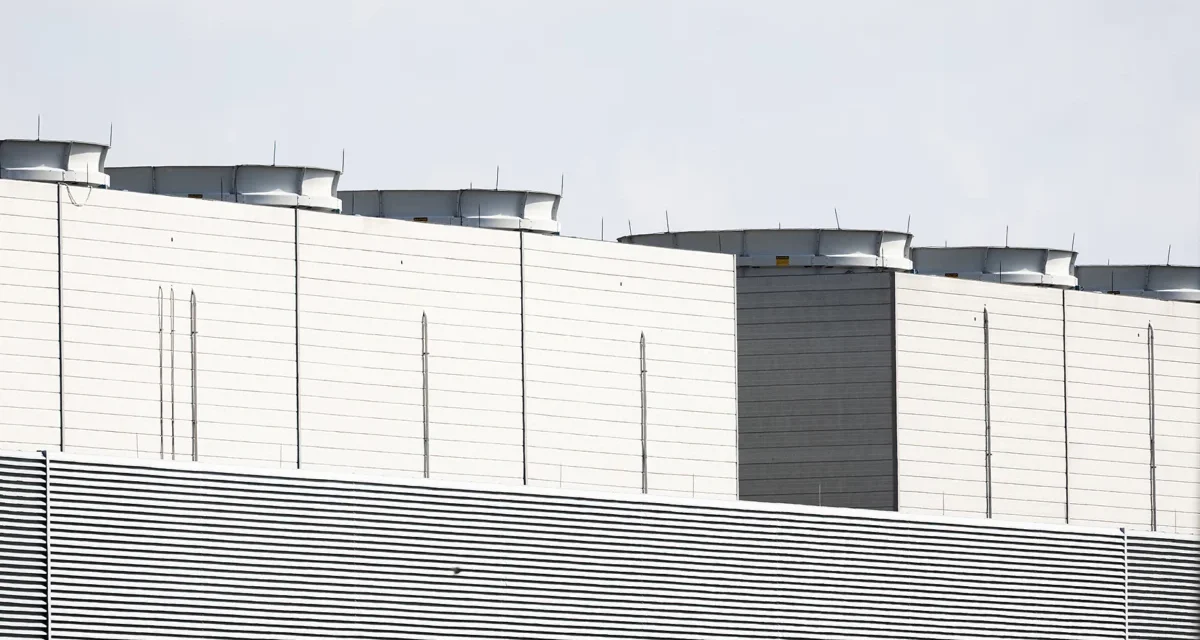
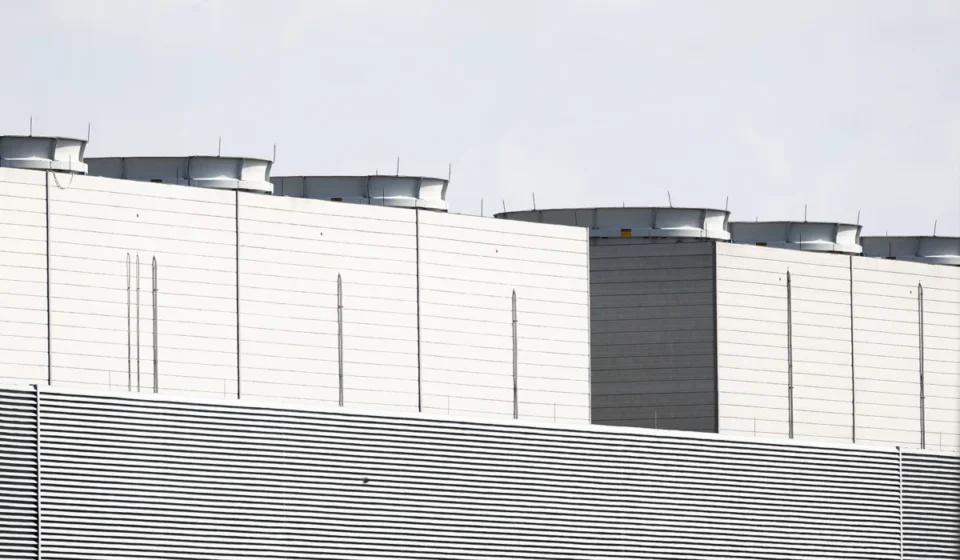
In the rolling landscape of the American Midwest, a new kind of architectural titan is emerging. These are not factories in the traditional sense, nor are they skyscrapers of commerce. They are massive, windowless, and humming with the collective weight of the world’s digital existence. As the artificial intelligence (AI) boom accelerates, the United States is rapidly transforming into the world’s largest host for data centers, with over 3,000 facilities already operating.
However, as these digital fortresses rise across the rural horizon, a quiet but intense debate is brewing regarding their environmental footprint. While much of the public discourse has centered on their voracious appetite for electricity and water, a less-discussed byproduct is now drawing the ire of conservationists: light pollution.
The Luminescence Dilemma
Vayujeet Gokhale, a physics professor at Truman State University and a board member for DarkSky Missouri, has a simple but profound request for the industry. “If you are going to have lights on at night, then let’s do it in a responsible way,” he says.
Gokhale’s mission is part of a global movement to reclaim the night. As the artificial glow of human development expands, the natural darkness that once blanketed rural America is fading. For Gokhale, this is not a subjective aesthetic complaint; it is an ecological imperative. He argues that among the litany of environmental challenges posed by the modern era, light pollution is uniquely solvable.
“You don’t need to light up the place for these computers and memory banks to work. They’ll still work even if it’s completely dark,” Gokhale explains. “You need light for certain other things, like security, but you can minimize the pollution without affecting the quality of the data center product. You can’t make that same case with water and energy.”
Chronology of a Growing Conflict
The expansion of data centers is not a slow creep; it is a sprint. Fueled by the insatiable demand for AI infrastructure and cloud storage, the industry has seen a massive influx of capital.
- May 2026: Google announces a landmark $15 billion investment in Montgomery County, Missouri. Gov. Mike Kehoe hails the project as a catalyst for economic growth, framing it as an investment in “Missouri families, communities, and long-term opportunity.”
- June 2026: Legislative interest peaks as Rep. Colin Wellenkamp introduces House Bill 3362, attempting to mandate that data centers cover the costs of grid upgrades and establish permitting requirements for water usage. The bill fails to gain traction.
- July 2026: The St. Charles County Council passes a six-month moratorium on large-scale data center developments, signaling a growing friction between corporate expansion and local governance.
- September 2026: Voter frustration reaches a boiling point in the city of Independence, where residents successfully recall city council members who approved tax breaks for a controversial data center project.
This chronology illustrates a deepening divide. While state-level officials often view these projects as economic windfalls, local communities are increasingly wary of the long-term impact on their quality of life, environmental resources, and, increasingly, the sanctity of their night skies.

Supporting Data: The Ecological Impact
The concern over light pollution is grounded in hard science regarding the behavior of nocturnal species. According to the U.S. Department of Agriculture, roughly one-third of all food produced in the U.S. depends on pollinators. While bees and butterflies receive the most attention, a vast array of nocturnal insects—moths, beetles, and crickets—are essential to the ecosystem.
Nicole Flowers-Kimmerle, a horticulture educator at the University of Illinois Urbana-Champaign, notes that artificial light disorients these creatures, disrupting their mating and feeding cycles. “If we see that we’re having a declining number of moths, then that’s going to affect pollination, but it also affects the food web,” she says.
The issue extends to the skies above. The Mississippi River Basin serves as a primary migration flyway for nearly 50% of North American bird species. Murry Burgess, an assistant professor at Mississippi State University, explains that many migratory birds rely on the stars to navigate.
“With light pollution, it’s really obscuring the stars and throwing them off course, making them expend more energy circling to find their way,” Burgess says. “That’s when you start to see a lot of window collisions and increased mortality.”
Official Responses and Industry Standards
The data center industry has historically operated under a cloak of proprietary secrecy, making public engagement difficult. However, organizations like DarkSky International have begun publishing “Principles for Responsible Outdoor Lighting.” These guidelines recommend:
- Directional Shielding: Ensuring light is pointed downward to eliminate skyglow.
- Motion Sensing: Utilizing technology that ensures lights are active only when human presence is detected.
- Spectral Management: Using warm-colored, low-Kelvin lights that are less disruptive to biological rhythms than harsh, blue-spectrum LEDs.
Advocates like Gokhale argue that these measures are not just "green" initiatives; they are smart business practices. Reducing unnecessary lighting lowers electricity bills and improves facility security by eliminating the blinding glare that can actually hide intruders in the shadows. “In many environmental issues, it’s a zero-sum game,” Gokhale says. “Not so with light pollution. It’s a win-win.”
Despite this, legislative progress remains stagnant. In Missouri, the Department of Natural Resources currently lacks a formal definition for a “data center,” making it difficult to draft effective regulations. Without a standardized regulatory framework, the burden falls on individual municipalities to negotiate these terms—a process that has proven to be inconsistent and often contentious.

The Broader Implications: A Call for Policy
The battle over data center lighting is a microcosm of a larger societal struggle: how to integrate high-tech infrastructure into a landscape that was never designed to support it.
As more data centers are planned—with three-quarters of new projects slated for rural areas in the South and Midwest—the potential for cumulative environmental degradation is significant. Experts argue that if the U.S. is to maintain its leadership in the AI sector without sacrificing its natural heritage, a top-down policy approach is necessary.
“At the most fundamental level, we need to define what these things are and what their purpose is,” Gokhale asserts. He believes that by categorizing data centers as critical infrastructure, states could implement standardized requirements for lighting, water usage, and energy efficiency.
For the residents of places like Montgomery County or Independence, the question is not just about the light—it is about the right to determine the character of their own environment. As the "AI economy" continues to expand, the pressure on legislators to provide a balance between progress and preservation will only mount.
The night sky, once a constant of the human experience, is becoming a finite resource. Whether the data center industry chooses to act as a steward of that resource or a source of its erasure remains to be seen. As Burgess puts it, “It’s really important to preserve dark sky areas, the same way that you would have a wildlife refuge. The sky is part of the environment; it’s part of their habitat.”
In the end, the solution may be as simple as a switch—or as complex as the politics that govern the machines beneath the lights. For now, the glow from the server rooms continues to pulse, casting a long, bright shadow over the future of the American night.
This story was produced by the Mississippi River Basin Ag & Water Desk, an independent reporting network based at the University of Missouri in partnership with Report for America, with funding from the Walton Family Foundation.