


























































The Human Shield: How Minneapolis Child Care Centers Are Surviving an Immigration Crackdown

This report was produced by The Hechinger Report, a nonprofit, independent news organization focused on inequality and innovation in education.
MINNEAPOLIS — On a frigid February afternoon, the routine at a local Spanish-immersion child care center felt deceptively normal. Inside, toddlers wrestled into puffy coats, their small hands fumbling with mittens as parents arrived for pickup. But behind the scenes, the atmosphere was thick with a quiet, calculated tension.
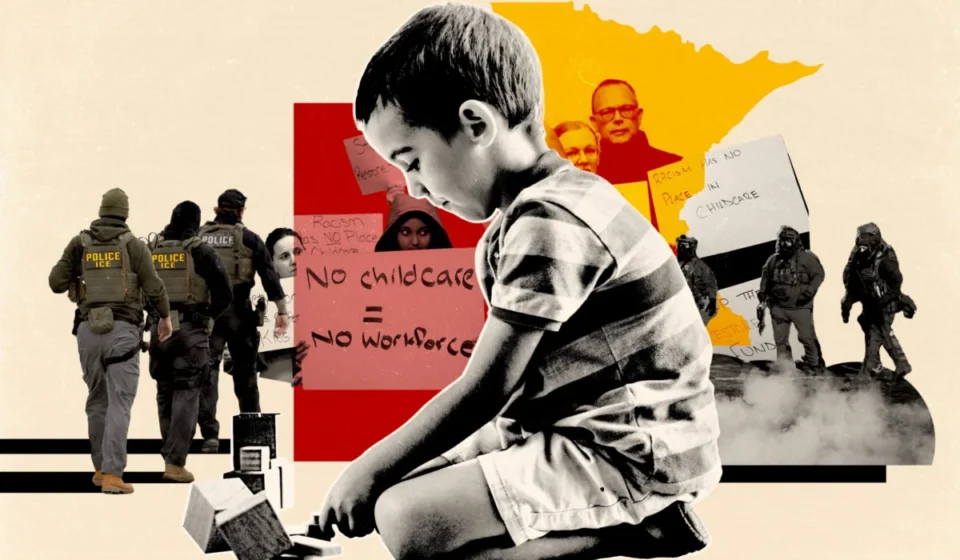
In an office just down the hall, Michael, the husband of the center’s director, sat glued to a bank of monitors. He wasn’t watching for security breaches in the traditional sense; he was scanning the street for any vehicle that might be carrying agents from U.S. Immigration and Customs Enforcement (ICE). Since January, when federal authorities descended on the Twin Cities as part of a massive enforcement initiative dubbed "Operation Metro Surge," Michael has abandoned his own career duties to volunteer as a sentry at the school.
He is not alone. As the last of the children departed, a group of volunteers began to trickle in. Most are in their 70s, retirees who have become so integrated into the center’s daily operations that the staff has affectionately dubbed them the abuelitas. Their mission is clear: to escort the center’s immigrant staff members home, acting as both a physical buffer and a linguistic bridge should federal agents attempt to initiate a traffic stop.
A Chronology of Crisis: From Viral Allegations to Federal Intervention
The current climate of fear did not manifest overnight. It began in late 2025, when rumors circulated through the Twin Cities that immigration agents were detaining individuals regardless of their legal status. For Diana, the director of the center, the shift was palpable.
"They are not respecting due process," Diana said. "What is happening?"
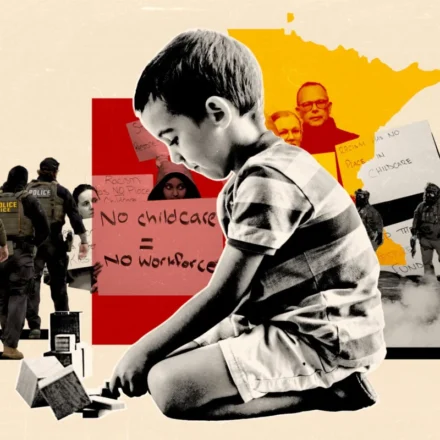
The situation reached a flashpoint on December 26, 2025, when Nick Shirley, a 23-year-old right-wing influencer, released a YouTube video alleging widespread fraud in Somali-run daycares across Minneapolis. The video, which contained claims later debunked by local media and independent fact-checkers, went viral. It was amplified by high-profile political figures, including Vice President JD Vance and Attorney General Pam Bondi.
The political fallout was immediate. The Trump administration announced a freeze on federal child care payments for low-income families in Minnesota, citing the "fraud" claims. While a federal judge later ordered these funds unfrozen in February 2026, the damage to the local ecosystem was profound. On New Year’s Eve, just days after the viral video, Diana’s center received a chilling, anonymous phone call.
"He was saying, ‘You guys are not safe. You guys have to leave,’" Diana recounted. "I was thinking, ‘Do I have to go into lockdown? Is this someone who will come and shoot?’"
The escalation continued on January 5, when the administration cited the Shirley video as justification for surging an additional 2,000 ICE and Border Patrol agents into Minnesota, bringing the total force to 3,000 officers. The atmosphere turned tragic two days later when an ICE agent, Jonathan Ross, shot and killed Renee Macklin Good, a civilian who had been volunteering as an observer during the enforcement actions.
The Infrastructure of Mutual Aid
The murder of Good sent shockwaves through the community. For six days, Diana was forced to close her doors as the center’s staff—paralyzed by fear—stayed home. To survive, the center had to pivot from an educational institution to an underground logistics network.
The volunteer driving program is an intricate, time-consuming operation. Some 60 volunteers, many commuting from the suburbs, work in coordinated shifts to ensure that every staff member—all of whom are authorized to work in the country—arrives and departs safely.
"I’m just doing what I can do," said Sarah, a 71-year-old volunteer driver. "I’m white, I’m 71. I think I would not be treated like she might be treated." Sarah, like others interviewed, requested that the center remain anonymous and that her full name be withheld, fearing that public exposure could trigger further federal scrutiny.

These networks are not limited to this single center. Lily Crooks, the director of a child care facility in St. Paul, has been instrumental in organizing regional support. At her center, she raised $5,000 to purchase Lyft gift cards, allowing employees and parents to avoid public transit hubs—locations where ICE agents are known to stage operations.
"You literally have to have a good network to survive, because it’s not as though there is a government organization coming to help," Crooks noted.
Supporting Data: The Fragility of the Child Care Sector
The impact of this enforcement goes beyond individual anxiety; it threatens the very foundation of the state’s child care infrastructure. According to the American Immigration Council, roughly 1 in 5 workers in the child care field nationwide are immigrants.
In Minnesota, the stakes are exceptionally high. Approximately 23,000 children in the state rely on federal child care subsidies. When federal funding was briefly frozen, the entire sector faced a potential collapse. Even without the financial freeze, the social impact is devastating: Diana’s center saw 12 families withdraw their children in the immediate aftermath of the January surge, forcing her to lay off staff and consolidate classrooms.
The "Operation Metro Surge" narrative has consistently focused on the idea of rooting out fraud and criminal activity. However, the reality on the ground—as reported by The Star Tribune and other local outlets—shows that the raids have primarily disrupted legitimate, tax-paying businesses and families.
Implications for the Future of Community Resilience
As the federal presence in the Twin Cities begins to shift toward more covert, suburban-focused operations, questions regarding the sustainability of these volunteer networks remain. While some staff members are beginning to drive themselves again, the psychological toll persists.
For many of the volunteers, this is not a political hobby, but a moral imperative. Sarah, who remembers the activism of the Civil Rights Movement, views this as a defining moment for her generation. "I still need to find the strength and courage to do what I know is right," she said.
Yet, the emotional cost is significant. P., a staffer at the center who relies on the volunteer drivers, describes her existence in air quotes: "I’m ‘free,’ but I can’t do anything. It’s very hard."
The struggle, as Diana puts it, is one of resistencia—a Spanish term that blends the concepts of resistance and endurance. It is a commitment to not giving up, despite the absence of a "saving entity" coming to intervene.
Conclusion: A Blueprint for Survival?
The Minneapolis experience offers a grim template for other communities that may find themselves in the crosshairs of federal immigration policy. The reliance on mutual aid networks—while a testament to the strength of the community—is also a sobering indictment of the current system.
"It’s both really amazing to see the way that people are sticking up for their neighbors and supporting them, and then it also kind of feels bleak realizing that there isn’t going to be some saving entity coming," said Lily Crooks.
As the center moves forward, the daily routine of "checking in" on the radio to see if all staff members have arrived safely continues. For now, the volunteers keep driving, the staff keeps teaching, and the director keeps watching the monitors. The situation, according to Diana, is far from resolved. "This is not over," she said. "And maybe it’s going to take years."
In the heart of Minnesota, the message remains clear: when the institutions of government fail to protect, the institutions of the neighborhood must rise to fill the void. Whether this model can be sustained as the national political winds continue to shift is the question that defines the future of early childhood education in the region.