
























































WASHINGTON, D.C. – The enduring quest for comprehensive healthcare reform has ignited a profound ideological schism within the Democratic Party, laying bare contrasting visions for America’s medical future. As the nation gears up for a pivotal election year, candidates from congressional hopefuls to seasoned senators are navigating the treacherous waters between "Medicare for All" – a single-payer, government-run system – and a "public option," a government-sponsored insurance plan designed to compete with private providers. This internal debate, far from being a mere policy discussion, has become a defining litmus test, shaping campaigns and revealing the deep philosophical divides that animate the party’s diverse factions.
At the heart of this contention is the fundamental question of how best to address the escalating costs of health insurance, the persistent problem of the uninsured, and the perceived inequities of the current multi-payer system. While a shared commitment to universal coverage unites Democrats, the pathways to achieve it diverge sharply, creating political friction that reverberates from national platforms to local town halls.
A Fissure in the Party: Medicare for All vs. Public Option
The divide is stark. On one side stand progressive standard-bearers and democratic socialists, advocating for a radical overhaul of the existing system. Their rallying cry, "Medicare for All," envisions a comprehensive, government-administered healthcare program that would effectively eliminate private insurance as the primary payer, replacing it with a single, universal plan akin to those found in many industrialized nations. Proponents argue this would guarantee healthcare as a human right, eradicate out-of-pocket costs, and streamline administrative inefficiencies, ultimately leading to better health outcomes and substantial long-term savings.
Conversely, moderate and centrist Democrats champion the "public option," a more incremental reform aimed at expanding access and affordability within the existing market framework. This proposal would allow Americans to purchase a healthcare plan offered by the federal government, designed to compete with private insurers on state-based marketplaces. The rationale is that this competition would drive down premiums and improve the quality of private plans, offering a viable, lower-cost alternative without dismantling the private insurance industry entirely. This approach is often presented as a pragmatic step toward universal coverage, more palatable to a broader electorate and less disruptive to the current economic landscape.
The chasm between these two approaches is not merely one of degree but of philosophy. Progressives often dismiss the public option as an insufficient measure, a mere "handout to private insurance companies" that fails to address the systemic issues of profit-driven healthcare. They contend that it would perpetuate a system where insurers and pharmaceutical companies continue to profit from illness, leaving millions vulnerable to high costs and limited access. Moderates, in turn, view "Medicare for All" as an unrealistic, politically infeasible, and economically disruptive proposal that risks alienating swing voters and could lead to significant resistance from powerful industry stakeholders.
Minnesota’s Political Landscape: A Microcosm of National Tensions
Nowhere is this internal struggle more evident than in Minnesota, where competitive congressional and Senate races serve as a crucial battleground for these differing healthcare philosophies. The state’s political topography, with its blend of urban progressivism and rural conservatism, offers a poignant illustration of the strategic calculations at play for Democratic candidates.
In southern Minnesota’s 1st Congressional District, for instance, Jake Johnson, a Democrat seeking to unseat incumbent Republican Rep. Brad Finstad, gingerly navigated the healthcare debate at a recent town hall in New Richland. Johnson, positioning himself as a moderate, empathized with constituents struggling with healthcare costs but stopped short of endorsing Medicare for All. Instead, he articulated support for "a strong public option to the health insurers we have now," signaling a preference for market-based competition over a single-payer system. His cautious approach reflects the district’s political leanings, which saw former President Donald Trump secure 55% of the vote in 2024, making a hard-line progressive stance a potential electoral liability.
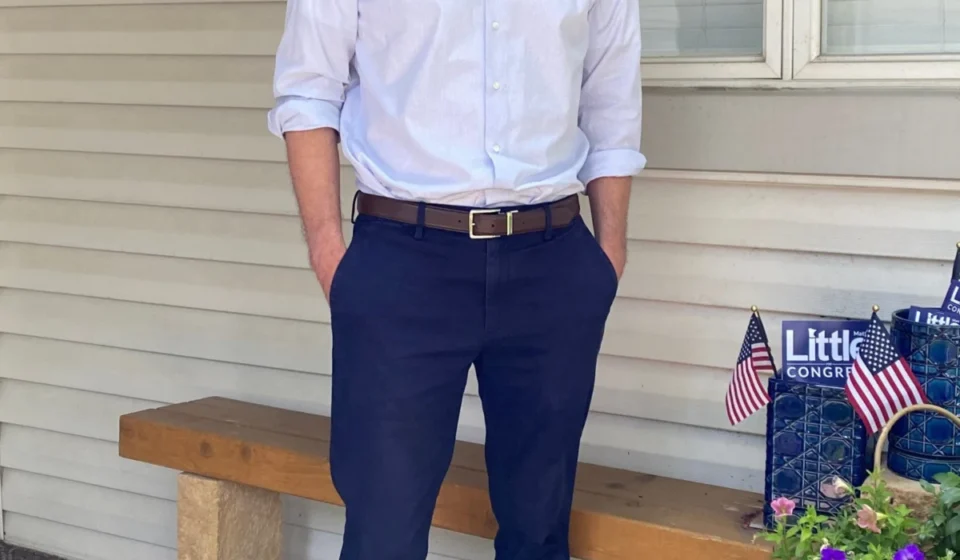
Just next door, in the neighboring 2nd Congressional District, the narrative shifts dramatically. This district, where former Vice President Kamala Harris won with 52% of the vote, provides a more fertile ground for progressive ideas. Here, the DFL-endorsed candidate, Matt Little, a former state senator and Lakeville mayor, is an unabashed proponent of Medicare for All. Little’s personal experience, witnessing his gravely ill mother struggle to access a specialist even with insurance, fuels his conviction. "We were lucky to have insurance," he recounted, highlighting the inadequacies of the current system. He champions the bill sponsored by Rep. Pramila Jayapal (D-Wash.) and Sen. Bernie Sanders (I-Vt.), which proposes a truly comprehensive, government-guaranteed healthcare system, free of premiums, deductibles, and co-payments, and significantly curtails the role of private insurers.
This contrast between Johnson and Little underscores the core dilemma for Democrats: tailor the message to the district’s perceived ideology, or push for a bold national vision regardless of local political headwinds. The strategic decision often boils down to a candidate’s assessment of their district’s receptiveness to transformative change versus incremental reform.
A Decades-Long Battle: The Evolution of Healthcare Reform Debates
The current intra-party debate is not new; it is merely the latest iteration of a decades-long struggle to reshape American healthcare. From Theodore Roosevelt’s call for national health insurance in the early 20th century to Harry Truman’s post-WWII proposals, and from Lyndon Johnson’s creation of Medicare and Medicaid to the Clinton administration’s ill-fated reform efforts, the United States has consistently grappled with the challenge of providing universal, affordable healthcare.
From ACA’s Promise to Progressive Push
The most recent significant attempt at comprehensive reform came with the passage of the Affordable Care Act (ACA) under President Barack Obama. The ACA, enacted in 2010, aimed to expand health insurance coverage through state-based marketplaces (like Minnesota’s MNsure), subsidies for low-income individuals, and protections for those with pre-existing conditions. A key element initially envisioned for the ACA was, in fact, a public option. However, intense lobbying from health insurers, pharmaceutical companies, and other powerful actors in the healthcare industry, coupled with opposition from some centrist Democrats, ultimately led to the removal of the public option from the final legislation. This historical episode serves as a powerful cautionary tale for progressives, highlighting the formidable obstacles to enacting even moderate reforms against entrenched interests.
The ACA, while expanding coverage for millions, did not fully resolve the issues of affordability, underinsurance, or the complex, fragmented nature of the U.S. healthcare system. Its limitations, particularly the continued reliance on private insurers and the high out-of-pocket costs many still faced, laid the groundwork for the resurgence of more radical proposals.
The Resurgence of Single-Payer Advocacy
The idea of a national, government-run healthcare system modeled on Medicare has been present in political discourse for decades, but it gained significant traction with Senator Bernie Sanders’ presidential campaigns. Sanders, a self-described democratic socialist, elevated "Medicare for All" from a fringe idea to a central tenet of the progressive movement. His advocacy, coupled with growing public frustration over healthcare costs and the perceived failures of the private insurance market, breathed new life into the single-payer cause.
Progressive activism, spurred by grassroots movements and energized by primary victories of candidates aligned with the left wing of the party, has further solidified Medicare for All’s position within the Democratic platform. In Minnesota, this has been evident through the DFL endorsement process, where candidates embracing more progressive stances have often gained an edge. This renewed push comes at a time when public trust in institutions, including healthcare providers and insurers, is often low, and the perceived profitability of the medical industry amidst widespread suffering has fueled calls for fundamental change.
Unpacking the Proposals: Costs, Benefits, and Controversies
The debate between Medicare for All and a public option is not merely theoretical; it carries profound implications for the national economy, individual citizens, and the future of the healthcare industry. Each proposal comes with its own set of purported benefits, considerable costs, and fierce opposition.
The Vision of Medicare for All: Universal Coverage and Cost Elimination
Proponents of Medicare for All, as envisioned by the Jayapal-Sanders legislation, paint a picture of a healthcare system where comprehensive care – including dental, vision, and mental health – is a guaranteed right for every U.S. resident. The system would eliminate all premiums, deductibles, co-payments, and most private insurance, simplifying a Byzantine payment structure that currently burdens both patients and providers.
The economic argument for Medicare for All rests on the premise that eliminating the administrative overhead of multiple private insurers, controlling drug prices through collective bargaining, and negotiating lower provider rates would offset the substantial increase in federal spending. While the plan would necessitate significant tax increases on individuals and businesses, advocates argue that these new taxes would, for most working Americans and businesses, be less than what they currently pay in premiums, deductibles, and out-of-pocket costs. They point to the administrative simplicity and cost-effectiveness of single-payer systems in countries like Canada, the UK, and Taiwan as evidence of its viability. The human cost savings, from reduced bankruptcies due to medical debt and improved public health outcomes, are also frequently cited.
However, critics, including the American Medical Association (AMA) and the American Hospital Association (AHA), vehemently oppose Medicare for All. They argue that it would severely limit patient choice, stifle innovation, and lead to long wait times and rationed care, mirroring some of the perceived shortcomings of "socialized medicine" systems abroad. They also raise concerns about physician autonomy and the potential for massive disruptions to the healthcare workforce and infrastructure. Furthermore, the sheer scale of the tax increases required to fund such a system is often highlighted as a political non-starter, particularly for moderate voters.
The Public Option: A Market-Based Approach to Affordability
The public option, on the other hand, is presented as a less disruptive, more politically feasible solution. Its core premise is to introduce a government-run health insurance plan that would compete directly with private insurers on the ACA marketplaces. The expectation is that this competition would force private insurers to lower their premiums, improve their coverage, and become more efficient to retain customers. For those struggling to afford private plans, the public option would offer a more affordable alternative, backed by the stability and negotiating power of the federal government.
Advocates, such as Rep. Angie Craig, who introduced the "Medicare-X Choice Act" to create such an option, believe it would leverage market forces to expand access and drive down costs without upending the entire private insurance industry. It maintains patient choice between private and public plans and avoids the massive tax increases associated with a single-payer system.
However, progressives and Medicare for All proponents criticize the public option as a half-measure. They argue that it wouldn’t fundamentally change the power dynamics within the healthcare industry, allowing private insurers to continue cherry-picking healthier, younger individuals while the public option disproportionately attracts older and sicker Americans. This could lead to a two-tiered system where the public option becomes a less attractive, underfunded safety net, while private insurers continue to thrive by avoiding high-cost patients. Matt Little, for instance, dismisses it as "just another handout to private insurance companies" and "nibbling around the edges" of a national problem.

The Economic and Societal Stakes
The economic stakes in this debate are immense. Healthcare spending in the U.S. far outstrips that of any other developed nation, yet outcomes often lag. The cost of medical care is a leading cause of personal bankruptcy, and the number of uninsured or underinsured Americans remains stubbornly high, despite the ACA. Any significant reform, whether a public option or Medicare for All, would involve a massive reallocation of resources and have profound effects on the national economy, employment, and the financial well-being of millions.
Societally, the debate touches on deeply held values concerning individual liberty, government responsibility, and the role of the market in essential services. For many, healthcare is a moral issue, a fundamental human right that should not be subject to market whims. For others, it represents an area where government overreach could stifle innovation and personal choice.
Stakeholder Reactions: Unions, Medical Associations, and the Pharmaceutical Industry
Beyond the political parties, powerful stakeholders exert considerable influence on this debate. Organized labor, a traditional ally of the Democratic Party, finds itself split. Some unions, like the United Auto Workers and the Association of Flight Attendants, have endorsed Medicare for All, believing it would free their members from the burden of negotiating healthcare benefits. However, many other unions strongly oppose it, viewing employer-provided healthcare as one of their most potent bargaining chips, a benefit hard-won over decades that they are reluctant to relinquish to a government program.
Medical associations, particularly the AMA and AHA, represent significant opposition to single-payer. Their concerns about physician autonomy, patient choice, and the potential for reduced reimbursement rates carry substantial weight in Washington. They advocate for reforms that strengthen the existing multi-payer system, such as improving the ACA and enhancing price transparency, rather than dismantling it.
The pharmaceutical industry, with its significant lobbying power, consistently opposes any measure that threatens its pricing power or market dominance, viewing both Medicare for All and even a robust public option as threats to its profit margins. Their influence cannot be overstated, as demonstrated by the removal of the public option from the ACA.
Voices from the Campaign Trail: Candidates Articulate Their Stances
The Minnesota races offer a detailed look at how candidates are articulating their positions, often reflecting a strategic calculus tied to their district’s demographics and their own political identities.
Jake Johnson: The Moderate Path in Minnesota’s 1st District
Jake Johnson, the Democratic challenger in the 1st Congressional District, exemplifies the moderate approach. His statement about sympathizing with those struggling with costs while supporting "a strong public option" reflects a desire to appear responsive to constituent needs without alienating more conservative or independent voters in a Trump-leaning district. By advocating for a public option, Johnson positions himself as a reformer who believes in incremental change and market-based solutions, appealing to those who seek relief from high costs but are wary of a complete government takeover of healthcare. This strategy aims to bridge the gap between the party’s progressive base and the broader electorate, a common tactic in purple or red-leaning districts.
Matt Little: A Progressive Champion for Medicare for All in the 2nd District
In stark contrast, Matt Little, running in the more liberal 2nd Congressional District, embraces Medicare for All with fervent conviction. His personal story about his mother’s illness serves as a powerful testament to his belief that healthcare is a fundamental right, not a privilege. Little’s endorsement of the Jayapal-Sanders bill signifies his commitment to a comprehensive, single-payer system that would eliminate out-of-pocket costs and significantly reduce the role of private insurers. He views the current moment as a "defining moment" for the country, citing the perceived failures of the Trump administration’s healthcare policies and the ending of enhanced ACA subsidies as evidence of the urgent need for systemic change. For Little, the public option is merely "nibbling around the edges," an insufficient response to a national crisis. His position is tailored to energize the progressive base in his district and align with the broader leftward shift within parts of the Democratic Party.
Nuance and Pragmatism: Berg and Klein’s Perspectives
The 2nd District race also features other Democrats who embody different shades of this debate. State Rep. Kaela Berg, also running as a progressive, demonstrates a more pragmatic flexibility. While she supports Medicare for All as a long-term goal, she also backs the public option, stating, "anything that gives people more health coverage" is valuable in the interim. As a flight attendant and union activist, her perspective reflects the complex stance of organized labor, some of whom support M4A while others are hesitant to cede their hard-won healthcare benefits. Berg’s approach suggests a willingness to pursue immediate, actionable reforms while continuing the fight for a more ambitious vision, a strategy often termed "MFA-lite" or "Medicare for All in stages."
State Sen. Matt Klein, a physician and internist with the Mayo Clinic, offers another nuanced perspective. He is a "firm believer that we need to get to universal healthcare" and would "support whatever bill advances that." However, as a physician, he stops short of fully endorsing Medicare for All, preferring the implementation of the public option. His stance aligns with the broader medical establishment, including the AMA, which expresses significant concerns about M4A’s impact on patient choice and physician autonomy. Klein’s professional background provides him with a unique insight into the practicalities and challenges of healthcare delivery, informing a more cautious approach to systemic reform. Rep. Kelly Morrison (D-3rd District), also a physician, similarly has not co-sponsored M4A legislation, indicating a potential alignment with Klein’s cautious approach among medical professionals in politics.
The Senate Race: Flanagan’s Bold Stance vs. Craig’s Public Option Push
The fault lines extend to Minnesota’s U.S. Senate race, where Lt. Gov. Peggy Flanagan and Rep. Angie Craig are vying for the seat currently held by retiring Sen. Tina Smith (who has co-sponsored Sanders’ M4A bill).
Flanagan, like Little, represents the progressive wing, asserting, "This is not working… It is broken and I think people are ready (for Medicare for All)." She warns against starting with the public option, arguing, "You should not start at the bottom because you are going to get even less." Her position reflects a belief that bold, transformative change is politically necessary and strategically superior to incremental steps, which she fears will dilute the ultimate goal.
Conversely, Rep. Angie Craig, known for her moderate legislative approach, recently introduced the "Medicare-X Choice Act," aimed at creating a public option within the ACA exchanges. Craig believes this would "give the insurance companies some competition," leading to lower premiums and better coverage for all. Her strategy is one of pragmatic reform within the existing system, focusing on market-based solutions and accountability for insurance companies. She also supports other reforms, such as legislation to hold insurers accountable for denial rates and measures to lower prescription drug costs, indicating a multi-pronged approach to addressing healthcare affordability.
The Road Ahead: Implications for the Democratic Party and American Healthcare
The internal Democratic debate over healthcare is more than just a policy squabble; it has profound implications for the party’s unity, electoral strategy, and the future trajectory of American healthcare.
Navigating Internal Divisions and Electoral Realities
The ideological chasm poses a significant challenge to party unity. While the shared goal of universal coverage provides a common ground, the divergent paths risk alienating different segments of the Democratic base. Progressives may feel betrayed by candidates who don’t embrace Medicare for All, while moderates might view such a stance as an electoral liability in general elections. This tension can complicate primary races, diverting resources and energy that might otherwise be directed at Republican opponents.
Strategically, the choice between Medicare for All and a public option forces candidates to weigh the enthusiasm of the progressive base against the appeal to independent and moderate voters. In districts that lean heavily Democratic, a bold stance on Medicare for All might be an asset. In swing districts, however, a more cautious approach centered on the public option might be perceived as safer. The success of either approach often depends on the national political climate and the perceived urgency of healthcare reform.
Legislative Prospects and the Path to Universal Coverage
The split within the Democratic Party severely complicates the legislative prospects for either proposal. While over 100 U.S. House Democrats, including Minnesota’s Reps. Ilhan Omar and Betty McCollum, co-sponsor the Jayapal-Sanders Medicare for All bill, and Sen. Tina Smith co-sponsors Sanders’, a significant bloc of moderate Democrats remains resistant. This division, coupled with unified Republican opposition to anything resembling "socialized medicine," means that a single-payer system faces an uphill battle in Congress. The history of the ACA’s public option removal serves as a stark reminder of the power of vested interests and the difficulty of passing transformative healthcare legislation.
Even a public option, while more moderate, is not guaranteed smooth passage. It would still face intense opposition from the insurance industry and Republicans who view it as an unacceptable expansion of government into the private sector. The best chance for any significant Democratic healthcare legislation—be it a public option, enhanced ACA subsidies, or measures to lower prescription drug costs—would likely require a Democratic trifecta: control of the White House and both chambers of Congress. Even then, internal party negotiations would be fraught with challenges.
The Enduring Debate: A Defining Issue for a Generation
Ultimately, the debate over Medicare for All versus a public option is a defining issue for the Democratic Party and, indeed, for the future of American society. It reflects deeper questions about the role of government, the nature of economic justice, and the fundamental right to health. While the immediate prospects for a single-payer system may be limited by current political realities, the progressive push has ensured that the idea of universal, comprehensive, government-guaranteed healthcare remains a central part of the national conversation.
The outcome of this internal struggle will not only shape the Democratic Party’s platform for years to come but will also determine the direction of healthcare policy in the United States, impacting the lives and well-being of millions of Americans for generations. As candidates continue to campaign, their stances on this critical issue will undoubtedly serve as a key indicator of their vision for a more equitable and healthy nation.