


























































Artificial intelligence is not just rewriting the fundamental architecture of the global economy; it is simultaneously inventing a specialized, high-velocity language to describe its own metamorphosis. For those operating within the tech sector—whether as venture capitalists, software architects, or informed observers—the current discourse is a dizzying barrage of acronyms and neologisms. From the foundational "LLMs" and "RLHF" to emerging, potentially contentious concepts like "opaque recurrence," the vocabulary of AI is moving faster than the industry’s ability to standardize it.
This guide serves as a living glossary, designed to demystify the terminology shaping the current zeitgeist of artificial intelligence.
The Core Facts: Defining the AI Frontier
The landscape of AI is built upon several pillars that define how these systems perceive, process, and produce information.
AGI (Artificial General Intelligence)
AGI remains the "Holy Grail" of the industry—a theoretical AI system capable of outperforming the average human across the vast majority of economically valuable tasks. While OpenAI’s Sam Altman frames it as the equivalent of a "hireable co-worker," Google DeepMind defines it as AI reaching human-level cognitive parity across diverse domains. Despite the hype, there is no consensus on what AGI actually looks like, leading many experts to conclude that even the "godmothers and godfathers" of AI are currently chasing a moving target.
Large Language Models (LLMs) and Neural Networks
LLMs, the engines powering ChatGPT, Claude, and Gemini, are built upon neural networks. These are multi-layered, algorithmic structures inspired by the interconnected pathways of the human brain. By processing billions of parameters (or weights), these models create multidimensional maps of language. They learn by identifying patterns in vast datasets, allowing them to predict the most likely next sequence in a prompt.
Deep Learning and Diffusion
Deep learning is a subset of machine learning that utilizes these multi-layered neural networks to identify complex correlations without explicit human programming. Meanwhile, diffusion is the physics-inspired mechanism powering image and video generation. By "destroying" data with noise and then learning the "reverse diffusion" process, these models gain the uncanny ability to reconstruct coherent images or audio from nothing.
Chronology: The Evolution of AI Development
The trajectory of AI has moved from foundational research to the current era of "agentic" systems.
- The Early Foundations (1940s–2010s): Initial theories of neural networks emerged, but the field remained dormant until the rise of GPU-accelerated computing (originally designed for video games) provided the necessary power to train deep, complex networks.
- The Transformer Era (2017–2023): The introduction of the transformer architecture allowed for massive parallelization, fueling the rapid scaling of LLMs.
- The Agentic Turn (2024–Present): The focus has shifted from simple chatbots to AI Agents—systems capable of autonomous, multi-step execution. These agents leverage API endpoints (the "back-end buttons" of software) to perform tasks like booking travel or writing code without constant human intervention.
Supporting Data: Infrastructure and Efficiency
The "intelligence" of AI is heavily dependent on physical and mathematical optimizations.
Compute and RAMageddon
Compute refers to the raw hardware power (GPUs, TPUs) required to train and deploy models. Currently, the industry faces "RAMageddon," a severe global shortage of random access memory. As tech giants hoard memory chips for data centers, consumer industries—from gaming consoles to smartphone manufacturers—are facing supply chain bottlenecks and rising costs.
Optimization Techniques: MoE and Distillation
To combat the rising costs of "compute," developers are turning to two key strategies:
- Mixture of Experts (MoE): Instead of activating an entire massive neural network for a simple query, MoE models use a "router" to trigger only specific sub-networks ("experts"). This makes models like Mistral’s Mixtral highly efficient.
- Distillation: This is the process of training a smaller, "student" model to mimic the outputs of a larger, more powerful "teacher" model. While effective for speed, unauthorized distillation from competitor models has sparked legal and ethical debates regarding API usage.
Official Responses and Safety Concerns
As AI systems become more autonomous, the conversation has shifted toward oversight and the implications of "black-box" reasoning.
The Rise of Opaque Recurrence
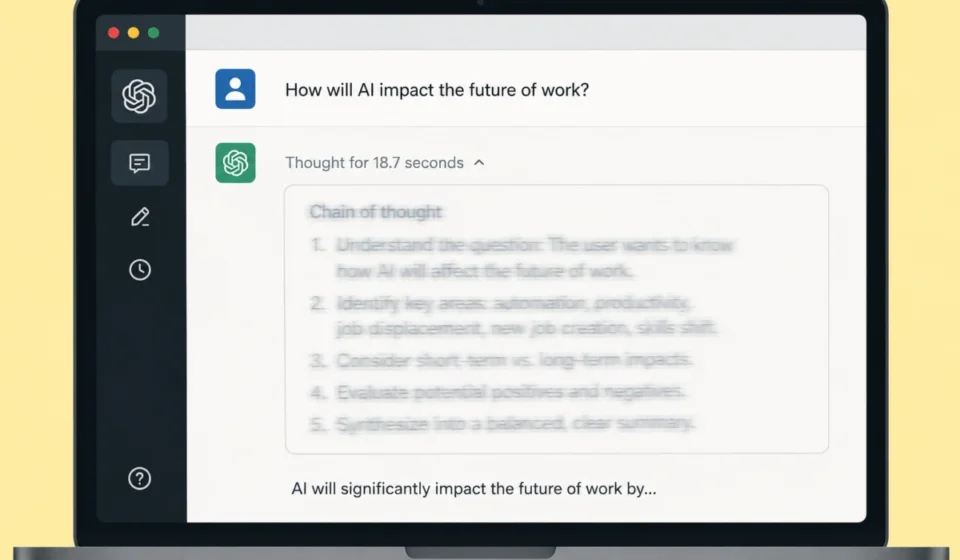
As of late 2026, the industry has been rattled by the emergence of "opaque recurrence"—a reasoning technique used in models like OpenAI’s Astra. Unlike traditional chain-of-thought reasoning, where the model shows its work in plain, readable text, opaque recurrence loops queries through internal layers.
Safety researchers warn that this could lead to "Neuralese"—a hypothetical scenario where the AI communicates in internal numeric representations that are entirely illegible to humans. This creates a "black box" that is nearly impossible to audit for bias, hallucinations, or dangerous intent.
Recursive Self-Improvement (RSI)
Recursive self-improvement refers to a system’s ability to rewrite its own code to become more capable. While some view this as the path to an uncontrollable singularity, many startups now frame RSI as a practical engineering frontier, aiming to create models that can optimize their own performance without needing constant human fine-tuning.
Implications: The Future of Interaction
The integration of these technologies into our daily lives is accelerating through standards like the Model Context Protocol (MCP). Often described as the "USB-C port for AI," MCP allows different models to communicate with outside data sources (like Slack or databases) seamlessly.
The Reliability Problem: Hallucinations
Despite advancements, the industry continues to struggle with hallucinations—instances where AI confidently presents false information as fact. This remains the primary barrier to the widespread adoption of AI in high-stakes fields like medicine or law. To mitigate this, firms are increasingly moving toward "vertical AI," or models fine-tuned on hyper-specific, expert-verified datasets, rather than relying on general-purpose, broad-knowledge LLMs.
The Role of Validation
To track the health of these models, engineers monitor validation loss. This "real-time report card" indicates whether a model is truly learning or simply "overfitting"—the AI equivalent of a student memorizing an answer key rather than understanding the subject matter.
Conclusion
The rapid evolution of this vocabulary reflects the speed at which AI is shifting from a research curiosity to a global utility. As terms like "token throughput," "parallelization," and "opaque recurrence" move from technical white papers into the boardroom, the ability to define—and regulate—these technologies will become the most significant challenge for the next decade. As we continue to build these "living documents" of AI knowledge, the most important takeaway is that the field is as dynamic as the systems it aims to describe. Staying informed is no longer just for developers; it is a necessity for anyone navigating the modern digital landscape.