


























































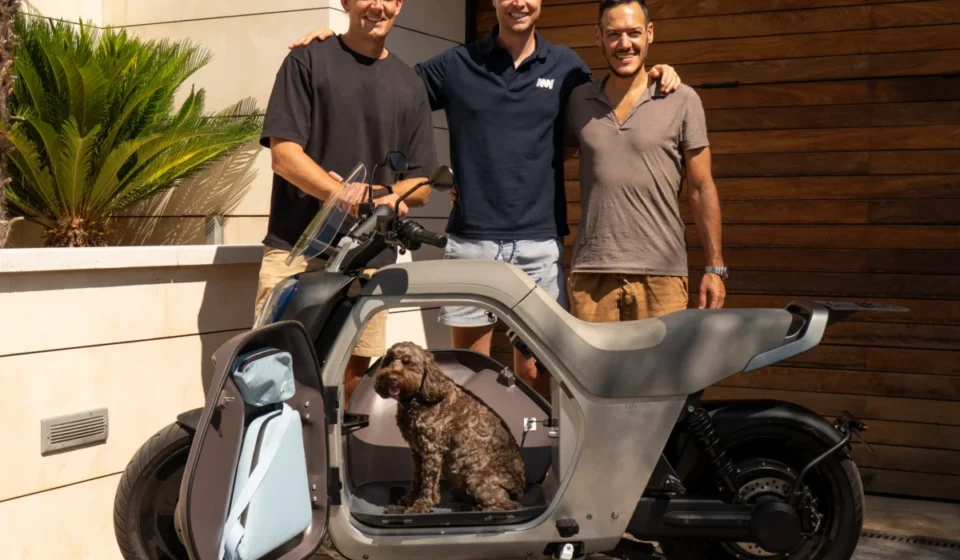
The "Life Utility Vehicle": How Belgian Startup Any Aims to Disrupt European Urban Mobility

For decades, the European urban landscape has been defined by a paradox. While European cities are arguably the most pedestrian-friendly in the world, the humble passenger car remains the default choice for the average citizen. Whether it is the weekly grocery run, the commute to the office with a laptop, or a weekend getaway, the convenience of the car’s trunk has kept the four-wheeled vehicle firmly rooted as the king of urban transit.
However, a quiet revolution is taking place on two wheels. Belgian startup Any is challenging this long-standing status quo, not by trying to replace the motorcycle, but by rethinking the very philosophy of urban mobility. By introducing the "Life Utility Vehicle" (LUV)—a modular, high-capacity electric motorcycle—the startup is attempting to bridge the "missing link" between the nimbleness of a bike and the utility of a car.
The Genesis of the LUV1: Designing for "Real Life"
The core philosophy of Any is simple yet disruptive: to succeed in changing consumer behavior, electric two-wheelers must be "designed for real life." For co-founder Erik de Winter and his team, this means acknowledging the practical baggage that comes with modern existence.
"It came from asking a simple question: what does a real week actually need?" the company noted in a recent LinkedIn dispatch. "Groceries, weekend bags, suitcases—the stuff you don’t want to leave behind just because you’re on two wheels, not four."
The result is the LUV1, a modular electric motorcycle that boasts the storage capacity of a cargo bike while maintaining the performance of a commuter motorcycle. With a top speed of 100 km/h (62 mph) and the ability to store up to 120 liters of cargo, the LUV1 is positioned to handle the heavy lifting that usually forces commuters into their cars.
Chronology of a Startup: From Concept to Configuration
The momentum behind Any is the result of a carefully orchestrated ascent within the European tech and automotive scenes.
- May 2026: The prototype for the LUV1 makes its high-profile debut at Milan Design Week. The design, spearheaded by former Pininfarina design director Lowie Vermeersch, immediately captures industry attention for its sleek yet utilitarian aesthetic.
- November 2026: Having already secured initial momentum, the startup closes a €1.5 million funding round to transition from prototype to pre-production.
- May 2027: A follow-up funding top-up of €1.25 million is secured, bringing total venture capital raised to €2.75 million ($3.2 million).
- Current Phase: The company has launched an online configurator, allowing prospective owners to customize their LUV1 with various frames, panels, and accessories. In the first 100 days of the reservation campaign, the startup secured over 600 orders.
The involvement of Lowie Vermeersch is not merely aesthetic. As the founder of Granstudio and a key investor in Any, Vermeersch serves as the company’s creative director, ensuring that the "Life Utility Vehicle" category is built on a foundation of high-end automotive design principles rather than simple utility-focused engineering.

Engineering and Utility: Data Behind the Design
The LUV1 is designed to be more than just a bike; it is a platform. By utilizing a modular frame, customers can adapt the vehicle to their specific lifestyle. An open frame configuration offers a minimalist experience, while enclosed panel options provide the security needed for transporting work equipment, camping gear, or even pets.
Technical Specifications and Performance
- Cargo Capacity: Up to 120 liters of integrated storage.
- Performance: Top speed of 100 km/h (62 mph).
- Range: Up to 87 miles per charge, powered by two swappable batteries.
- Accessibility: Designed to be accessible via an A1 license, significantly lowering the barrier to entry for prospective riders.
- Pricing: Starting at €7,000 (approx. $8,150), positioning it competitively against high-end e-cargo bikes and well below the cost of a traditional passenger car.
The engineering team, led by Alessandro Mangano—whose resume includes stints at Ferrari, Aprilia, and the Piaggio Group—has focused on making the LUV1 a viable alternative for diverse demographics, ranging from urban commuters to families and adventure-seekers.
Official Responses and Strategic Vision
Pieter Van de Velde, who took the helm as CEO of Any one year ago, has been instrumental in aligning the company’s vision with the realities of the venture capital and automotive sectors. The startup’s board and advisor list are populated with high-profile individuals from the automotive industry, signaling a serious intent to scale.
"We are building a portfolio of vehicles," says Erik de Winter, CCO of Any. The vision does not stop at the LUV1. The company is already exploring a "third-wheeler" variant, which would further expand the utility of the platform.
The market response has been overwhelmingly positive. Beyond individual commuters, the company has seen interest from the last-mile delivery sector. As urban centers continue to tighten restrictions on combustion-engine vehicles, the demand for high-capacity electric solutions is hitting a critical inflection point. The European Association of Motorcycle Manufacturers (ACEM) has publicly stated that they expect the powered two-wheeler market to be primarily electric by 2030, a shift that Any is perfectly positioned to capitalize on.
Implications for Urban Mobility
The implications of Any’s success go far beyond the sale of a few hundred motorcycles. If the LUV1 proves that two-wheelers can successfully replace the utility of a car, it could fundamentally alter how urban planning is approached.
1. Reclaiming Public Space
Every car replaced by an LUV1 represents a significant reduction in the urban footprint. Motorcycles and, by extension, Life Utility Vehicles, require significantly less parking space and road surface, potentially allowing cities to repurpose parking zones for green space or pedestrian infrastructure.

2. Economic Accessibility
At a starting price of €7,000, the LUV1 offers a much lower barrier to entry than a car, including the hidden costs of fuel, insurance, and maintenance. By making the "cargo-capable" experience affordable, Any is democratizing a form of mobility that was previously restricted to those who could afford both a car and a bike.
3. Last-Mile Logistics
The interest from delivery players suggests that the LUV1 could solve one of the most stubborn problems in modern logistics: the efficiency gap in last-mile delivery. By combining the speed of a motorcycle with the storage capacity of a van, the LUV1 could reduce delivery times in congested city centers, leading to a more efficient and less polluted urban core.
The Road Ahead: Scaling for Impact
Despite the initial success and the buzz generated in Milan, the most difficult phase for Any lies ahead. The company is currently in the midst of raising a Series A round of at least €10 million ($11.65 million). This capital is crucial for ramping up production to meet the demand of the initial 600+ reservation holders and preparing for the first commercial deliveries.
The challenge, as with any hardware startup, is execution. While the design is elegant and the mission is clear, the transition from a well-received prototype to a mass-produced consumer vehicle is a gauntlet that has claimed many ambitious startups before. However, with the backing of automotive veterans and a clear, identified "missing link" in the market, Any appears to have the strategic discipline to navigate the coming years.
As European cities continue their slow but steady march toward car-free zones and low-emission mandates, the need for vehicles that can carry "real life" without the baggage of a two-ton chassis has never been higher. Whether the LUV1 becomes the catalyst for this shift remains to be seen, but one thing is certain: for the first time in a long time, the car is facing a competitor that truly understands what it means to be a vehicle for everyday life.
Disclaimer: Some links within this article may lead to affiliate partners, from which we may earn a small commission. This does not influence our editorial independence or the objective nature of our reporting.