

























































The rapid proliferation of generative AI (genAI) has ushered in a new era of software development, characterized by speed, accessibility, and a methodology colloquially dubbed "vibe coding." Coined by AI luminary Andrej Karpathy, the term describes a process where developers and non-technical staff alike generate functional applications simply by chatting with AI models. While this paradigm shift promises to democratize software creation and accelerate prototyping, it has simultaneously ignited a firestorm of concern within the cybersecurity community.
Industry experts, including those from Gartner and Forrester Research, are warning that the "vibe coding" craze is becoming a significant enterprise security threat. The primary concern is that by removing the barriers to entry for application development, companies are inadvertently expanding their attack surfaces, inviting data leaks, and fostering the creation of insecure, unmanaged software that could compromise the entire corporate infrastructure.
The Genesis of a Trend: What is Vibe Coding?
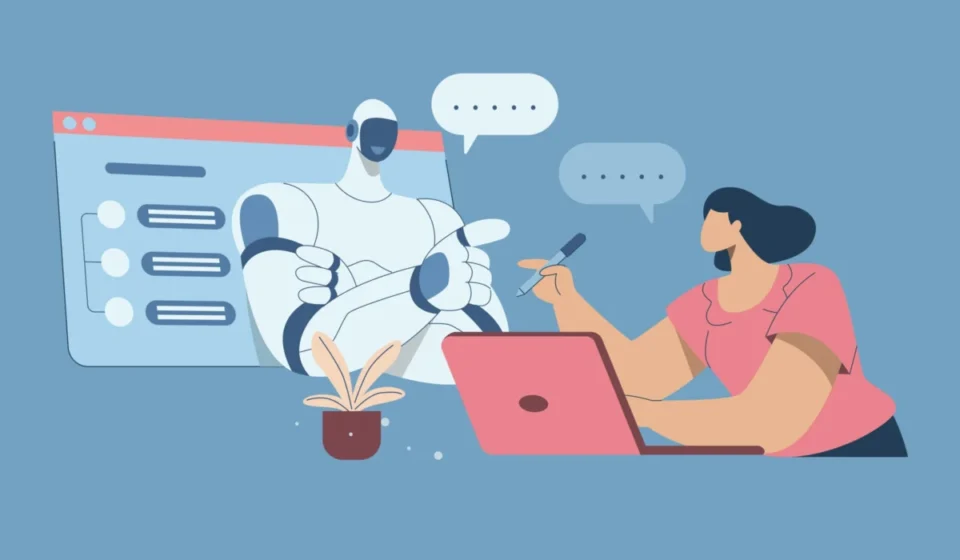
"Vibe coding" represents a fundamental departure from the traditional software development lifecycle (SDLC). Historically, building an application required deep technical expertise, rigorous architecture planning, and extensive manual coding. Today, an employee with little to no formal training in computer science can use natural language prompts to instruct a large language model (LLM) to write code, design user interfaces, and even debug logic.
The practice gained immediate traction within the developer community as a way to quickly spin up "proof of concepts" or simple internal tools. For enterprises, the allure is undeniable: speed and efficiency. A process that once took weeks can now be condensed into a few hours. However, this velocity comes at a cost. The ease of use encourages a "move fast and break things" mentality that is diametrically opposed to the structured, security-first approach required for enterprise-grade software.
Chronology: From Innovation to Security Liability
The emergence of vibe coding as a recognized phenomenon can be traced back to the broader adoption of AI-assisted programming tools in 2024 and 2025.
- Early 2024: AI-assisted coding tools gain mainstream adoption. Developers begin using them for code completion and boilerplate generation.
- Late 2024: The term "vibe coding" enters the lexicon, popularized by Andrej Karpathy. The focus shifts from using AI as a tool to using AI as a primary architect.
- Early 2025: Enterprises begin aggressive upskilling programs to encourage non-technical staff to build their own tools, aiming to reduce the backlog for IT departments.
- Mid-2025: Security research firms begin identifying a correlation between the proliferation of AI-generated applications and an increase in exposed "hard-coded secrets"—sensitive keys and credentials embedded in code—within public repositories.
- Current State: Cyber-defenders are now calling for a moratorium on "shadow IT" coding practices, advocating for strict governance frameworks to reign in the risks posed by unchecked AI-generated output.
Supporting Data: The Efficiency Paradox
A recent research study conducted by scholars at Massey University and the University of Auckland highlights the primary motivation behind this shift: 62% of participants cited "speed and efficiency" as their primary driver for using vibe coding.
While the efficiency gains are measurable, the quality metrics tell a different story. The rapid generation of code often bypasses traditional quality assurance gates. Researchers from the US and the UK, in a paper published by the Association for Computing Machinery (ACM) on June 30, noted that while output may appear clean, it frequently masks "subtle logic errors, performance bottlenecks, or serious security flaws."
The danger is magnified by the scale of production. Because vibe coding is so accessible, employees can generate hundreds of applications in a matter of days. As Pete Shoard, chief of research for cybersecurity at Gartner, points out, "Not all of them will be scanned. There will be no commonality. It’s not a patch that everyone can install." When an enterprise loses visibility into the number of applications running on its network, it loses the ability to secure them.
The Anatomy of the Threat: Data Leaks and "Shadow IT"
The most immediate security risk identified by experts is the accidental exposure of sensitive corporate data. When an employee writes an application using a genAI tool, they may inadvertently instruct the AI to use proprietary data or hard-code secrets—such as API keys or database credentials—directly into the application.
If this code is subsequently pushed to a repository like GitHub—a common habit for developers sharing their work—those secrets are instantly exposed to the public sphere. "The number one risk at the minute is hard-coded secrets being uploaded through vibe-coded applications to GitHub, and then providing a route in," says Gartner’s Pete Shoard.
Furthermore, vibe coding encourages the growth of "Shadow IT." When employees create their own applications without the oversight of a central IT or security department, these applications exist outside of the company’s patch management, auditing, and compliance processes. If a vulnerability is discovered in an AI-generated library, there is no centralized mechanism to track where that library was deployed or how to remediate the flaw.
Official Perspectives: The Pushback from Industry Veterans
Not all industry leaders are sold on the "vibe coding" revolution. Frank Erickson, of the consulting firm 28Stone, argues that the current hype has done a "massive disservice" to the field of software engineering.
"There’s a huge difference between vibe coding and enterprise software development," Erickson asserts. "Some of the loudest, most aggressive proponents of AI are a bit too latched onto the concept."
Erickson notes that he becomes "pretty perturbed" when internal teams refer to their work as "vibe coding." For him, this language suggests a lack of seriousness and a misunderstanding of what professional software development entails. He argues that AI is, at best, a co-pilot, and at worst, a liability if treated as a replacement for human engineering.
The consensus among skeptics is that while AI tools are transformative, they cannot replace the foundational principles of software development: validation, testing, and secure architectural design.
Implications for Enterprise Governance
To survive the era of AI-assisted programming, enterprises must move beyond merely "upskilling" their workforce. They must implement a robust governance framework that treats AI-generated code with the same scrutiny as human-written code.
1. The Need for Continuous Auditing
Governance should include "continuous technical debt monitoring." Researchers from Indonesia have proposed a framework where AI-generated code is subjected to a lifecycle that includes "inspecting, interpreting, and validating" at every stage. This ensures that even if an application is written at high speed, it does not bypass the necessary security checkpoints.
2. Redefining the Role of the Human Developer
The ACM-published research emphasizes that AI functions primarily as an assistant. The responsibility for "overall direction, integration, and validation" must remain firmly in the hands of the human developer. Organizations should mandate that any code intended for production must be reviewed by a human who understands the underlying security implications of the AI’s output.
3. Risk-Based Governance Policies
Rather than banning AI tools—a move that would likely be met with employee resistance—enterprises should adopt risk-based governance policies. This involves:
- Sandboxing: Ensuring that all AI-assisted development occurs in isolated environments.
- Secret Management: Utilizing tools that automatically detect and redact secrets before code is committed to a repository.
- Standardization: Creating templates for common application types to ensure that security configurations are consistent across the board.
Conclusion: Taming the Wild West of Code
Vibe coding is not inherently "evil," but it is inherently "unmanaged." The risk it poses to the enterprise is not necessarily the technology itself, but the lack of structure surrounding its implementation. As organizations rush to capture the productivity gains of the AI age, they must avoid the trap of prioritizing speed over safety.
The future of enterprise software development will undoubtedly involve AI, but it must be an AI that operates within the boundaries of a rigorous, secure, and governed environment. For those who fail to implement such frameworks, the "vibe" may quickly turn into a security nightmare, characterized by data breaches, exposed intellectual property, and a total loss of visibility into the digital tools that power their business. The gold rush is on, but in the world of enterprise security, the most successful companies will be those that keep their heads while everyone else is chasing the vibe.