























































The Surveillance Paradox: Flock Safety and the Battle for the American Public Square

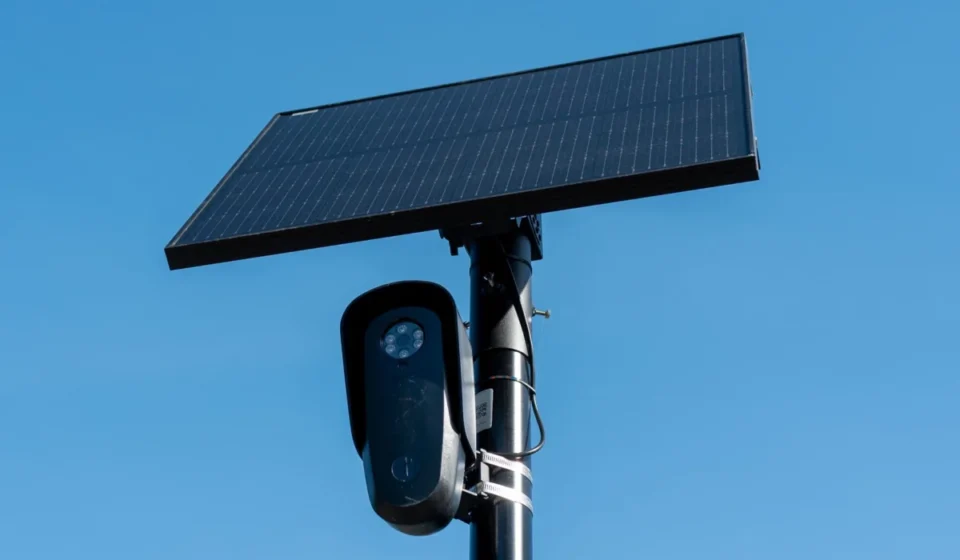
In the modern era of rapid technological advancement, few companies have ignited as fierce a debate as Flock Safety. Known for its extensive network of license plate recognition (LPR) cameras, drones, and AI-driven surveillance tools, the company finds itself at a critical juncture. As public concern over privacy escalates and political scrutiny intensifies, Flock Safety CEO Garrett Langley is advocating for a “national compromise” to reconcile the demand for public safety with the fundamental right to individual privacy. However, as the company faces mounting evidence of systemic misuse, the question remains: can such a balance truly exist, or is the architecture of mass surveillance inherently incompatible with democratic freedoms?
The Core Conflict: Privacy vs. Public Safety
The central tension facing the United States today, according to Langley, is the false binary between safety and privacy. During a recent interview with Fox News, Langley argued that viewing these two concepts as mutually exclusive is a strategic error.
“When people talk about just one of these, privacy or safety, they’re prioritizing the wrong thing,” Langley stated. “What we have to prioritize as a country is compromise. How do we have our safety, and how do we balance privacy?”
For supporters of the technology, Flock’s cameras are indispensable tools in the fight against violent crime, car thefts, and organized retail theft. By providing law enforcement with real-time, actionable data, these systems have arguably assisted in closing cases that would have otherwise gone cold. For critics, however, the ubiquity of these cameras—which often operate silently and without the explicit consent of the public—represents a fundamental shift in the relationship between the state and the citizen. The fear is that the "safety" provided by these cameras comes at the cost of a chilling effect on free movement and association.
A Chronology of Controversy
The rise of Flock Safety has been meteoric, but it has not been without significant turbulence.
- The Proliferation Phase: Over the last several years, Flock Safety successfully penetrated the law enforcement market, installing thousands of cameras in municipalities, private neighborhoods, and corporate campuses across the United States.
- The Turning Point: The narrative shifted in mid-2026 when investigative reports—most notably from The Washington Post—began to document the dark side of this technology. The revelation of 46 specific instances where police officers misused the system to stalk intimate partners, ex-spouses, and acquaintances transformed the debate from a theoretical privacy concern into a visceral reality of abuse.
- The Political Backlash: By August 2026, the issue had transcended party lines. In a rare display of bipartisan alignment, both progressive Democrats and conservative Republicans began positioning themselves against the unregulated expansion of surveillance networks.
- The Policy Pivot: Responding to the mounting pressure, Flock announced modest changes to its data retention policies and access protocols. These adjustments, however, have been met with skepticism by civil liberties groups who argue that the changes are largely superficial.
The Reality of Misuse: Data and Incidents
The most damning evidence against the current model of surveillance is the documented misuse by those tasked with upholding the law. When a tool designed for crime prevention is weaponized by those in power to facilitate stalking or personal vendettas, the moral justification for the technology is severely undermined.
The Washington Post’s investigation into 46 cases of officer misconduct provided a grim look at how internal safeguards failed. These instances were not merely "glitches"; they were systemic failures of oversight. When an officer uses a taxpayer-funded, high-tech surveillance grid to track an ex-partner, they are violating the public trust and the privacy of the individual, proving that the technology is only as safe as the human behind the keyboard.
Langley’s response to these revelations has been a mix of apology and defiance. In an interview with CBS News, he expressed genuine remorse for the victims, stating, “It kills me that she went through that.” Yet, he pivoted quickly to defend the company’s broader mission, arguing that Flock is not the source of police abuse, but rather the mechanism by which such abuse is now being surfaced. “I don’t think that Flock created police abuse,” Langley insisted. “I think we’re the first company to ever shine a light on it and build the tools to find it.”
The Political Landscape: A Bipartisan Reckoning
The backlash against Flock has become a defining issue of the 2026 midterms, rivaling the controversy surrounding the massive energy consumption of data centers.
The Left’s Perspective
On the political left, the concern is rooted in civil rights and the potential for the mass collection of data to be used to suppress dissent. Michigan’s Democratic Senate nominee, Abdul El-Sayed, has been vocal in his opposition, characterizing the technology as an invasive "mass proliferation" that watches citizens’ every move without their knowledge. Similarly, Senator Bernie Sanders has taken a hardline stance, tweeting, “STOP AI MASS SURVEILLANCE. STOP FLOCK.” The argument here is that the normalization of constant monitoring leads to a society where privacy is an exception rather than the rule.
The Right’s Perspective
On the political right, the opposition is framed through the lens of government overreach and individual liberty. Three House Republicans recently introduced a bill designed to prohibit the federal government from purchasing automated surveillance systems that utilize facial recognition or biometric IDs, specifically naming Flock Safety cameras. For these lawmakers, the ability of the state to track citizens’ movements—even under the guise of public safety—is an unacceptable encroachment on constitutional rights.
Corporate Responses and the "Evidence Mode" Dilemma
In an effort to stem the tide of criticism, Flock has implemented several policy changes. The default data retention period was shortened from 30 days to seven days, and the company introduced a requirement that a case code be entered before data can be accessed.
However, these measures have been criticized as "security theater." The primary point of contention is "Evidence Mode"—a setting that allows law enforcement agencies to override the seven-day retention policy and store data for an indefinite period.
The American Civil Liberties Union (ACLU) has been particularly critical of these half-measures. In a statement regarding the policy shift, the ACLU noted, “While Flock has not shortened the default retention period to the ACLU’s recommended 48 hours, its proposal may be a step in the right direction. Whether this is a real change or just another Flock PR move, however, will depend on how its ‘Evidence Mode’ operates.”
The fear is that "Evidence Mode" provides a loophole so wide that the new retention policies are rendered effectively meaningless. If every investigation can be categorized as requiring "Evidence Mode," the seven-day default becomes a historical footnote rather than a privacy safeguard.
Implications for the Future of Surveillance
As we look toward the future, the implications of this debate extend far beyond a single company. We are witnessing a societal renegotiation of the "Right to be Let Alone."
The Need for Legislative Action
Langley has called for state regulators to pass legislation that makes the unauthorized use of surveillance data a criminal offense. This shift—from relying on corporate policies to relying on federal and state law—marks a maturation of the conversation. If surveillance is to exist in a democratic society, it must be governed by strict, transparent, and enforceable legal frameworks that include severe penalties for those who abuse their access.
The Technological Ceiling
There is also the question of whether the technology itself can be constrained. Can an AI-driven system be built with "privacy-by-design" that prevents misuse by its very architecture, rather than by policy? Critics argue that the more data a system collects, the more valuable and dangerous it becomes. Without a fundamental re-engineering of how surveillance data is stored, queried, and audited, legislative efforts may prove insufficient.
Conclusion: A Long Road Ahead
As the industry and the public move toward the October Disrupt conference, where Langley is slated to speak, the discourse is shifting from "how can we use this technology?" to "should this technology exist in its current form?"
The "compromise" that Langley seeks will likely require much more than just policy tweaks. It will demand a total overhaul of accountability mechanisms, a transparent dialogue with civil liberties advocates, and, most importantly, the willingness of the surveillance industry to accept that some uses of their technology may be fundamentally incompatible with a free society.
For now, the debate over Flock Safety serves as a microcosm of a larger American struggle: how to preserve the benefits of innovation without sacrificing the fundamental privacy that defines a democratic life. The surveillance age is here, but the rules for that age have yet to be written. Whether those rules will empower the citizen or further empower the watcher remains the defining question of our time.