






















































This story was produced as part of ThreeSixty Journalism’s 2026 Capitol Reporting Workshop for Minnesota youth, with financial support from the Saint Paul & Minnesota Foundation.
Every day, at exactly 11:30 a.m., the rhythm of Dah Htoo’s school day shifts. While his peers at Johnson Senior High School on the east side of St. Paul head to afternoon electives or prepare for lunch, Htoo departs campus. He drives six miles north to the Finishing Trades Institute of the Upper Midwest. For Htoo, this transition represents more than just a change of scenery; it is a gateway to a future he once struggled to envision.
Htoo, a senior, is a participant in the Finishing Trades program, a specialized Career and Technical Education (CTE) track that allows students to gain industry-specific experience while simultaneously earning high school credit. “Right now, we’re doing drywalling,” Htoo explains. “We do the process exactly how someone would do it if they were working professionally in the trades. It’s real work.”
For Htoo, the traditional academic path never held much appeal. He confesses that he never saw himself in a college lecture hall, nor was he interested in a desk-bound career. Despite his desire for hands-on work, he spent much of his early high school years feeling aimless, largely unaware of the vocational opportunities available to him. That changed thanks to Mary Voigt, the Career Pathway coordinator at Johnson Senior High, who spotted Htoo in the hallway skipping class and invited him to join a field trip to the Finishing Trades Institute. That chance encounter redirected his trajectory.
The Evolution of the CTE Model
The struggle to keep students engaged is a nationwide challenge, but educators like Voigt have found that CTE programs offer a vital alternative. Since before the pandemic, Voigt has observed a growing disconnect between traditional curriculum and the aspirations of her students.
“It was really clear that families whose kids were attending Johnson didn’t see any value in the traditional school model,” Voigt said. “I started to ask myself: ‘Why would they care about school? What are we actually offering them?’”
Johnson High’s current program is a robust example of the nationwide CTE system, which provides courses in fields ranging from health sciences and engineering to education and business. The goal, according to advocates, is to transform school from a series of bureaucratic "hoops to jump through" into a practical bridge toward meaningful employment. By integrating industry-standard certifications and real-world work experience into the school day, CTE programs aim to provide students with tangible agency over their futures.
A Chronology of Opportunity: From Hallway to Job Site
The path to vocational training is often paved with obstacles, most notably a lack of awareness. For many students, the existence of trade programs remains a well-kept secret, hidden behind the high-pressure rhetoric of the "college-for-all" mandate.
The turning point for many students often begins with outreach. At Johnson Senior High, Voigt utilizes a "constant contact" strategy, advertising new career pathways weekly. She believes that visibility is the primary barrier between a disengaged student and a successful trade career. Once students like Htoo see the reality of the work—the tools, the teamwork, and the physical sense of accomplishment—their engagement with school often improves.
After his initial visit to the Finishing Trades Institute, Htoo found a sense of purpose. He realized that his desire for "productive and hands-on" work could be fulfilled through a career in construction or welding. He now approaches his day with a sense of urgency and professionalism that was previously absent, proving that when education aligns with a student’s personal interests, the results are transformative.
Supporting Data: The Case for Vocational Training
The efficacy of CTE programs is increasingly backed by compelling data, though the landscape remains complex. A 2025 study from the Minnesota Department of Education revealed that 92% of students enrolled in two or more CTE programs graduate from high school—a rate 8% higher than the statewide average. This statistic suggests that CTE is not just a career incubator, but a powerful dropout-prevention tool.
However, the economic promise of these programs is subject to rigorous scrutiny. While proponents frequently tout the "high wage and high demand" nature of the trades, a 2024 report from the Minnesota Department of Employment and Economic Development (DEED) offers a sobering reality check. The study indicated that, on average, most fields offered within current CTE programs do not generate a "living wage"—defined by the MIT Living Wage Calculator as approximately $48,500 per year in the Twin Cities metro—within the first five years of graduation.
Only graduates from international business-focused CTE tracks consistently earn above that threshold. This data suggests that while CTE programs are excellent for engagement and graduation rates, there is a significant "wage gap" that policymakers must address to ensure that these pathways lead to long-term financial stability rather than just entry-level positions.
Official Responses and Legislative Action
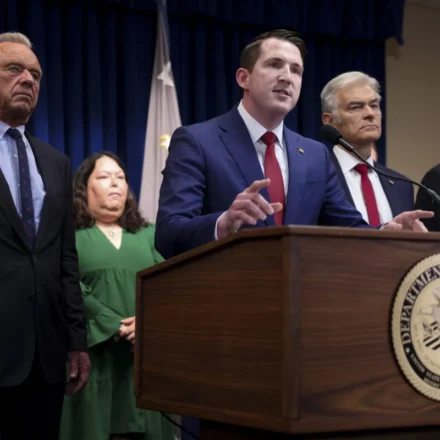
Recognizing the potential and the limitations of the current system, Minnesota lawmakers have stepped in with proposed solutions. A bipartisan bill currently in committee seeks to bolster state funding for CTE programs. Authored by Rep. Bianca Virnig (DFL-Twin Cities suburbs), the legislation aims to increase the state’s share of funding by raising the reimbursement rate from 35% to 50%.
“The goal is to get those young people to make it through the week, the month, the year, and to provide them with the life skills they need to live into adulthood,” Rep. Virnig stated. The proposed bill would require the Commissioner of Education to raise $46.5 million annually to support these initiatives, while also mandating stricter reporting and transparency from school districts to ensure that the funds are effectively utilized.
The response from leadership has been cautiously optimistic. Senate Majority Leader Erin Murphy expressed support for the bill’s core premise but maintained a pragmatic outlook. “I support it in concept,” Murphy noted, “but the devil is in the details.” The primary concern among legislators is ensuring that the increased funding leads to measurable outcomes in job placement and wage growth, rather than just expanding programs that do not lead to economic self-sufficiency.
Implications: The Future of Secondary Education
The broader implication of this movement is a fundamental rethinking of what constitutes a "successful" high school experience. If schools are to remain relevant in a rapidly changing economy, they must move beyond the binary choice of four-year college or no education.
For students like Anna Warren, a student at Highland Park Senior High, the frustration lies in the disconnect between the available opportunities and the lack of communication. “I know that there are a lot of opportunities you can get through the school,” Warren said. “But oftentimes, they’re not very well publicized.”
This observation highlights the final, and perhaps most critical, hurdle: systemic integration. Even if funding is increased and programs are expanded, the benefits remain inaccessible if students do not know they exist. Career pathway coordinators like Mary Voigt are currently doing the heavy lifting, but systemic reform may require schools to fundamentally change how they communicate post-secondary options to students from their freshman year onward.
Conclusion: Crafting a Career
As Dah Htoo prepares to graduate, his outlook on life is remarkably different from the student who was skipping class in the hallways just a year ago. He isn’t worried about sitting in an office or typing all day; he is focused on the practical application of his skills—welding, construction, and the tangible results of his labor.
His story reflects a growing trend in Minnesota and across the country. By providing students with high-quality, hands-on alternatives, the education system can catch those who might otherwise fall through the cracks. While the state continues to debate funding rates and living wage definitions, the students themselves are finding that the most effective way to prepare for the future is to start building it today. Whether or not this legislative push results in higher wages, one thing remains clear: for students like Htoo, the opportunity to engage in meaningful work is, in and of itself, a success story.