
























































A New Era at Cupertino: Apple Reports Record Q3 2026 as Tim Cook Prepares to Pass the Torch

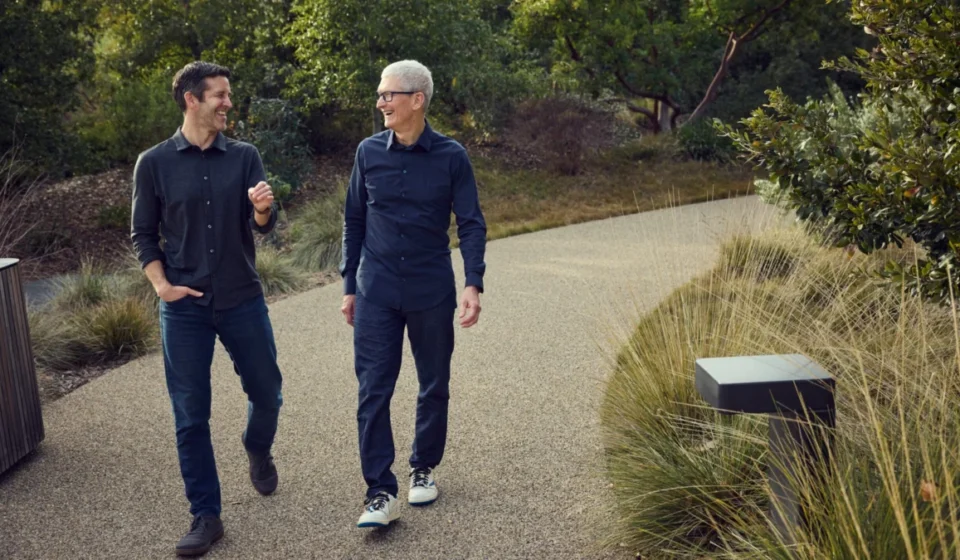
In a watershed moment for the world’s most valuable technology company, Apple Inc. reported its fiscal Q3 2026 earnings on Thursday, delivering a paradoxical blend of record-breaking revenue and sobering warnings about supply chain limitations. The earnings call served a dual purpose: it acted as a triumphant closing chapter for outgoing CEO Tim Cook, who presided over a period of unprecedented growth, and an introduction to the next phase of leadership under John Ternus, who is set to officially assume the CEO role at the beginning of September.
While the financial metrics were stellar, the atmosphere among investors remained cautious. Despite generating $109.4 billion in revenue—a 16% year-over-year increase—and posting a net profit of $29.8 billion, Apple’s stock faced a 9% decline in mid-day trading on Friday. The market’s reaction highlights a growing tension between Apple’s historical ability to scale and the modern, increasingly volatile realities of global supply chains and regulatory pressure.
The Main Facts: A Record-Breaking Quarter Amidst Growing Pains
Apple’s fiscal Q3 2026 results established a new high-water mark for the June quarter. Revenue reached $109.4 billion, fueled by robust performance across most hardware categories. Gross margins hit 50.1%, a notable increase from the 46.5% reported in the year-ago quarter, though CFO Kevan Parekh noted that two percentage points of this gain were driven by favorable tariff returns.
However, the headline numbers mask deeper structural shifts. The company’s services division, long viewed as the engine of long-term stability, showed signs of deceleration. While revenue in this sector eclipsed $30 billion for the first time in a June quarter, growth failed to meet the aggressive targets set by Wall Street analysts. Factors contributing to this slowdown included unfavorable currency exchange rates, a softening mobile gaming market, and the tangible financial impact of new App Store business model regulations.
Perhaps the most significant revelation of the earnings call was the company’s admission of a "forecasting mishap." Apple significantly underestimated the demand for its latest iPhone and Mac lineups. While "demand exceeding expectations" is usually the hallmark of a successful product launch, in the current geopolitical and logistical climate, it has become a liability. Apple now faces a supply chain bottleneck that leadership admits it lacks the flexibility to solve in the short term.
Chronology of the Transition: From Cook to Ternus
The transition of power at Apple has been meticulously managed, but the gravity of the change was palpable during the earnings call. Tim Cook, who has steered the company through a period of massive expansion and service-centric evolution, delivered his 19th and final earnings call as CEO.
- June 2026: Apple achieves a record-setting Q3 performance, confirming the company is in a position of strength as it enters a leadership transition.
- August 2026: The final preparations for the change in leadership are finalized, with John Ternus participating in his first earnings call alongside Cook.
- September 1, 2026: John Ternus is scheduled to officially take the helm as CEO of Apple Inc.
- Late 2026/Early 2027: The company faces a critical test as it attempts to manage supply chain constraints while navigating the next phase of its "Siri AI" rollout.
Cook’s farewell was marked by a sense of pride and confidence. "The transition is going seamlessly," Cook told analysts, "and I am beyond excited for John to step into his new role and lead Apple into its next era." Ternus, for his part, kept his comments focused on continuity and the "enormous opportunity" presented by the artificial intelligence sector, signaling that while the face of the company is changing, the strategic roadmap remains largely consistent.
Supporting Data: The Mac Resurgence and Services Strategy
The most surprising performance metric of the quarter was the Mac division, which saw an astonishing 28.7% jump in sales. This surge is being credited to the "MacBook Neo" and the integration of the Mac into the broader Apple ecosystem.
Key Data Points:
- Revenue: $109.4 billion (+16% YoY).
- Net Profit: $29.8 billion.
- Gross Margin: 50.1% (down to 48.1% when excluding tariff refunds).
- Services: Surpassed $30 billion in quarterly revenue; active paid subscription base eclipsed 1.5 billion.
- Enterprise Growth: Morgan Stanley, a bellwether for corporate adoption, deployed 20,000 iPhones, signaling a shift toward corporate-managed Apple hardware.
The success of the Mac is not merely a hardware story; it is an enterprise story. Apple confirmed that roughly half of all large-scale US education Mac purchases were "conquest sales"—devices that replaced existing Windows or Chromebook infrastructure. This shift suggests that Apple’s "halo effect," which previously kept consumers locked in via the iPhone, is now successfully migrating into the high-margin enterprise and education sectors.
Official Responses: Addressing the "100-Year Flood"
The primary concern raised by analysts was the narrowing of gross margins as the year progresses. Tim Cook and Kevan Parekh addressed this head-on, citing a "100-year flood" in the memory component market.
The DRAM market, dominated by a mere three primary suppliers, has become a major point of friction. Cook noted that the price spikes in memory costs were the primary driver behind recent price increases for the iPad and Mac lines. "It’s not a regular supply issue," Cook explained when asked about the inability to meet consumer demand. "It’s a demand forecast issue, to be candid."
Apple’s inability to pivot its supply chain in real-time has led to a warning: the impact of supply constraints is expected to increase significantly in the coming quarter. When asked about the company’s leverage over suppliers, management remained guarded, emphasizing that they are actively evaluating new ways to introduce supply chain flexibility, though they offered no immediate solutions for the impending shortages.
Implications: AI, Regulation, and the Future of Leasing
As Apple looks toward 2027, three distinct challenges loom over the company’s future.
The AI Dilemma
The rollout of "Siri AI" remains the company’s most ambitious—and complicated—project. Regulatory hurdles in the EU and China have significantly delayed the global launch. While there is optimism regarding a potential support deal with Alibaba and Baidu in China, the path forward in Europe remains murky. Furthermore, the monetization of AI remains unproven. Cook hinted at an "upgrade option" through iCloud+ to handle the heavy processing demands of power users, but the specific mechanics remain undefined.
The Financial Engineering of the Klarna Deal
Perhaps the most potent tool in Apple’s arsenal to combat potential sales slumps is the new Klarna product leasing deal. With 1.5 billion active users, Apple is effectively transitioning from a "hardware-first" sales model to a "subscription-as-a-service" model. By allowing customers to pay monthly for hardware, Apple hopes to accelerate replacement cycles—a move that would turn hardware revenue into a predictable, recurring stream of income.
Analyst Skepticism
The consensus among major financial institutions remains mixed. Morgan Stanley’s Erik Woodring questioned whether Apple’s historical leverage over its supply chain is beginning to wane, while Bank of America’s Wamsi Mohan noted that "demand is being shunted into subsequent quarters," which may dampen the stock’s short-term performance. However, there is a silver lining: analysts from Wells Fargo emphasized that the underlying momentum remains strong, suggesting that once the supply chain constraints are addressed, the company is well-positioned for a robust fiscal 2027.
Conclusion
As Tim Cook departs, he leaves behind a company that is undeniably at the top of its game in terms of product integration and market penetration. However, the Q3 2026 earnings report serves as a stark reminder that even a titan like Apple is susceptible to the pressures of a complex global economy. The "Apple of 2027" under John Ternus will be defined not just by its ability to innovate, but by its ability to solve the logistical and regulatory puzzles that defined the end of the Cook era. Investors and consumers alike will be watching closely as the transition unfolds, eager to see if the company can maintain its record-breaking pace in an increasingly constrained world.