






















































The hallways of Minnesota’s public schools, typically bustling with the vibrant energy of childhood, have fallen eerily quiet. In districts across the state, attendance registers show gaps where students once sat, and classrooms have been replaced by the sterile, disconnected glow of Zoom screens. This shift is not the result of a seasonal flu or a return to pandemic-era mandates; it is a profound reaction to "Operation Metro Surge," a federal immigration enforcement initiative that has left families, educators, and school administrators grappling with a climate of pervasive fear.
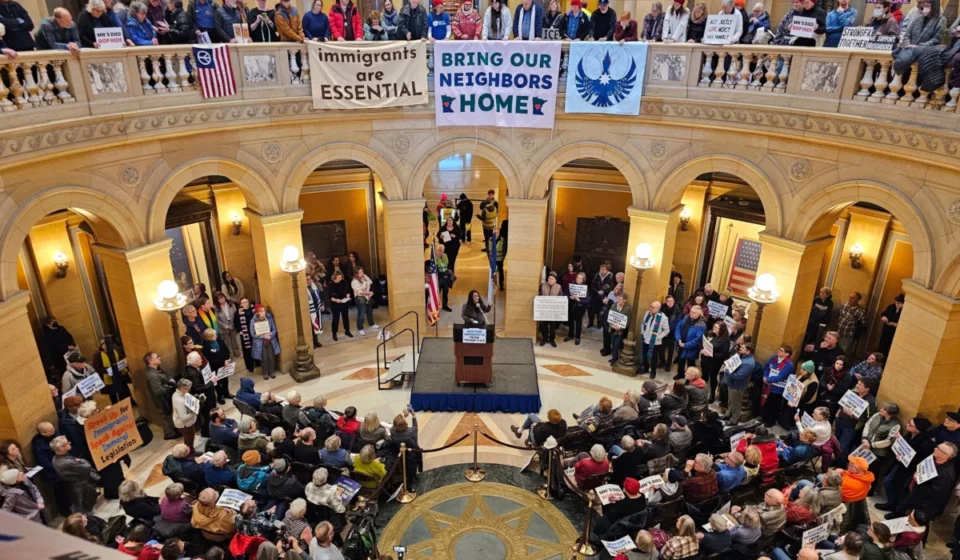
During a recent legislative hearing, the first of several planned by state lawmakers to address the crisis, the gravity of the situation was laid bare. Parents, superintendents, and teachers testified that the mere presence of federal immigration agents—and the subsequent threat of detention—has effectively dismantled the sense of security necessary for a functioning educational environment.
The Human Toll: Stories from the Frontlines
The testimony provided during the Senate Education Finance Committee meeting painted a harrowing portrait of the daily realities faced by Minnesota’s immigrant families. The anecdotes shared were not abstract policy debates; they were visceral accounts of fractured households.
Amy Hewett-Olatunde, an English as a second language (ESL) teacher within the St. Paul Public Schools system, provided a sobering perspective. At the height of the recent federal operations, nearly 7,000 students in her district were absent. "We are watching a generation of St. Paul children, and children across this entire country, lose their childhoods to a fear that no child should know," she stated.
The psychological impact is visible in the smallest details of these children’s lives. One account described an elementary student walking to their bus stop alone, their parents watching fearfully from behind closed blinds, terrified that the simple act of going to school could lead to a permanent separation. Another student returned home from school only to find an empty house, their parents having been detained by officials while they were in class. In yet another instance, a high school student was detained at a bus stop and held for five days with almost no communication with their family.
Chronology of the Surge and Educational Disruption
The timeline of "Operation Metro Surge" has been marked by a cascading series of incidents that have increasingly encroached upon the sanctity of school zones.
While precise, statewide data on the exact number of absences remains incomplete, the anecdotal evidence provided by school officials indicates a rapid, downward spiral in attendance that began in earnest following high-profile enforcement actions.
- Early Detection: Initial reports of enforcement activity near transit hubs caused immediate parental alarm.
- The Attendance Plunge: Following specific incidents—such as the widely publicized death of Renee Good—attendance at institutions like Partnership Academy in Richfield plummeted to an all-time low of 39%.
- The Shift to Remote Learning: As fear intensified, districts like Columbia Heights and Fridley reported hundreds of students abandoning in-person learning for online platforms.
- Escalation: In recent weeks, reports have surfaced of ICE vehicles circling school grounds, including an incident where six agency vehicles reportedly blocked a roundabout at Hayes Elementary School, effectively preventing children from reaching their classrooms.
Superintendents have been forced to pivot from their traditional roles as academic leaders to crisis managers. Many are now personally conducting home visits to ensure that, in the wake of parental detention, children are not left in households without adult supervision.
Supporting Data: The Quantitative Impact on Districts
The fiscal and operational consequences of this disruption are significant. For school districts already operating on tight margins, the exodus of students creates a long-term budgetary crisis.
In the Columbia Heights Public School District, the impact is quantifiable: enrollment has dropped by 130 students compared to the previous year, a decline that administrators directly attribute to the immigration surge. This drop represents a loss of nearly $2 million in state funding—a devastating blow to a district trying to provide support services to traumatized families.
Data from other districts mirror this trend:
- Willmar Public Schools: Experienced a week where 25% of the student body (936 students) was absent.
- Fridley Public Schools: Over 400 of approximately 2,700 students have opted for online-only learning to avoid the risks associated with commuting to school.
- Charter Schools: The Minnesota Association of Charter Schools reports that some member institutions have experienced attendance drops exceeding 40%.
Beyond enrollment, there is the hidden cost of social work. At Twin Cities Academy, staff have spent weeks visiting the homes of students to help parents complete "Delegation of Parental Authority" paperwork—legal documents intended to ensure children are placed in the care of trusted individuals should their parents be detained. Executive Director Betsy Lueth noted that parents often only opened their doors to these workers if they recognized a familiar face, a testament to the level of suspicion now permeating the community.
Official Responses and Political Polarization
The legislative hearing highlighted a stark divide in how Minnesota’s political leaders view the situation. While DFL lawmakers have proposed bills aimed at restricting immigration enforcement activities in and around schools and daycare facilities, these measures have faced stiff opposition.
The DFL Perspective: Protecting the Vulnerable
Sen. Clare Oumou Verbeten characterized the targeting of Minnesota’s youngest residents as "cruel." Her position, shared by many of her colleagues, is that schools must be treated as safe havens, free from the reach of federal enforcement. She urged her colleagues to "sit with the discomfort" of the testimony provided, arguing that the current response relies too heavily on the scapegoating of immigrants and people of color.
The Republican Perspective: Law and Order
Republican members of the committee, led by Sen. Eric Lucero, pushed back against the narrative that federal agents are the aggressors. Sen. Lucero argued that characterizing law enforcement as "invaders" is inflammatory and ignores the risks these agents take to uphold the rule of law. He contended that the committee hearing was one-sided, deliberately excluding the voices of those who believe that immigration laws must be strictly enforced and who feel that the rights of legal residents are being compromised.
Sen. Jason Rarick, while acknowledging the emotional weight of the testimony, called for a return to "civility." He criticized tactics used by some activists to obstruct immigration enforcement, such as the use of whistles and other signals, arguing that such actions only escalate tensions and make finding a peaceful resolution more difficult.
The Broader Implications for Minnesota’s Future
The situation in Minnesota raises fundamental questions about the role of the state in protecting its residents, particularly those who are most vulnerable.
For many educators, the priority is clear: the psychological trauma being inflicted on children will have long-term consequences that extend far beyond the current academic year. Students who learn in the shadows, with the curtains drawn and in whispers, are not developing the social or academic skills necessary for long-term success.
"Parents and caregivers have stepped up to lead in this moment," said Sarah Lindsey, a teacher and parent who has helped organize food and rent assistance for dozens of families. "And now it is time for you, as legislators, to step up, to lead, and to support our impacted communities."
As the House Education Finance Committee prepares for its own session to discuss the impact of "Operation Metro Surge," the divide between those who prioritize immigration enforcement and those who prioritize the stability of the school system remains vast. With no clear path toward bipartisan support for the proposed legislative fixes, the state’s educators and families find themselves in a precarious position—waiting for a resolution while the everyday rhythms of childhood continue to be interrupted by the realities of federal policy.
For now, the silence in Minnesota’s classrooms stands as a haunting testament to a community caught in the middle of a national debate, where the collateral damage is measured not in policy, but in the lost innocence of the next generation.