


















































The Resurgence of the North Star Core: Minneapolis Navigates the Return to In-Person Work

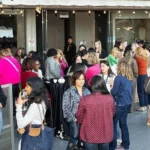
MINNEAPOLIS — For years, the Monday morning rhythm at Corner Coffee in downtown Minneapolis was a quiet affair, a stark reminder of the hushed corridors and empty skyways that defined the post-pandemic era. However, the first week of September 2025 marked a definitive shift in the city’s pulse. Store manager Mia Pariseau found herself at the center of a sudden, caffeinated whirlwind.
“We got just slammed,” Pariseau remarked, describing a scene where at least five people were lined up consistently for over an hour. “And it was just me and one other person here.”
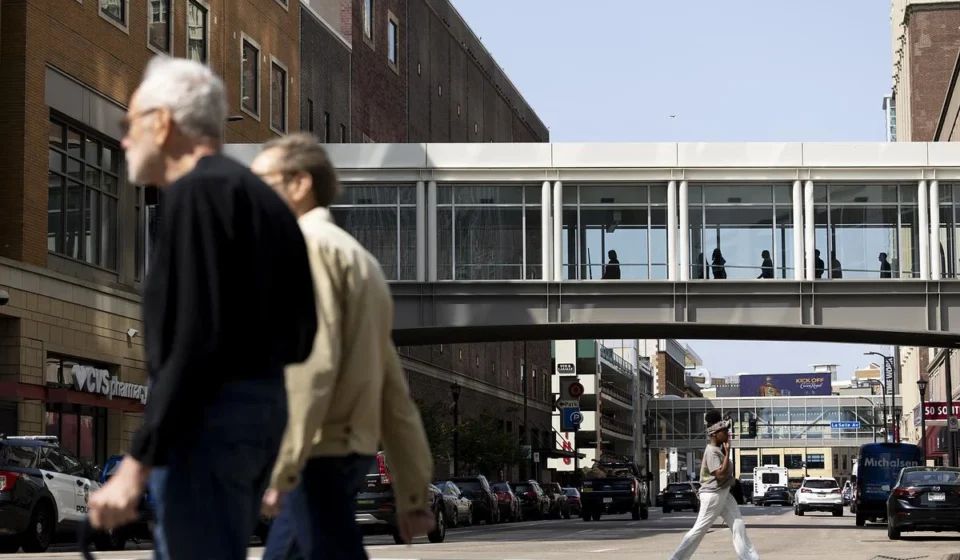
This surge in foot traffic is not a random fluctuation but the visible result of a major corporate pivot. Corner Coffee’s proximity to the Target Corporation headquarters makes it a bellwether for the retailer’s workforce trends. On September 2, Target’s commercial unit officially began a mandate requiring employees to be in the office three days a week. The influx of thousands of workers has sent ripples through the downtown economy, signaling a new chapter in the city’s long recovery from the remote-work revolution.
Main Facts: The Great Re-Entry of 2025
The revitalization of downtown Minneapolis is currently anchored by the return of its largest private-sector employers. As of early September 2025, in-person work levels have climbed to nearly 75% of their pre-pandemic benchmarks. This figure, provided by the Minneapolis Downtown Council, represents a significant milestone for a city that was once considered a laggard in the national return-to-office trend.
The primary catalyst for this recent spike is Target, the city’s second-largest employer behind Hennepin Healthcare. By requiring its commercial unit to maintain a physical presence for the majority of the work week, Target has effectively re-populated the skyways and street-level businesses that had struggled to survive on the "ghost town" atmosphere of 2020 and 2021.
Key highlights of the current landscape include:
- Mandate Implementation: Target’s three-day-a-week policy for its commercial unit began on September 2, 2025.
- Occupancy Trends: Downtown occupancy is nearing 75% of 2019 levels, with expectations for further growth as more units within major corporations follow suit.
- Corporate Alignment: Twelve of the top 15 downtown employers have now instituted formal back-to-office policies, including Wells Fargo and Ameriprise Financial.
- State Influence: The momentum was bolstered earlier in the summer when State of Minnesota employees were required to return to the office for 50% of their working hours starting June 1.
Chronology: From "Ghost Town" to Vibrant Hub
The journey toward the current state of downtown Minneapolis has been a multi-year process characterized by caution, resistance, and eventual adaptation.
2020–2021: The Era of Desolation
Following the onset of the COVID-19 pandemic, Minneapolis, like many urban centers with high concentrations of white-collar workers, saw its central business district hollow out. Minnesota’s share of remote workers peaked at 21% in 2021, significantly higher than the national average of 17.9%. During this period, attorneys like Jenny Lissarrague, who has worked downtown since 2012, described the area as a "ghost town" where the absence of pedestrians created a sense of isolation.

2022–2023: The Incremental Shift
By 2022, the share of primarily remote workers in Minnesota began to dip, falling to 16.9% as some firms experimented with "hybrid-lite" models. However, the recovery remained sluggish compared to other Midwestern hubs. Many employees remained hesitant to return, citing commute times and the flexibility afforded by home offices.
Summer 2024–Early 2025: The Policy Hardline
The tide began to turn more aggressively in mid-2024 and early 2025. City leaders and business advocacy groups intensified their calls for a return to the core to support the tax base and local retail. On June 1, 2025, the State of Minnesota implemented its 50% in-office requirement for state workers. Though met with union resistance and threats of labor action, the move successfully increased the daily population of the capitol area and downtown.
September 2025: The Target Milestone
The most recent and perhaps most impactful chronological marker was the September 2nd Target mandate. As an anchor institution, Target’s policy changes often dictate the economic health of the surrounding blocks. The "back-to-school" energy described by workers this month suggests a transition from optional attendance to a structured professional environment.
Supporting Data: The Economics of the Skyway
To understand the scale of the transition, one must look at the data provided by the Federal Reserve Bank of Minneapolis and the Downtown Council.
While Minnesota was initially slower than its neighbors to bring employees back, the state is now "catching up." The concentration of major employers downtown—led by Hennepin Healthcare, Target, Wells Fargo, and Ameriprise—means that even small percentage shifts in attendance result in thousands of additional people in the city center.
| Metric | 2021 (Peak Remote) | 2022 (Transition) | 2025 (Current) |
|---|---|---|---|
| MN Remote Work Share | 21.0% | 16.9% | Est. <12% |
| National Remote Work Share | 17.9% | N/A | N/A |
| Downtown Pedestrian Traffic | ~20% of pre-COVID | ~45% of pre-COVID | ~75% of pre-COVID |
Kittie Fahey, senior director of advancement for the Minneapolis Downtown Council, notes that the nature of the commute is also changing. Traffic is no longer concentrated in a 7:00 AM to 9:00 AM window. Instead, many employees are utilizing flexible start times, with a significant number of workers arriving around noon. This "spread-out" traffic pattern presents both opportunities and challenges for transit providers and food service businesses.
Official Responses: Collaboration vs. Logistics
The return to the office is viewed through different lenses depending on whether the perspective is institutional, managerial, or individual.
The Institutional View: Minneapolis Downtown Council
Kittie Fahey emphasizes the social and professional benefits of the return. She argues that the "vibrancy" of a city depends on the "spillover" effect—where workers don’t just occupy desks, but also inhabit the streets. "Go out for lunch, stay after and go meet friends, go do some things," Fahey urged. "Use all the resources we have." The Council’s goal is to move beyond a "work-and-go-home" culture to a more holistic urban experience.

The Corporate View: Team Dynamics
From the perspective of those within the corporate towers, the return is often framed as a necessity for innovation. Madelyn Dunn-Lammert, an associate designer for Target, noted that the remote environment of the last three years, while functional, lacked the spark of in-person interaction. "Being able to grab lunch with co-workers or work through a project in-person helps build team connections and facilitate collaboration, especially in a creative field," she said.
The Practical View: Transit and Infrastructure
However, not all feedback is positive. Long-time downtown workers like Jenny Lissarrague point out that the infrastructure of the city has not yet returned to its 2019 efficiency. "It’s a lot less busy post-pandemic," Lissarrague observed. She highlighted a significant hurdle: transit. With the rise of remote work, bus routes were scaled back, and they have not yet been fully restored. This creates a "chicken and egg" problem where workers are hesitant to commute due to poor transit options, while transit agencies are slow to increase service without guaranteed ridership.
Implications: The Future of the Central Business District
The influx of workers in September 2025 brings into focus several long-term implications for the future of Minneapolis.
The "After-Hours" Vacuum
One of the most pressing concerns for city planners is the lack of evening activity. Fahey noted a "crazy" difference in restaurant hours compared to the pre-pandemic era. In the central business district, finding a restaurant open until 11:00 PM is now a rarity. For the downtown scene to regain its full vibrancy, the city must solve the "18-hour city" puzzle—ensuring that there are reasons for the 60,000 downtown residents and thousands of commuters to stay past 5:00 PM.
Real Estate and Retail Adaptation
Local businesses like Corner Coffee are having to relearn their own operations. The sudden "slams" of customers require staffing levels that were unnecessary just six months ago. If the 75% occupancy rate holds or grows, we can expect a secondary wave of retail openings in the skyways, which currently still feature several vacant storefronts left behind during the 2020-2022 exodus.
The Cultural Shift in Work
The "back-to-school-like energy" at Target suggests that the novelty of the return is currently driving engagement. The long-term implication, however, is whether this is a permanent cultural shift or a temporary compliance with corporate mandates. The resistance seen among state workers suggests that the "flexibility" of the pandemic era remains a highly valued commodity.
Conclusion: A Bright, if Different, Future
Despite the challenges of reduced transit and early closing times, the mood in downtown Minneapolis is shifting toward optimism. The sight of people walking through the IDS Center with lunch in hand and the sound of crowded coffee shops are indicators of a recovering ecosystem.
As Mia Pariseau of Corner Coffee puts it, “The future is bright.” While the downtown of 2025 may not look exactly like the downtown of 2019, the return of its largest employers has ensured that the heart of the city is beating once again. The coming months will determine if this heartbeat can be sustained into the evening hours, transforming Minneapolis from a daytime office hub back into a full-time urban destination.