


























































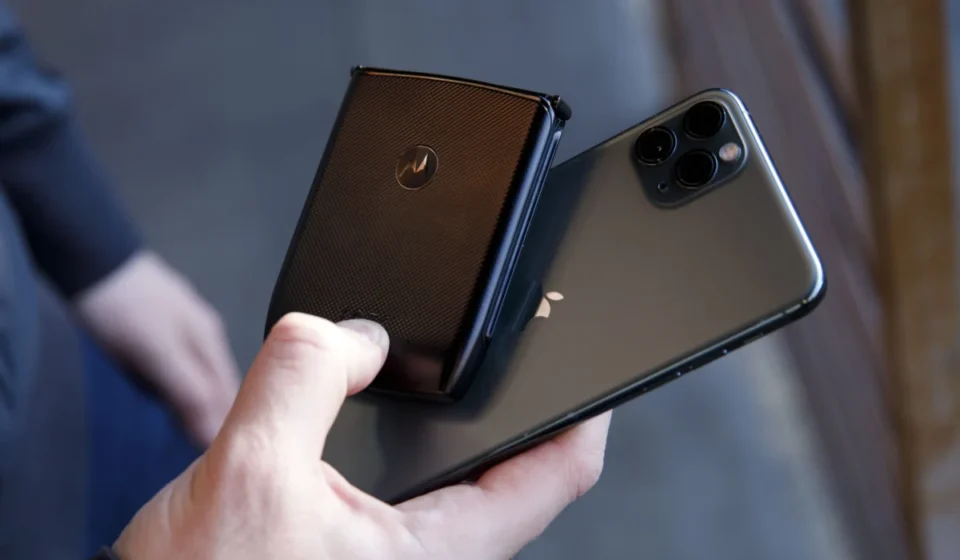

The technology world is holding its breath as September 9 approaches. For over half a decade, Apple has watched from the sidelines as Samsung, Google, and Motorola carved out the burgeoning foldable smartphone market. Now, the silence is set to break. In a move that marks a tectonic shift in the company’s product strategy, Apple is widely expected to unveil its first foldable device—the long-rumored "iPhone Ultra"—at its upcoming launch event.
This transition coincides with a historic moment for the Cupertino giant: the leadership handoff from longtime CEO Tim Cook to the former Vice President of Hardware Engineering, John Ternus. As Apple embraces an entirely new form factor, the pressure on Ternus to deliver a device that feels quintessentially "Apple" while competing in a saturated niche is immense.
The Chronology of the Foldable Quest
Apple’s journey to this point has been characterized by characteristic caution. While Samsung debuted the Galaxy Fold in 2019, Apple opted to refine its internal display technologies and hinge mechanics, seemingly waiting for the foldable category to mature beyond early-adopter gimmicks.
- 2019–2021: Apple files numerous patents regarding flexible glass and "self-healing" screen coatings, signaling that research was well underway behind closed doors.
- 2022–2024: Industry analysts begin tracking supply chain movements involving flexible OLED panels, though Apple prioritizes the development of the Vision Pro headset, shifting engineering resources toward spatial computing.
- 2025: Rumors reach a fever pitch as macOS and iOS code references start hinting at a device with a dynamic, resizable interface.
- September 2026: The official unveiling. This event is set to be the most anticipated keynote since the original iPhone announcement, serving as a litmus test for the "Post-Cook" era of hardware design.
What We Know About the "iPhone Ultra"
If the price tag of $2,000 holds true, the iPhone Ultra will be positioned firmly as a luxury status symbol. Early testers report that the device feels remarkably premium, avoiding the "plastic" sensation that plagued early foldable entrants from competitors.
Form Factor and Display Dynamics
The device is expected to feature a 5.5-inch cover display that expands into a 7.8-inch, iPad-like main screen. When folded, the phone is rumored to be shorter and wider than the standard iPhone 18, providing a distinct silhouette. Apple has reportedly invested heavily in solving the "crease problem"—the physical indentation at the fold point that has frustrated users of other foldable devices for years. By utilizing a new proprietary hinge mechanism and a display substrate that minimizes tension, Apple aims to deliver a "seamless" visual experience.
Technical Concessions and Hardware Constraints
To achieve a sleek, pocketable profile, Apple has had to make difficult compromises:
- The Camera Trade-off: The iPhone Ultra will likely skip the high-end telephoto lens found in the "Pro" line, opting instead for a dual-lens system featuring a main and ultra-wide camera.
- Biometrics: To save precious internal space, Face ID is expected to be omitted in favor of a side-mounted Touch ID sensor. While this marks a departure from Apple’s recent reliance on facial recognition, the integration of biometric fingerprinting into the power button is a proven, reliable alternative.
- Charging: The device will feature MagSafe compatibility, maintaining the company’s ecosystem of magnetic accessories.
Software: The iOS Experience on a Foldable
Despite the expanded, tablet-like display, the iPhone Ultra will run iOS rather than iPadOS. While this may strike some as a limitation, internal reports suggest that Apple’s latest silicon—the same chip powering the budget-friendly MacBook Neo—is more than capable of handling the heavy lifting required for side-by-side multitasking. The interface is designed to fluidly transition apps from the cover screen to the expanded canvas, ensuring that the transition from phone to "mini-tablet" feels intuitive rather than jarring.
Beyond the Fold: A Strategic Refresh
While the foldable iPhone steals the spotlight, Apple’s September event is also slated to host the rollout of the iPhone 18 series. In an unusual strategic twist, reports suggest the iPhone 18 Pro and Pro Max will launch in September, while the standard iPhone 18 may be delayed until early 2027. This inverted release schedule suggests that Apple is prioritizing high-margin, premium users as it navigates a cooling global smartphone market.
HomePods and the AI Revolution
Following the recent integration of Gemini-powered AI into Siri, Apple is preparing a hardware refresh for the HomePod. By leveraging the new AI capabilities, Apple intends to transform the HomePod from a simple speaker into a central, proactive hub for the smart home. References found in recent macOS preview builds indicate that these devices are near-ready for retail distribution.
The Rise of "Visual Intelligence" in AirPods
Perhaps the most polarizing announcement involves the next generation of AirPods. Research led by Aaron Perris into macOS code revealed footage of users wearing AirPods equipped with tiny, integrated cameras.
The accompanying marketing copy suggests these cameras are designed for "Visual Intelligence," allowing users to save information from the real world—such as identifying a book or scanning a document—simply by asking Siri. While comparisons to the privacy-controversial "smart glasses" from Meta are inevitable, Apple’s leadership is betting that their established brand equity in privacy will mitigate consumer fear. The camera is not intended for photography or video recording, but rather to act as "eyes" for the Siri AI to interpret the user’s environment in low resolution.
Implications for the Industry
The introduction of a $2,000 iPhone signals that Apple is no longer just chasing market share; it is aggressively segmenting its user base. By moving into the "ultra-premium" space, Apple is challenging the current ceiling for consumer electronics spending.
The Competitive Landscape
Competitors like Samsung have spent five years refining their foldable hardware. By entering now, Apple is betting that it can win not by being the first, but by being the "best." The success of the iPhone Ultra will depend heavily on whether the software experience can justify the premium price tag. If the interface is buggy or the hinge feels fragile, it could lead to a significant brand hit. However, if the device succeeds, it will likely accelerate the adoption of foldable technology across the entire industry.
The "Product Builder" Legacy
For John Ternus, the launch of the iPhone Ultra is a baptism by fire. His success in maintaining Apple’s rigorous quality control standards while managing a complex, multi-product launch will define his tenure as CEO. The market is looking for a sign that Apple still possesses the "magic" that Steve Jobs and Tim Cook cultivated.
Final Considerations: Ethics and Privacy
The move toward camera-equipped wearables brings the conversation back to surveillance. As society becomes more comfortable with AI assistants that can "see," the legal and ethical landscape will inevitably tighten. Norway’s recent push to ban certain camera-enabled wearables highlights the tension between convenience and public privacy. Apple’s challenge will be to ensure that its "Visual Intelligence" feature is not only secure but also perceived as such by a wary public.
As the September 9 event approaches, the tech community remains divided. Some see the iPhone Ultra as an unnecessary, overpriced experiment; others see it as the necessary evolution of the mobile device. Regardless of the outcome, one thing is certain: the era of the static, glass-slab smartphone is drawing to a close, and a new, flexible future is beginning to unfold.
Note: This article contains affiliate links. When you purchase through links in our articles, we may earn a small commission. This does not affect our editorial independence.